

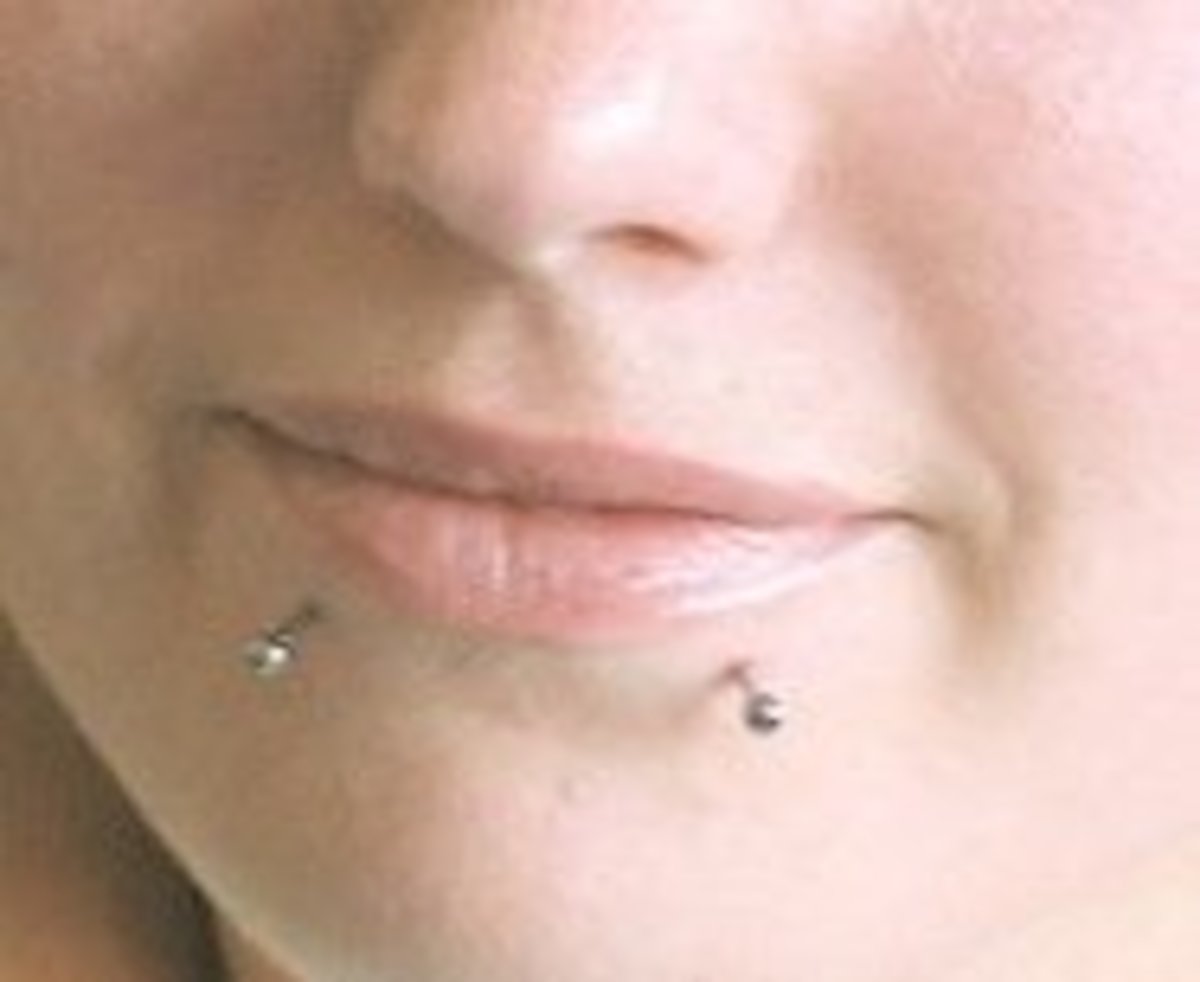
A snake bites piercing is a paired lower lip puncture positioned near the outer edges of the bottom lip. As the term implies, the placement mimics the look of a snake bite.
The label “snake bites” can be confusing because there are several other “bite” styles, such as spider bites and angel bites.
To avoid confusion, consider calling them “paired lower lip piercings” if you opt for this look.
Which types of jewelry are used for this piercing?
For snake bites, the typical jewelry choices are rings or labret studs.
A labret stud is a post with a decorative end on one side and a flat backing that rests against the inside of the lip.
Rings are circular pieces that hug the lip.
What material options are available for the jewelry?
Material choice is crucial for any piercing, and it’s especially important for oral piercings because the jewelry can contact teeth and gums.
For initial oral piercings, the Association of Professional Piercers (APP) suggests using implant-grade metals or gold that’s 14 karat or higher.
Opt for jewelry made from:
- Surgical steel. Stainless surgical steel includes other alloys like nickel but generally releases very little and is safe for most people.
- Titanium. Implant-grade titanium contains no nickel and is suitable for those with metal sensitivities. It’s pricier than steel but often a better choice for sensitive skin.
- Niobium. This lightweight, affordable metal is similar to titanium, though it may not carry an implant-grade label.
- 14-karat or higher gold. If you pick gold, ensure it’s solid gold rather than gold-plated or filled. Beware of gold vermeil or overlays, which can wear away and expose underlying alloys.
How much does the piercing usually cost?
Price varies based on location, jewelry quality, and the piercer’s experience.
Typically, a snake bites piercing costs between $60 and $120.
Remember to budget for a tip—around 20 percent is customary when you’re pleased with the service.
How is this piercing done?
Appointments start with a consultation about the piercing and your jewelry choice. You’ll also complete paperwork, including a liability waiver.
After that, the process usually follows these steps:
- The piercer disinfects the area around your lower lip.
- You’ll rinse your mouth with an antibacterial mouthwash to reduce bacteria.
- The piercer marks the planned piercing points with a body-safe marker and confirms placement with you.
- A clamp is used to pull the lower lip down and away from teeth and gums.
- A hollow needle is passed through the inner lip, jewelry is inserted, and the piece is secured before repeating on the opposite side.
- The area is cleaned again by the piercer.
- You’ll receive detailed aftercare instructions to promote healing.
Will it hurt?
Yes, it will hurt, though pain levels vary between individuals.
While snake bites may seem intense, they’re often rated as less painful than some other lip piercings that pass through more tissue.
Those who’ve had them done commonly rate pain around 3–5 on a 10-point scale. Many people find the clamp’s pressure more uncomfortable than the needle itself.
What risks are associated with this piercing?
Any time tissue is pierced, some risk is involved.
Good aftercare and an experienced piercer can greatly reduce those risks.
Potential complications and side effects include:
- Infection. Bacteria introduced during eating, touching, kissing, or oral sex can infect the site. If instruments aren’t sterile, bloodborne infections like tetanus or HIV are possible.
- Swelling. Mild swelling in the first few days is normal, though some people swell more. Ice and sleeping with your head elevated can help.
- Tooth or gum harm. Jewelry rubbing against teeth and gums during talking or chewing can irritate gums and wear enamel.
- Trauma or tearing. It’s easy to catch lip jewelry on clothing, hair, or during kissing, which can tear the tissue.
- Nerve issues. Rarely, facial piercings have been linked to nerve disturbance; one study noted chronic problems in a few subjects.
What’s the healing time like?
Healing usually takes about 2–3 months, depending largely on how well you follow aftercare guidance.
Other factors—such as your general health and the piercer’s expertise—also affect healing time.
What kind of aftercare is involved?
Proper aftercare is critical to help the piercing heal and to decrease the chance of complications.
While healing, do:
- wash your hands before touching or cleaning the piercing
- rinse your mouth with saline or a gentle antibacterial rinse when you wake up, after meals, and before bed
- spray or rinse the outside of the piercing with saline
- maintain good oral hygiene with regular brushing and flossing
- use a new, soft-bristled toothbrush and keep it stored separately from others
- use mild soap to gently clean the skin around the piercing
- rinse thoroughly to remove soap residue
- pat the area dry with clean paper towels (avoid cloth towels that can harbor bacteria or catch on jewelry)
- be cautious while eating—avoid hard, crunchy, spicy, and very hot foods and drinks
- reduce swelling by sleeping with your head elevated, applying cold compresses, and letting ice chips melt in your mouth
While healing, don’t:
- touch the piercing with unwashed hands
- fidget with or play with the jewelry
- talk excessively while the piercing is new (it can harm tissue and cause scarring)
- chew gum or on objects that harbor bacteria, like fingernails or pencils
- have oral sexual contact or kissing, even with a long-term partner
- share utensils, cups, or dishes
- use alcohol-based mouthwash
- smoke, as it can slow healing and increase complication risk
- submerge the piercing in pools, hot tubs, or natural bodies of water
- remove the jewelry before it’s fully healed
Signs of a problem
During the first 4–5 days, some swelling, minor bleeding, and tenderness are normal, and a small yellowish discharge may appear.
If symptoms persist or worsen, it could indicate a complication like infection.
Seek your piercer’s or a medical professional’s help if you notice:
- intense redness, pain, or swelling
- a large amount of foul-smelling discharge that’s thick, green, yellow, or gray
- a rash or blisters around the piercings
- warmth around the site
- redness spreading from the area
- gum or tooth problems, such as bleeding or erosion
- fever, chills, vomiting, or confusion
Changing the jewelry
Only change your jewelry once the piercing is fully healed.
Piercings heal from the outside inward, so they may look healed before they truly are. If in doubt, have your piercer change it for you.
You can change the jewelry yourself after healing, but if it’s difficult or stuck, have a professional handle it.
Retiring the piercing
Keep jewelry in place until the piercing has entirely healed—even if you dislike it.
After removal, keep the area clean while the holes close. Expect a small scar at each site after the tissue fills in.
Next steps
If you’re ready for a piercing, research reputable studios with positive reviews and a strong safety reputation.
Ask friends for referrals or find a local piercer via the APP.
Visit the studio before committing to:
- confirm they hold the proper permits and licenses
- ask about their sterilization procedures
- review credentials and before-and-after photos of healed piercings
- inspect the quality of the jewelry they offer
The bottom line
Snake bites, or matched piercings on either side beneath the lower lip, are a favored option among body jewelry fans.
They’re usually safe when you follow aftercare instructions, though there are considerations to keep in mind for lip-piercing healing.
As with any piercing, risks exist. If you observe signs of infection, contact your piercer or a healthcare provider right away.














Leave a Reply
You must be logged in to post a comment.