

DIY mosquito repellents made from household ingredients can help keep insects away. Be aware that some natural components may irritate sensitive skin.

What to consider when choosing natural mosquito repellents
People attract mosquitoes for reasons including scent, light, body heat, and humidity. If you seem to draw mosquitoes, you’re likely fed up with itchy, raised welts.
Various mosquito species — for example those that transmit malaria — are drawn to skin bacteria and sweat, while others respond more to carbon dioxide and particular hand odors.
No matter which type you encounter, you can protect yourself without resorting to DEET-based chemical repellents. DEET products can pose health and environmental concerns.
You may prefer to skip DEET unless you’re traveling to regions with a high risk of mosquito-borne illness like Zika. DEET is advised for people facing a risk of disease-transmitting mosquito bites.
For activities such as hiking, backyard relaxation, or camping, natural repellents can be a suitable alternative. They may be particularly appropriate for children, who can be more sensitive.
Continue reading to learn which natural repellents are most effective at preventing mosquito bites.
1. Lemon eucalyptus oil
In use since the 1940s, lemon eucalyptus oil is one of the better-known natural mosquito deterrents. The Centers for Disease Control and Prevention (CDC) recognize eucalyptus oil as an effective repellent ingredient.
A study showed that a 32 percent lemon eucalyptus oil formulation delivered more than 95 percent protection from mosquitoes for three hours.
DIY
Make your own blend using 1 part lemon eucalyptus oil to 10 parts sunflower oil or witch hazel. Researchers at the University of Florida advise not using this mixture on children under 3 years of age.
2. Lavender
Crushed lavender flowers release a scent and oil that can help repel mosquitoes.
An animal study on hairless mice found lavender oil effective at keeping adult mosquitoes away.
Lavender also has analgesic, antifungal, and antiseptic properties. Thus, besides deterring bites, it can calm and soothe irritated skin.
DIY
Grow lavender in an outdoor bed or in indoor pots. Crush the blossoms and apply the oil to bite-prone areas like ankles and forearms. Alternatively, place a few drops of lavender oil on a clean cloth and rub it on your skin.
3. Cinnamon oil
Cinnamon is more than a tasty addition to applesauce or oatmeal. A study from Taiwan reported that cinnamon oil can kill mosquito eggs and also repel adult mosquitoes, especially the Asian tiger mosquito.
DIY
To prepare a 1 percent diluted solution, mix 1/4 teaspoon (about 24 drops) of cinnamon oil into 4 ounces of water. Spray the mixture on skin or clothes, and around living spaces, upholstery, or plants. Use caution, as concentrated cinnamon oil may irritate the skin.
4. Thyme oil
Thyme oil ranks highly for repelling malarial mosquitoes. In one animal study, applying 5 percent thyme oil to hairless mice provided about 91 percent protection.
Burning thyme leaves can also help — research indicates smoke from thyme offers roughly 85 percent protection for 60 to 90 minutes.
DIY
For a simple oil blend, mix 4 drops of thyme oil with every teaspoon of a carrier like olive or jojoba oil. For a spray, add 5 drops of thyme oil to 2 ounces of water.
5. Greek catmint oil
Nepeta parnassica, a mint-family plant related to catnip, deters mosquitoes. Although the white and pink blooms reach about 18 inches, the bruised leaves’ extract and oil are most useful.

One study found oil from this plant repelled mosquitoes effectively for two to three hours. Researchers at Iowa State University also reported that catnip can be about ten times as effective as DEET at repelling mosquitoes.
6. Soybean oil
The University of Florida Medical Entomology Laboratory notes soybean-based products like Bite Block Kids (2 percent soybean oil) may offer long-lasting protection against mosquitoes.
DIY
Along with soybean oil, you can add a touch of lemongrass oil to your homemade formula. Research indicates this combination helps protect against multiple mosquito species.
7. Citronella
Citronella is a widely used natural essential oil effective against mosquitoes. Made from various herbs, it appears in many repellents. Outdoors, citronella candles can boost protection by up to 50 percent.
Research shows that the way citronella is formulated affects its effectiveness. When correctly formulated, it can be as protective as DEET for up to two hours. Poor formulations may evaporate quickly and leave you exposed.
8. Tea tree oil
Tea tree oil, also known as melaleuca oil, comes from Australia and is prized for antiseptic, antimicrobial, and anti-inflammatory benefits. Studies also indicate tea tree oil may serve as an effective insect repellent.
Evidence shows repellents containing tea tree oil can protect against mosquitoes, bush flies, and biting midges.
9. Geraniol
Geraniol is an alcohol used for fragrance or flavor, found in plant oils like citronella, lemongrass, and rose. As a repellent component, it can be effective for two to four hours depending on the mosquito species.
Avoid contact with eyes and be cautious if you have sensitive skin — geraniol can cause eye and skin irritation.
10. Neem oil
Although neem oil is marketed as a natural alternative, results about its effectiveness vary. A study in Ethiopia found neem oil provided over 70 percent protection for three hours.
Neem oil is not approved for topical repellent use because it can irritate skin. When traveling to areas with high risk of mosquito-borne diseases, DEET remains the preferred choice.
DIY
To use neem oil as a repellent, dilute 50 to 100 milliliters of neem oil in water, carrier oil, or lotion. Choose extra virgin, cold-pressed neem oil whenever possible.
Potential risks of essential oil-based mosquito repellents
Essential oils should never be applied undiluted to the skin. They must be mixed into a carrier oil like almond oil. A common ratio is 3 to 5 drops of essential oil per ounce of carrier oil.
The Food and Drug Administration (FDA) does not regulate essential oils. Faulty products can occur, so buy from trusted suppliers.
If you plan to travel to regions where mosquitoes transmit diseases such as malaria, yellow fever, or Zika, medical professionals recommend using a chemical repellent to lower the chance of contracting a serious infection.
Allergic reactions to active compounds in essential oils are possible. Before using a new product, perform a patch test on a small skin area and wait an hour or two to ensure no hives or burning sensations develop.
DEET risks
DEET is short for N,N-diethyl-meta-toluamide. It’s the active ingredient in many commercial repellents, including sprays, lotions, and liquids.
DEET-containing products repel mosquitoes and other biting pests such as ticks by interfering with the insects’ ability to detect human scent.
DEET has been sold commercially since 1957 and was used by the U.S. military as early as 1946. More than 120 DEET-containing products are registered with the Environmental Protection Agency (EPA).
The EPA states that DEET poses no health risks when used as directed. Rare adverse effects can occur, including:
- Irritation, pain, or tearing if applied near the eyes
- Skin irritation, swelling, or rash if left on too long
- Gastrointestinal symptoms like vomiting or nausea if ingested
- Seizures in very rare cases
To use DEET safely:
- Do not apply it under clothing or on irritated skin
- Avoid applying it to hands or areas where it could be ingested
- Do not overapply
- Wash it off skin and clothing when you come indoors
Young children should not apply DEET products themselves, nor should products be used around their eyes or mouth.
Treating mosquito bites
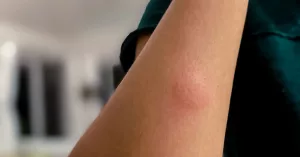
Even with repellents, you might still get itchy, uncomfortable mosquito bites.
Home remedies for bites include applying apple cider vinegar to the area. A slice of raw onion or a piece of fresh garlic placed on the bite can also relieve symptoms and help prevent infection. Over-the-counter remedies like calamine lotion or hydrocortisone cream can provide relief as well.
If you develop signs of infection or an allergic reaction from multiple bites, monitor your symptoms and contact your physician. Warning signs include:
- An elevated temperature
- Pus or bleeding at the bite site
- Persistent scabs that won’t heal
FAQs about mosquito repellents
How should you apply repellents to stay bite-free? Knowing the proper application for skin and clothing improves effectiveness.
How often should you reapply a repellent?
It varies. The EPA advises following label instructions for how much to use and reapplication timing. Consider factors such as:
- Water exposure (for example, swimming)
- Exercise and perspiration
- Ambient outdoor temperature
Reapplying according to package directions helps ensure ongoing protection.
What clothing offers the best protection?
Mosquitoes can bite through tight garments like leggings or yoga pants. Health experts suggest wearing loose-fitting clothing that covers arms and legs for better defense.
You can also treat clothing with permethrin or purchase items pre-treated with permethrin.
Permethrin is for fabrics only and should not be applied to the skin, so follow package directions closely and limit treatment to clothing, boots, socks, hats, and other wearable items.
What else reduces mosquito bite risk?
Beyond repellents, timely reapplication, and appropriate clothing, other measures can lower your risk of bites:
- Spend time in screened enclosures rather than open-air spaces. Repair any torn screens to prevent gaps.
- Use air conditioning instead of opening windows when possible to stay cool.
- Eliminate standing water around your property. Mosquitoes lay eggs in still water, so empty, scrub, or discard items like buckets, kiddie pools, pots, trash cans, and birdbaths.
Avoid being outside during peak mosquito activity between dusk and dawn.
Takeaway
Research supports that many natural ingredients can effectively repel mosquitoes. This offers a safer option for those wanting to limit exposure to synthetic chemicals, particularly children and pregnant people.
Trying different ingredients to blend a personalized, all-natural mosquito repellent can be an enjoyable and practical way to protect yourself from bites.




















Leave a Reply
You must be logged in to post a comment.