

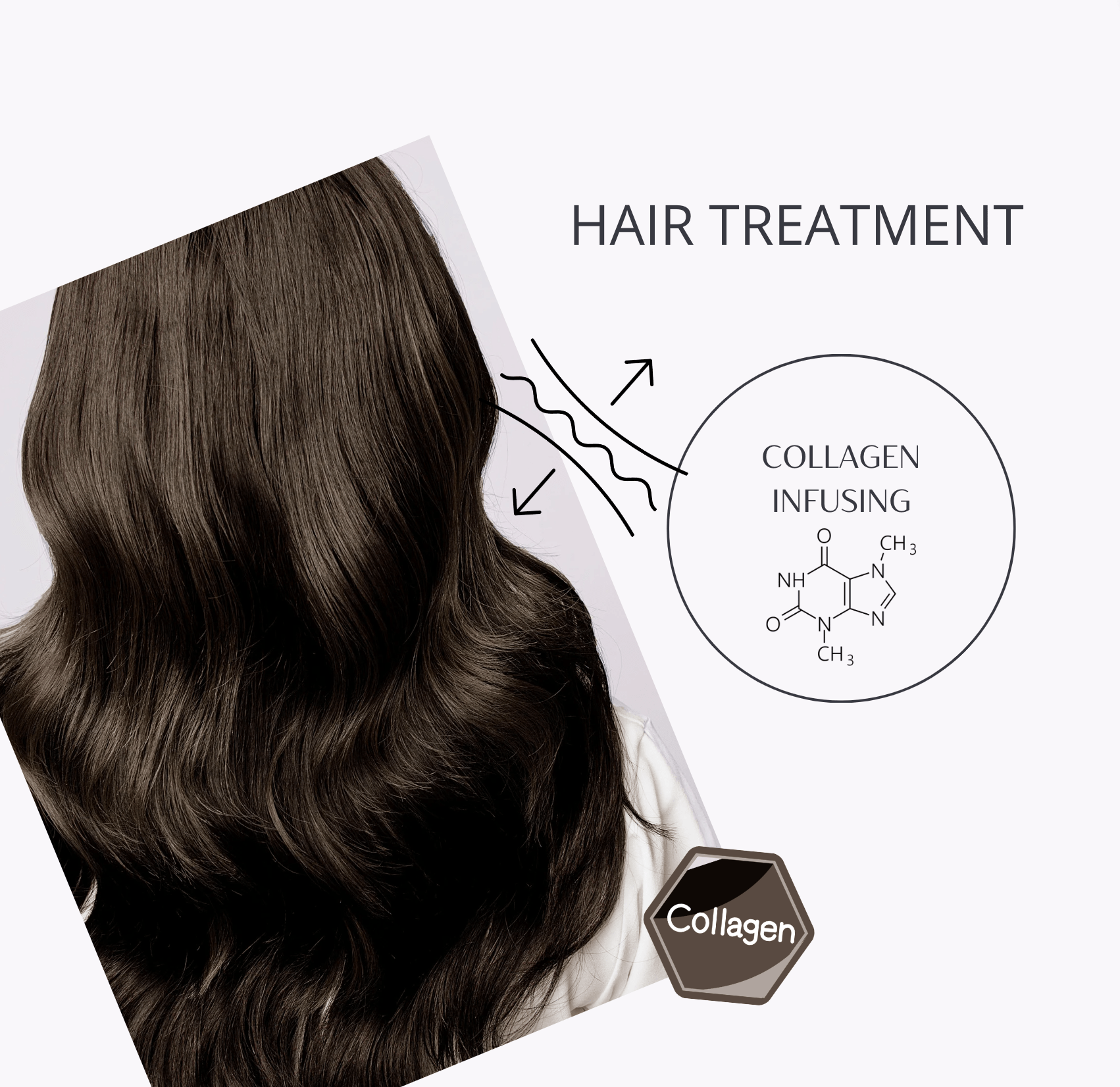
Collagen could support healthier hair by supplying amino acids and protecting hair follicles from damage. It may also help reduce thinning and the onset of graying.
Collagen is the most plentiful protein in the body and contributes to the structure of tendons, ligaments, and skin (1).
Your body synthesizes collagen naturally, but you can also obtain it from foods and supplements like bone broth.
It may provide several health advantages, including supporting strong, healthy hair.
Below are 5 evidence-based mechanisms by which collagen might benefit your hair.
1. Supplies Amino Acids Required to Form Hair
Hair is mainly composed of the protein keratin.
Your body needs several amino acids to assemble keratin — some of which are present in collagen (2, 3).
When you eat collagen and other proteins, they are broken down into amino acids that are then reused to synthesize new proteins and compounds (4).
There are 11 nonessential amino acids that your body can produce and 9 essential ones you must get from food. Collagen is largely composed of three nonessential amino acids: proline, glycine, and hydroxyproline (1, 5, 6).
Proline also contributes substantially to keratin. Thus, consuming collagen rich in proline should provide the raw materials needed for hair formation (2).
That said, human trials examining collagen’s direct effect on hair growth are sparse, so it’s unclear whether supplemental collagen actually stimulates hair growth.
Summary: Collagen supplies amino acids that can be used to make keratin, the protein in hair. However, human studies testing collagen for hair growth are limited.
2. May Protect Hair Follicles From Damage
Collagen can function as an antioxidant and counteract damage caused by free radicals.
Free radicals form in the body from stress, pollution, smoking, poor diet, alcohol, and other environmental factors. Excessive free radicals can damage cells, proteins, and DNA (7).
Evidence indicates free radicals may harm hair follicles. Because antioxidant defenses decline with age, older people are particularly vulnerable to follicle damage (8).
To combat free radicals and support hair health, antioxidants are necessary.
Several in vitro studies have found that collagen — notably derived from fish scales — can display significant antioxidant activity (9, 10, 11).
One experiment reported that marine collagen neutralized four types of free radicals, while another suggested it might be a stronger antioxidant than a well-known tea-derived compound (10, 11).
Keep in mind these findings come from lab studies on isolated cells; whether collagen exerts similar antioxidant effects in the human body remains uncertain.
Summary: Free radicals can damage hair follicles. Collagen might act as an antioxidant to counteract free radicals and protect hair, but human data are limited.
3. Could Reduce Age-Related Hair Thinning
Collagen constitutes about 70% of the dermis, the skin layer that houses the root of each hair (12).
Specifically, collagen contributes to the dermis’s strength and elasticity. As you age, collagen production and skin cell renewal slow down. This decline may be a factor in why hair thins over time (13, 14, 15, 16).
Therefore, supplying your body with collagen might help sustain a healthy dermis and limit hair thinning.
In one eight-week trial involving 69 women aged 35–55, daily collagen supplementation significantly improved skin elasticity versus placebo (17).
Another 12-week trial of over 1,000 adults found daily collagen increased skin collagen content and reduced signs of skin aging (18).
Because hair emerges from the skin, collagen’s potential to combat skin aging might help hair growth and decrease thinning. Still, direct studies on collagen’s effects on hair thinning are not available.
Summary: Collagen supports the skin layer that contains hair roots, so it might help prevent age-related thinning — however, direct research on hair-specific outcomes is lacking.
4. Might Slow the Onset of Graying
Through its antioxidant actions, collagen may help protect pigment-producing cells and slow graying.
Genetics largely determines age-related graying, but oxidative damage to the cells that produce hair pigment can also contribute (19).
Over time, melanocyte cells that generate melanin (the pigment giving hair its color) naturally decrease. Free radicals from poor nutrition, stress, and environmental toxins can also harm these pigment-producing cells (20).
Without adequate antioxidant protection, hair can begin to gray. A lab study showed that gray hair follicles had much lower antioxidant activity than pigmented follicles (20, 21).
Because collagen has shown free radical–fighting activity in test-tube studies, it might theoretically protect melanin-producing cells and delay or reduce graying (9, 10).
Nonetheless, evidence for collagen’s antioxidant effects in humans is still insufficient.
Summary: Oxidative damage to pigment cells can accelerate graying. Because collagen can act as an antioxidant, it may help protect these cells and slow graying.
5. Simple to Incorporate Into Your Diet
Collagen can be added to your diet through food sources or supplements.
As a component of connective tissue in animals, collagen is present in the skin, bones, and muscle of chicken, beef, pork, and fish.
Bone broth contains collagen and gelatin (a cooked form of collagen). You can drink bone broth on its own or use it as a soup base (22).
Eating foods rich in vitamin C may help your body produce collagen naturally. Good sources include oranges, bell peppers, Brussels sprouts, and strawberries (23).
Collagen is also widely available as supplements in pill or powder form. Most supplements are hydrolyzed, meaning the collagen is pre-broken down and easier to absorb (24).
Collagen powder typically has little taste or smell and can be mixed into smoothies, coffee, or other hot and cold beverages. Flavored options are available too.
Research to date suggests collagen supplements are generally safe for most people. Some users report an aftertaste, stomach upset, or heartburn (25).
Summary: Collagen is found in foods like bone broth and animal meats, including skin. Supplements are also an option, many containing hydrolyzed collagen for easier absorption.
The Bottom Line
Collagen may support healthy hair through multiple mechanisms.
It provides amino acids that can be used to form hair proteins, may strengthen the skin that houses hair roots, and could protect follicles and pigment cells from damage.
However, studies directly examining collagen’s effects on human hair are limited.
If you want to try collagen for hair support, consider bone broth or supplements that can be stirred into foods and drinks.
Collagen supplements are available at many stores or online.




















Leave a Reply
You must be logged in to post a comment.