

What Is a Height and Weight Chart?
A height and weight chart is a clinical reference tool used to evaluate whether an individual’s weight aligns appropriately with their height. Healthcare professionals rely on these standardized charts to track and assess:
- childhood growth and development
- weight management
- weight loss
During a routine medical visit, your healthcare provider will typically record your height and weight. These values are then compared against established reference ranges to determine whether you fall within a normal weight category for your height, age, and gender.

Understanding your measurements is important, and many people also want to know How to measure height in feet accurately before a checkup. Learning How to measure height in feet at home can help you monitor changes between appointments and better understand how height correlates with healthy weight ranges.
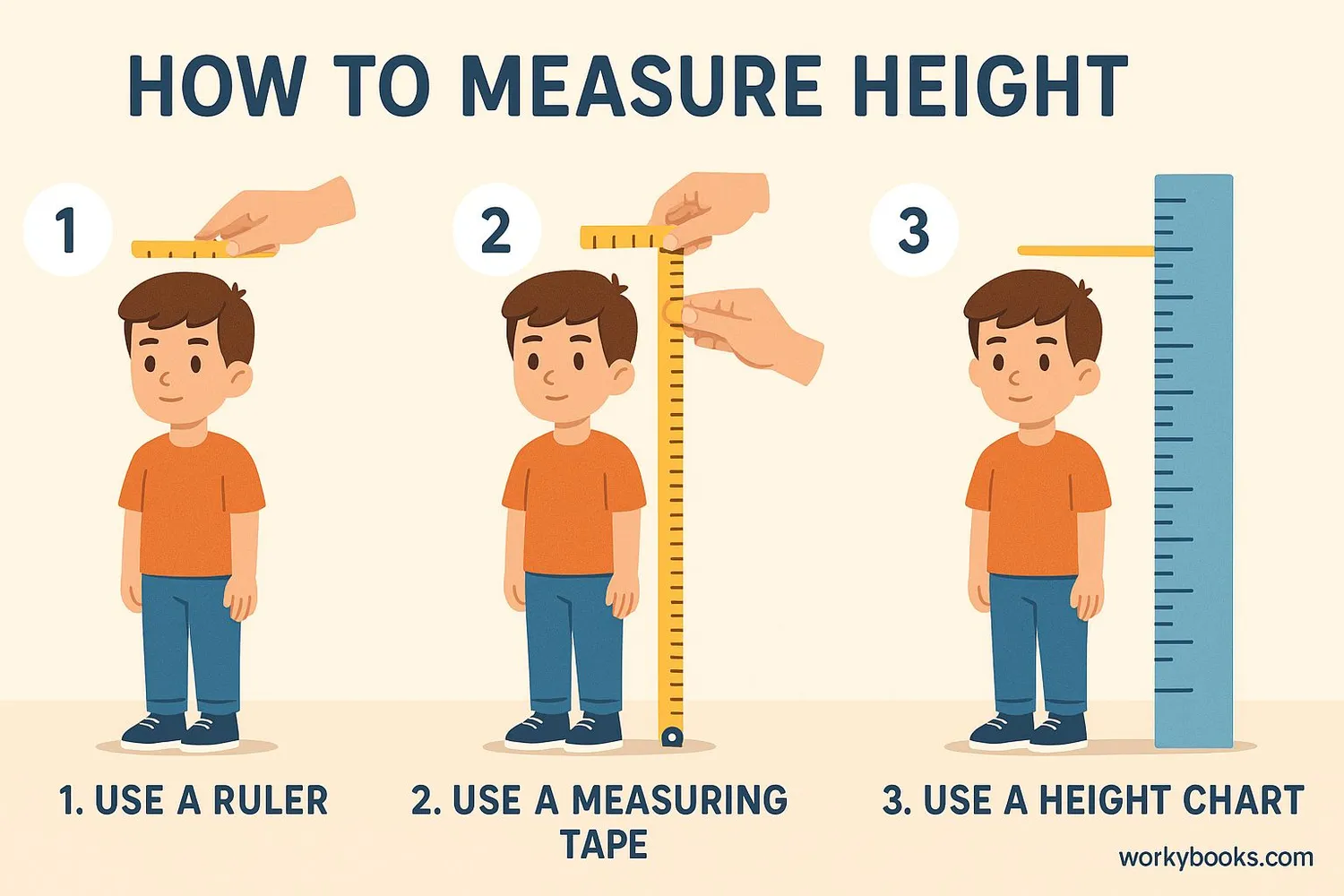
Keep in mind that these charts represent only one component of a comprehensive health evaluation. A single measurement or number cannot define overall health, and results should always be interpreted within the broader context of lifestyle, medical history, and body composition.
What Are the Types of Height and Weight Charts?
Healthcare providers generally use three primary types of charts to evaluate height and weight measurements in both children and adults.
Head circumference
This growth chart is specifically designed for children up to 36 months old. During assessment, a healthcare provider measures around the largest part of the child’s head. In most cases, normal height and weight measurements closely correspond with a typical head circumference.
If a child’s head appears significantly smaller than expected for their height, it may suggest delayed brain development. Conversely, a disproportionately large head compared to body size can indicate fluid retention in the brain. Early detection through regular monitoring allows pediatricians to investigate concerns promptly and provide appropriate care.
Body mass index (BMI)
A BMI chart is one of the most frequently used tools for assessing height and weight relationships. Medical professionals apply this screening method to individuals beginning at age 2. Its primary purpose is to determine whether a person falls within a healthy weight range for their height, or if they are classified as underweight, overweight, or obese.
According to the Centers for Disease Control and Prevention (CDC), BMI categories are defined as follows:
- 18.5 or less: underweight
- 18.5 to 24.9: healthy weight range
- 25.0 to 29.9: overweight
- 30.0 or higher: obese
BMI is calculated using one of two formulas, depending on the measurement units used for height and weight:
- pounds and inches: weight (pounds) divided by [height (inches)] squared, then multiplied by 703
- kilograms and meters: weight (kilograms) divided by [height (meters)] squared

Accurate measurement is essential for reliable BMI results. If you are unsure about your exact height, learning How to measure height in feet at home using a wall, flat surface, and measuring tape can improve the accuracy of your calculation. Even small errors in height measurement can significantly affect BMI outcomes.
Waist circumference
Waist circumference is often evaluated alongside BMI to provide additional insight into body fat distribution. The underlying principle is that a larger waist measurement may reflect excess abdominal fat, which is associated with increased health risks. According to the CDC, a healthy waist measurement is less than 35 inches for non-pregnant women and less than 40 inches for men.
Because abdominal fat is closely linked with metabolic risk, tracking waist size in combination with BMI offers a more comprehensive understanding of overall health status.
What Do the Measurements Mean?
Head circumference, height, and weight measurements play a vital role in tracking a child’s healthy growth pattern. Pediatricians plot these values on standardized growth charts that compare your child’s measurements with the average height and weight for children of the same age and gender.
These comparisons are expressed as percentiles. The 50th percentile represents the average for a particular age group. Measurements above the 50th percentile are considered above average, while those below the 50th percentile are below average.
Although percentiles are useful indicators of development, it is essential to interpret them realistically. For example, if your child is above average weight for their height, lifestyle factors such as limited physical activity or an unbalanced diet may contribute.
On the other hand, measurements that fall significantly below average may suggest undernourishment, though this is uncommon in the United States. Discuss any concerns with your healthcare provider, as genetics, hormonal influences, and overall health can also affect growth patterns.
Once individuals reach full adult height, BMI assessments shift their focus toward weight management rather than growth. Adults whose BMI falls above the normal range are often advised to reduce weight. This recommendation also applies to men and non-pregnant women with elevated waist circumference measurements. Even modest weight reduction can lower the risk of heart disease and type 2 diabetes.
Healthcare providers monitor children and adults in the obese BMI category especially closely. Obesity is considered an epidemic and significantly increases the likelihood of serious health conditions. If dietary modifications and increased physical activity do not result in sufficient weight reduction, a healthcare provider may discuss weight loss medications or bariatric surgery as potential treatment options.
What Are the Drawbacks of Height and Weight Charts?
Height and weight charts are widely used screening tools that can help identify potential health concerns. However, while numerical ranges provide useful guidance, there is no universal standard that applies perfectly to every individual. The CDC emphasizes that BMI is a screening tool and should not be used as the sole diagnostic method.
For example, BMI does not distinguish between muscle and fat mass, which means highly athletic individuals may appear overweight despite having low body fat. Similarly, body composition changes with age, affecting how results should be interpreted.
If you calculate your measurements at home and find that they fall outside a typical range, consider scheduling an appointment with your healthcare provider. Learning How to measure height in feet at home accurately can minimize measurement errors, but professional evaluation ensures that any underlying health conditions are appropriately ruled out.
It is equally important to observe trends over time rather than focusing on a single data point. If your child’s height and weight measurements consistently shift significantly above or below a specific percentile, follow up with your pediatrician. Monitoring gradual changes provides more meaningful insight into overall health and development than one isolated reading.























Leave a Reply
You must be logged in to post a comment.