
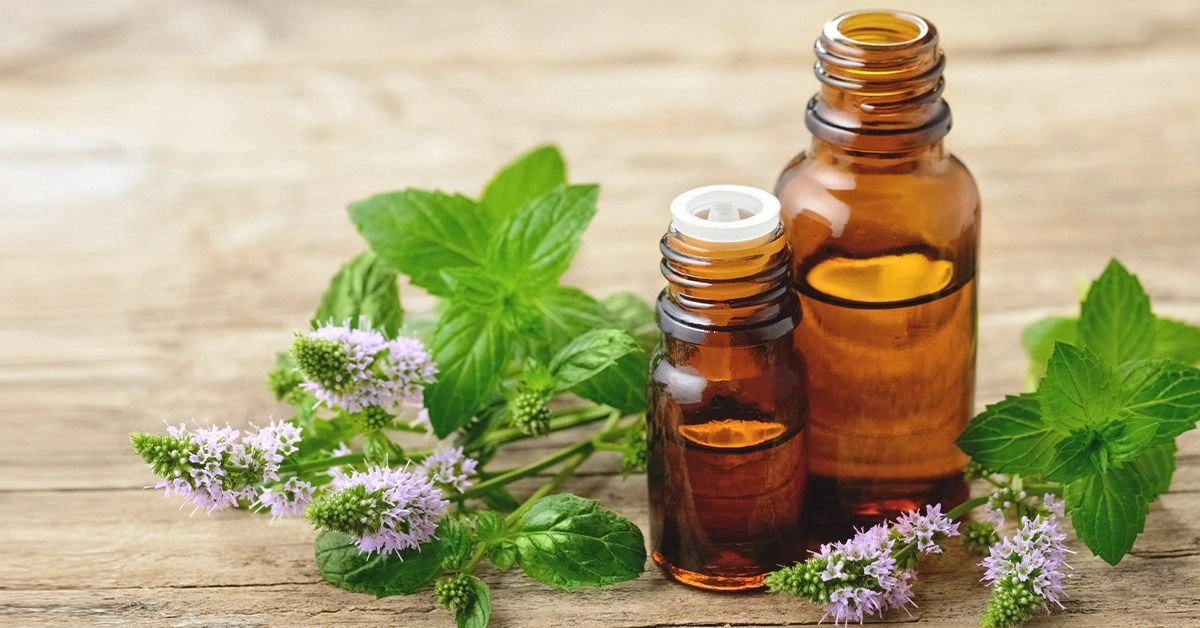
Peppermint oil may ease symptoms of irritable bowel syndrome and other digestive disorders. Different preparations might also help manage pain and offer benefits for skin and hair.
Although research points to potential health advantages, the FDA doesn’t oversee the purity or quality of essential oils. Consult a healthcare provider before beginning any essential-oil regimen, and investigate thequalityof the brand you choose. Always perform apatch testbefore using a new essential oil.
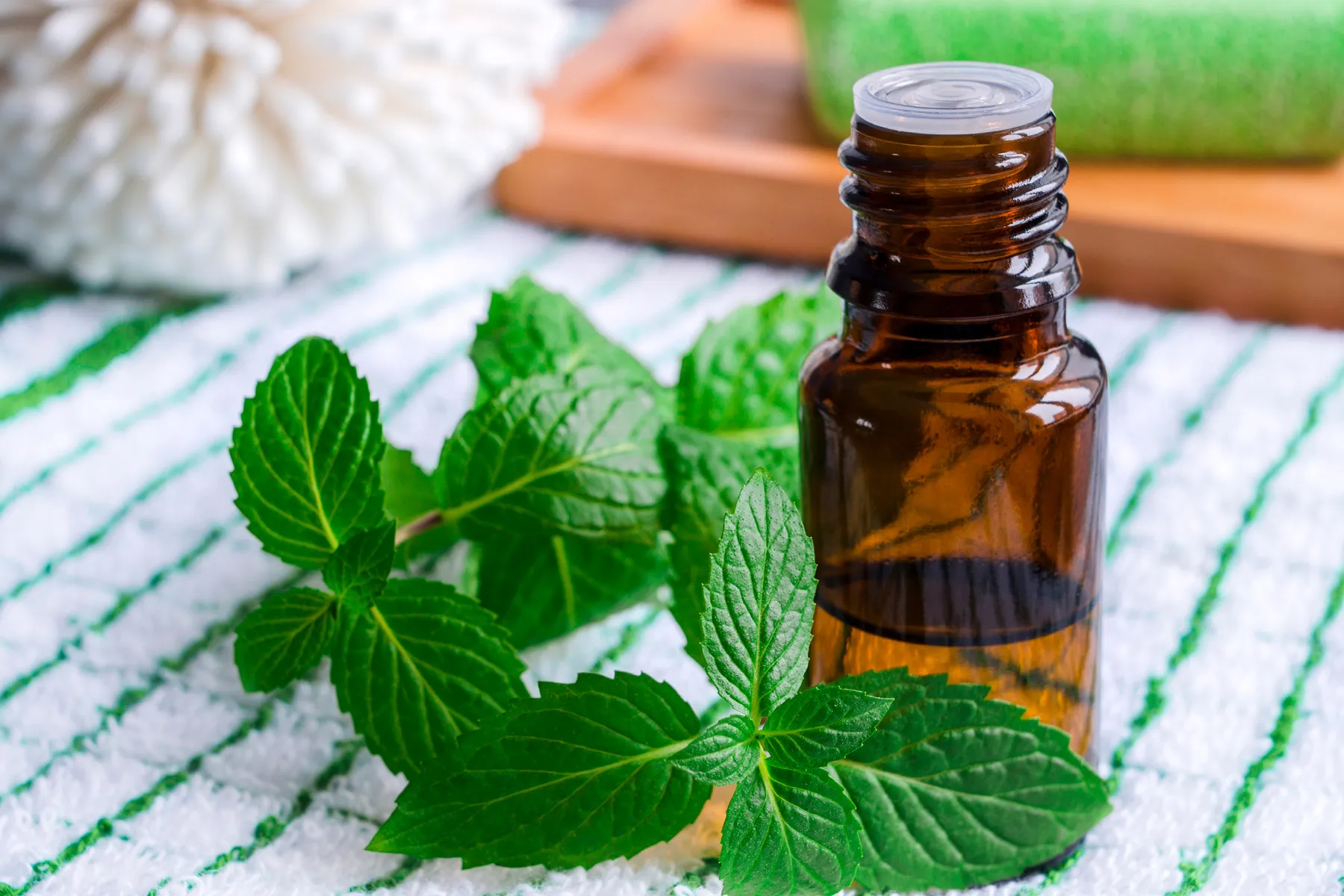
Peppermint is a fragrant herb in the mint family, a hybrid between spearmint and watermint. It grows naturally in parts of North America and Europe.
Peppermint essential oil is distilled from the plant’s leaves and is used for many purposes. It has a sharp, cool aroma and a corresponding brisk flavor — similar to the cooling sensation you experience after consuming peppermint-flavored items.
The primary constituents of peppermint oil are menthol and menthone, though it contains numerous other compounds as well.
Scientific name
Peppermint oil is derived from the peppermint plant, Mentha x piperita.
Continue reading to learn about peppermint oil’s various forms, uses, and possible health effects.
Peppermint oil uses
Peppermint oil serves a wide range of purposes, including:
- a treatment for conditions such as irritable bowel syndrome (IBS), nausea, and other digestive complaints, plus the common cold and headaches
- topical relief for itching, muscle soreness, and headache
- a flavoring agent in foods and products like mouthwash
- a fresh, pleasant fragrance in soaps and cosmetic items
Ways to use peppermint oil
There are several application methods for peppermint oil. It may be:
- applied topically (to the skin)
- diffused as an essential oil
- taken orally in tablet or capsule form
- applied intranasally (placing droplets inside the nose)
Be cautious about ingesting peppermint essential oil directly. Always consult a healthcare professional before swallowing peppermint oil or applying it to the skin.
Peppermint oil benefits
Uses of mint for medicinal purposes date back to Ancient Egypt, Greece, and Rome. What does current research reveal about peppermint oil’s benefits?
While some advantages are based on anecdotal reports, scientific study is ongoing. Below is a summary of research into several potential benefits.
For IBS
A significant portion of peppermint oil research has centered on IBS, a chronic gastrointestinal disorder that can cause:
- abdominal pain
- diarrhea
- constipation
A 2019 review of 12 trials evaluated peppermint oil capsules versus placebo for IBS. The analysis showed peppermint oil improved abdominal pain and other IBS symptoms.
The precise mechanisms behind peppermint oil’s effects on IBS and other GI issues aren’t fully understood. Some possible actions include:
- relaxing smooth muscle in the gastrointestinal tract
- exerting anti-inflammatory effects
- modifying the composition of gut bacteria
- reducing pain perception in the GI tract
The takeaway
Peppermint oil may lessen or alleviate symptoms of IBS.
For other GI conditions
Peppermint or menthol — one of its key constituents — combined with caraway has been used to ease symptoms of functional dyspepsia, which involves bloating, indigestion, and upper abdominal pain.
A 2019 review summarized studies of peppermint, menthol, and caraway; overall, that combination looks promising for reducing functional dyspepsia symptoms.
Another review of herbal remedies for pediatric GI disorders found peppermint oil effective at decreasing the duration, frequency, and severity of abdominal pain compared with placebo.
However, peppermint oil did not outperform simethicone drops for treating colic.
The takeaway
Peppermint oil may help ease abdominal pain stemming from gastrointestinal problems.
For nausea
Nausea arises for many reasons, often after surgery. A small 2016 study investigated inhaled peppermint oil for postoperative nausea and found participants reported lower nausea after inhalation.
By contrast, a 2018 review of aromatherapy studies for postoperative nausea, which included four trials of peppermint oil versus placebo, concluded inhaled peppermint oil had little to no impact on nausea severity post-surgery.
Nausea and vomiting are also common in early pregnancy. A 2018 study of 56 pregnant participants found no meaningful difference between peppermint oil aromatherapy and placebo for nausea and vomiting.
Researchers have also explored peppermint oil for chemotherapy-related nausea. A 2021 study of 80 patients applied one drop of peppermint oil between the upper lip and nose three times daily for five days after chemotherapy and reported reductions in the severity and frequency of nausea and vomiting.
The takeaway
Small studies show mixed outcomes on inhaled peppermint oil for nausea. In some settings it may help; in others, results are inconclusive.
For pain
Menthol and related oils have historically been used for pain relief from tension headaches, migraines, and other sources.
A 2019 study comparing peppermint oil and lidocaine nasal drops for migraines found headache intensity declined in 40% of patients in both groups. When peppermint oil drops were administered intranasally at an angle, they reduced headache frequency and pain similarly to lidocaine.
Another study evaluated peppermint oil tablets in people with swallowing difficulties and noncardiac chest pain; over half reported symptom improvement.
The takeaway
Different peppermint oil preparations or menthol may provide headache and migraine relief when used intranasally. In tablet form, peppermint oil can reduce discomfort for some with swallowing issues.
For skin and hair
Peppermint oil is commonly added to cosmetic products, but research on topical benefits for skin and hair is limited.
A small 2016 study evaluated a 1 percent peppermint oil solution for chronic itching and found improvements in itch duration and severity.
A 2014 animal study in mice compared a 3 percent peppermint oil solution with minoxidil (Rogaine) and controls. After four weeks the peppermint-treated group showed thicker, longer hair similar to minoxidil results.
In a 2016 study, topical menthol increased skin blood flow, which could support hair growth by improving scalp circulation.
The takeaway
Peppermint oil may help relieve itching, and preliminary data suggest it could promote hair growth, although more human research is needed.
Against bacteria and yeast
Peppermint oil demonstrates mild antimicrobial activity. Multiple studies have tested its effectiveness against bacteria and fungi with mixed outcomes.
A 2019 study noted peppermint oil’s antibacterial effects against strains such as:
- Staphylococcus aureus
- Escherichia coli
- Klebsiella pneumoniae
- Proteus mirabilis
- Pseudomonas aeruginosa
- Acinetobacter baumannii
These findings suggest peppermint oil may have future therapeutic potential for certain infections, but further investigation is required.
Antimicrobial activity appears to depend on the specific microorganism. Another study found peppermint oil had some activity but was less potent than other essential oils against 20 strains of Streptococcus suis.
A 2017 in vitro study tested essential oils against various Candida species and reported that peppermint oil exhibited antifungal effects, but it was the least active of the oils tested.
The takeaway
Peppermint oil can be active against some bacteria and shows limited antifungal effects against certain Candida strains, but results are inconsistent.
About safety and side effects
The Food and Drug Administration (FDA) advises using essential oils only as directed by the manufacturer.
Essential oils are generally not intended for oral ingestion. Oral consumption of peppermint extract may cause:
- heartburn
- nausea
- vomiting
If you’re adding peppermint flavor to food, choose a culinary-grade peppermint extract.
Aromatherapy and topical use of diluted peppermint oil can provide benefits with relatively low risk, but remember that peppermint aromatherapy can be toxic to pets. Before using aromatherapy, consider the safety for:
- children
- pets
- pregnant individuals
In very large doses peppermint oil can be toxic due to compounds like pulegone. Cosmetic formulations are intended to contain 1 percent or less pulegone, though levels may vary.
Because peppermint essential oil is highly concentrated, it must be diluted before topical application. Only a few drops are typically mixed into an ounce of carrier oil.
Topical application can sometimes cause irritation or rash. If you’re worried about a skin reaction, perform a patch test on a small area first.
Possible drug interactions with peppermint oil
Check with a doctor or pharmacist before using supplements, particularly if you take prescription or over-the-counter medications.
Peppermint oil may alter how quickly the body metabolizes cyclosporine — a drug used to prevent organ rejection — potentially allowing it to remain in the bloodstream longer.
Medications metabolized by liver enzymes might be affected by peppermint oil; these include:
- cyclosporine
- simvastatin
- lovastatin
- ketoconazole
Speak with a clinician before using peppermint oil if you take drugs that reduce stomach acid, such as:
- antacids
- H2 blockers like famotidine
- proton pump inhibitors such as omeprazole
Who shouldn’t use peppermint oil?
Individuals who should avoid peppermint oil include:
- People with G6PD deficiency. Those with this enzyme deficiency should not use peppermint extract or aromatherapy oils.
- People taking certain medications. Peppermint aromatherapy can inhibit the enzyme CYP3A4, which metabolizes many drugs. Discuss use with your doctor if you take prescription medications.
- Children and infants. Avoid applying peppermint oil to the face or chest of babies and young children because inhaled menthol can cause adverse effects.
Peppermint aromatherapy may also be hazardous to pets such as dogs and cats.
The takeaway
Peppermint oil comes from the peppermint plant and has been used to help with:
- gastrointestinal discomfort
- nausea
- pain
While some claimed benefits are anecdotal, research supports potential benefits for IBS, other digestive disorders, and certain types of pain relief.
Peppermint oil is generally safe when used correctly, but it can be toxic in very large amounts. Always dilute peppermint essential oil before topical use.
Discuss peppermint oil use with a healthcare professional and raise any questions or concerns you have. For a soothing, digestive-friendly ritual you might also consider peppermint tea as a complementary option.























Leave a Reply
You must be logged in to post a comment.