
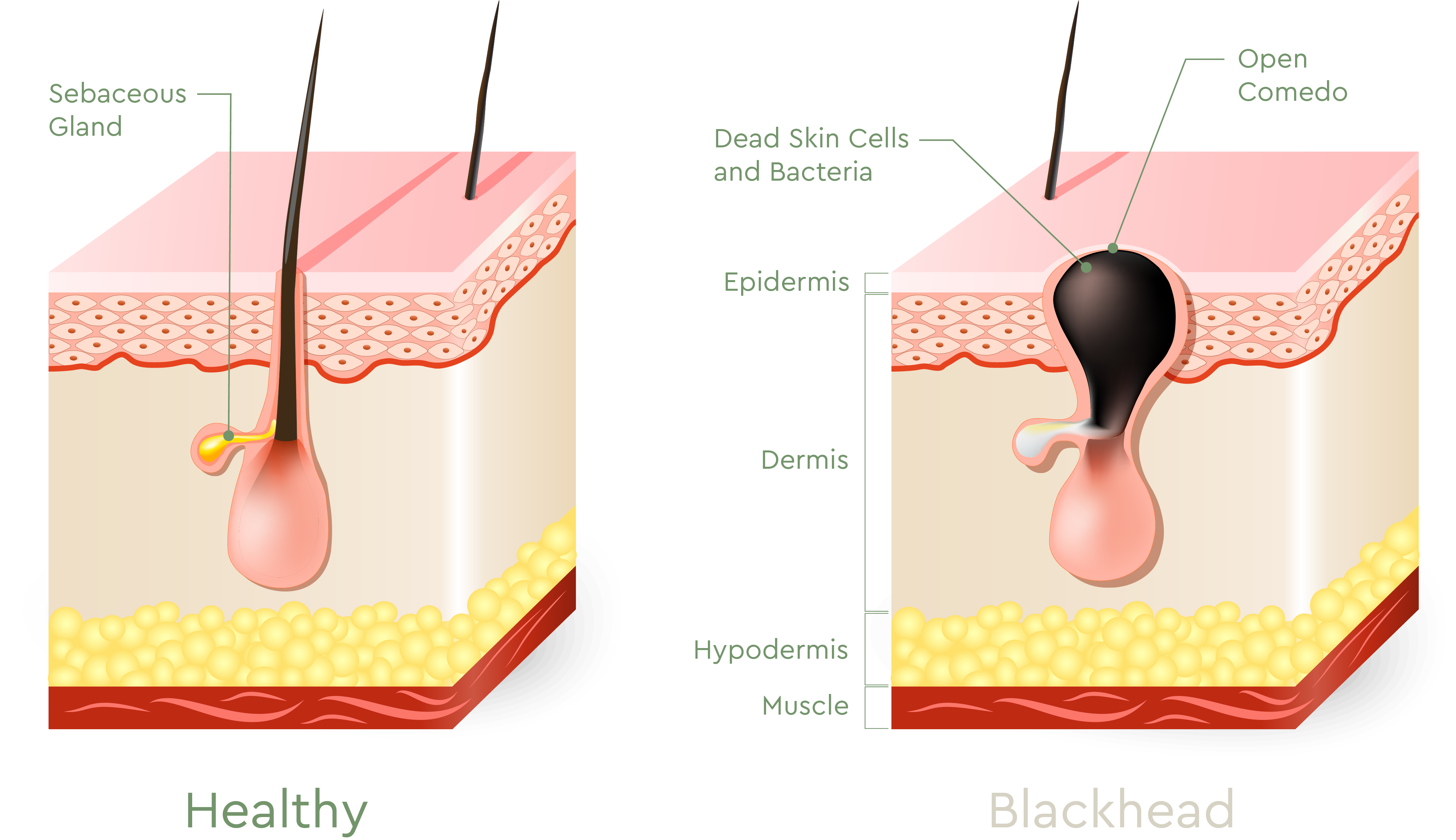
A blackhead develops when the opening of a hair follicle (pore) becomes clogged with a mix of dead skin cells and oil. This obstruction creates a small raised lesion called a comedo.
When the comedo is exposed to air, the trapped material oxidizes, darkens, and becomes a blackhead. If the comedo remains closed, it presents as a whitehead.
Blackheads most commonly appear on the face, but they can also show up on other body areas, such as the thighs, buttocks, and armpits.
Keep reading to understand why blackheads may develop on the inner thighs and what you can do to treat and prevent them.
Why do blackheads appear on my inner thighs?
Blackheads on the inner thighs often arise from a combination of:
- sweat
- skin oils
- surface dirt
- dead skin cells
Additionally, friction and chafing from snug jeans or leggings can contribute to their formation.
Treating and preventing blackheads on the inner thighs
Initial steps to prevent and manage blackheads include:
- maintaining good hygiene, such as washing the area regularly with a gentle, water-soluble liquid soap that has a low pH
- gently exfoliating to clear away dead skin cells
- wearing freshly laundered clothing
- avoiding tight garments that rub against the skin
- steering clear of fabrics that trap sweat, like polyester and vinyl
Your clinician or a dermatologist might suggest an over-the-counter topical product containing salicylic acid or retinoids to help clear blackheads. You can find a local dermatologist using tools like HealthEH FindCare.
Could it be hidradenitis suppurativa?
If you notice blackheads on your inner thighs and buttocks, they could indicate hidradenitis suppurativa (HS).
HS is a chronic skin condition that commonly affects areas where skin rubs together, including:
- inner thighs
- buttocks
- armpits

Hidradenitis suppurativa symptoms
HS usually appears in regions of skin-on-skin contact. Common signs of HS include:
- Blackheads: Small bumps that often occur in pairs and create tiny pitted areas in the skin.
- Small, painful nodules: These pea-sized lumps arise in zones with hair follicles, sweat and oil glands, and where skin rubs together.
- Sinus tracts or tunnels: In long-standing HS, channels connecting nodules can develop beneath the skin. These heal slowly and may discharge pus.
Hidradenitis suppurativa treatment
There is no outright cure for HS at this time. A healthcare professional or dermatologist will recommend a treatment plan that may combine medications and surgical options.
Medication
Medications commonly used for HS include:
- Topical antibiotics: such as gentamicin (Gentak) and clindamycin (Cleocin)
- Oral antibiotics: such as clindamycin, doxycycline (Doryx), and rifampin (Rifadin)
- Biologic agents targeting TNF: such as adalimumab (Humira)
Surgery
In some situations, a clinician may advise surgical intervention. Surgical approaches for HS can include:
- Unroofing: Surgically opening the skin to expose and clear the tunnels.
- Limited unroofing (punch debridement): Removal of a single problematic nodule.
- Electrosurgery: Removal of damaged tissue using electrical current.
- Laser therapy: Treatment to remove or reduce skin lesions.
- Wide excision: Surgically removing all affected skin, often followed by a skin graft.
Takeaway
While blackheads are most frequently seen on the face, they can also occur on other areas of the body, including the inner thighs, buttocks, and armpits.
Preventing and treating blackheads on inner thighs follows similar principles: regular bathing, gentle exfoliation, wearing clean clothes, and avoiding tight garments and sweat-trapping fabrics.
Blackheads on the buttocks and inner thighs may sometimes signal hidradenitis suppurativa.
If you experience additional signs like painful, pea-sized nodules or tunnels under the skin linking these nodules, consult your healthcare provider or a dermatologist for evaluation and a tailored treatment plan.












Leave a Reply
You must be logged in to post a comment.