

Dark elbows happen when the skin on your elbows becomes noticeably darker than the surrounding arm tissue. Multiple factors can contribute, but there are practical measures you can take at home to reduce their appearance.

Common causes of dark elbows include:
- a buildup of dead skin cells
- hyperpigmentation worsened by sun exposure
- use of certain contraceptive pills
- melasma (darkened patches) following pregnancy
- freckles and age-related spots
- skin disorders such as psoriasis or eczema
- inflammation from a past injury
- phytophotodermatitis — a skin reaction that can occur when sunlight interacts with citrus juices or other plant compounds
Although these triggers can affect any skin area, elbows are often more prone because they receive less frequent care than more noticeable regions like the face.
Individuals with inherently darker skin tones may also be at higher risk for developing darker elbows. For more related information, you might find helpful resources on dark eyelids.
At-home remedies to brighten
Home solutions are often preferred for lightening dark elbows since they’re typically budget-friendly and carry fewer side effects than medicated options. Consider trying one or several of these approaches:
Aloe vera
A 2012 study indicated aloe vera may have skin-lightening effects. This is related to alpha-adrenergic receptor activity when the gel is applied topically. Use aloe-containing gels or lotions and apply up to twice daily.
Baking soda
Baking soda acts as both an exfoliant and a mild lightening agent that can help with dark elbows. Mix a teaspoon at a time with water in a small bowl, adding until you achieve the amount needed. Apply the paste directly to your elbows.
Treat it like a mask: let it sit for about 10–15 minutes, then rinse off. Repeat this twice weekly. Avoid using baking soda on facial skin.
Oatmeal and yogurt
Oatmeal and yogurt are calming and moisturizing, making them suitable for dry, rough elbow skin. Use them combined as a mask.
Mix equal parts oatmeal and yogurt until smooth, then spread over your elbows. Leave for up to 20 minutes before rinsing.
Turmeric
Turmeric comes from a root related to ginger and has been used for various skin concerns. The National Center for Complementary and Integrative Health notes turmeric powder may benefit certain skin issues when applied as a paste.
Blend turmeric powder with water into a paste and apply to the elbows. Keep it on for up to 10 minutes, then wash off.
Long-term skin care
Beyond spot treatments, maintaining a consistent skin-care routine will support long-term improvement. Daily habits like cleansing, hydrating, and sun protection can gradually reduce the visibility of darkened patches while keeping skin healthy.
Cleanse and moisturize
Make a habit of washing your elbows during showers or baths, and always follow with a moisturizer.
For extra hydration, consider applying a heavier emollient over your regular body lotion, such as coconut oil or aloe vera gel.
The American Academy of Dermatology highlights that ingredients like soy, lignin, ellagic acid, and niacinamide (vitamin B3) can help lighten skin.
Exfoliate the elbows
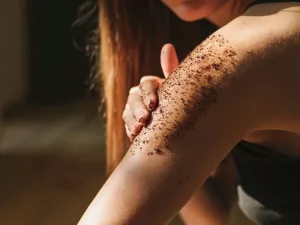
To prevent dead skin buildup, exfoliate your elbows once or twice weekly.
You can use an exfoliating body wash or a sugar scrub, massaging in smooth, circular strokes. Avoid aggressive scrubbing — excessive friction can irritate the skin and make discoloration more apparent.
Wear sunscreen
Daily sunscreen use is important. If your arms are exposed, apply a broad-spectrum SPF at least 15 minutes before going outside; the American Academy of Dermatology recommends SPF 30 or higher.
Be mindful to cover the elbows well. Because the skin stretches when you bend your elbow, you may need to reapply sunscreen more often in that area.
Remember, sunscreen not only shields skin from damage but also helps maintain the results of any lightening treatments. The American Osteopathic College of Dermatology warns that a single day of unprotected sun exposure can negate months of treatment progress.
Over-the-counter and clinical options
If home measures and improved skin care don’t yield enough change, stronger interventions may be necessary to treat the underlying hyperpigmentation.
Over-the-counter lightening creams are a logical next step; look for formulations that include lipohydroxy acid, which can help reduce dark pigmentation.
However, OTC products can be costly relative to the quantity in each bottle, since you may need to cover a relatively large area, and improvement can take several weeks to months.
Potential side effects include:
- irritation
- skin peeling
- heightened sensitivity to sunlight
Some people may develop allergic responses to components like licorice extract or kojic acid. Discontinue use if you notice redness, a rash, or itching.
If OTC treatments are ineffective, prescription-strength lightening agents are available; consult a dermatologist about options such as hydroquinone or other clinical depigmenting products.
In more severe or resistant cases, laser therapy is another possibility, but it carries risks like scarring that could worsen the appearance of darkened elbows.
Conclusion
Dark elbows can be bothersome, and improvement often takes time. Still, a consistent skin-care regimen combined with home remedies or medicated products can help fade dark patches on the elbows.
If you don’t observe progress after a few months, see your dermatologist for a review of your treatment plan and additional recommendations tailored to your skin.














Leave a Reply
You must be logged in to post a comment.