

Key takeaways
- The Self-Administered Gerocognitive Exam (SAGE) test is a self-administered screening instrument created to spot early indications of mild cognitive impairment, which can signal the beginning of dementia or Alzheimer’s disease.
- Although the SAGE test can successfully flag potential cognitive problems, it is not a diagnostic tool and must be reviewed by a physician, who may suggest additional evaluations.
- When compared with other cognitive assessments such as the Mini-Mental State Examination (MMSE), the SAGE test is easier to access and may identify cognitive decline that progresses to dementia at an earlier stage.
As the years pass, it’s common to notice subtle shifts in memory and thinking. You may find it harder to retrieve certain details, misplace everyday items more frequently, or struggle to recall names and important dates as quickly as you once did.
For many older adults, these mild cognitive changes are a normal part of aging. However, concerns can arise about whether these symptoms point to something more serious, such as Alzheimer’s disease or another form of dementia. In this context, using a Dementia test online free can feel like a practical first step toward clarity and peace of mind.
The Self-Administered Gerocognitive Exam (SAGE) is a Dementia test online free designed to screen for early stage dementia. Developed by researchers at Ohio State University, this accessible tool can help detect cognitive concerns that may reflect an underlying medical condition requiring further evaluation.
Below, you’ll find comprehensive information on how the SAGE works, who may benefit from taking it, and what to expect from the process.

Who should take the SAGE test?
You might consider taking the SAGE if you have noticed persistent memory lapses or changes in thinking skills in yourself or someone close to you. The assessment is specifically designed to identify mild cognitive impairment (MCI), often regarded as one of the earliest warning signs of dementia.
Mild cognitive impairment involves a modest yet noticeable decline in cognitive abilities, particularly memory. Individuals with MCI may forget scheduled appointments, have difficulty keeping up with mortgage or bill payments, or struggle with tasks that previously felt routine.
Executive function can also be affected. This includes the capacity to organize tasks, follow multi-step instructions, make sound judgments, and plan ahead. Despite these challenges, MCI is typically mild enough that individuals remain independent and capable of managing most daily responsibilities.
It’s important to understand that MCI does not always progress to dementia or Alzheimer’s disease. In some cases, it may be linked to other treatable causes, such as vitamin deficiencies, thyroid disorders, sleep disturbances, or medication side effects. If you suspect that you or a loved one could be experiencing MCI, starting with a Dementia test online free like SAGE—or reviewing a Sample dementia test—can provide a helpful baseline before consulting a healthcare professional.
What are some of the questions on the SAGE test?
The SAGE begins with general questions about your background and overall health. From there, it includes a variety of cognitive tasks. You may be asked to identify images, group related objects into categories, or solve basic math problems. Other sections assess memory by requiring you to recall instructions or remember simple information, such as country or animal names.
The exam also evaluates visuospatial skills and executive function. One well-known component is the clock-drawing test, a classic dementia screening exercise. In this task, you draw the face of an analog clock and position the hands to indicate a specific time. This activity helps measure planning ability, spatial awareness, and comprehension.
To ensure accurate results, you should complete the SAGE independently. Avoid asking for help or using external resources. If a question seems unclear, do your best to answer it based on your understanding.
How to take the SAGE test
The SAGE is available for free online in multiple languages, making it widely accessible to diverse populations.
There are four distinct versions of the test in each language. While the specific questions vary slightly, all versions are considered equivalent in difficulty. You may select any version without affecting the validity of the screening.
To complete the traditional format, download the PDF file, open it on your computer, and print it out. You will need a pen or pencil to fill in your responses.
You can access the official file here: download the SAGE.
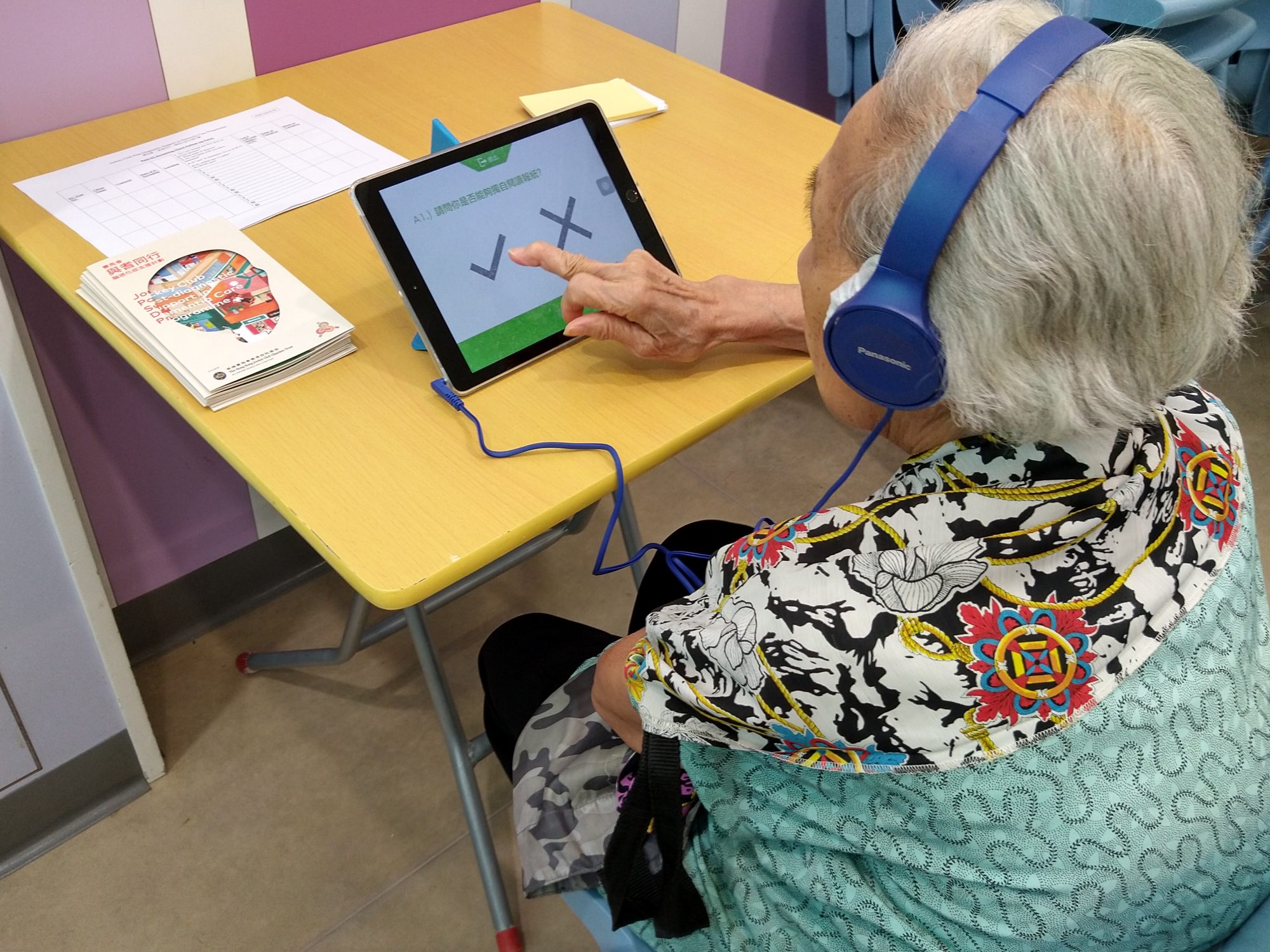
If printing is not an option, a digital version is also available through an app-based platform. A free trial may allow you to take the assessment at no cost initially, but be aware that charges could apply after the trial period ends.
How reliable is the SAGE test?
The SAGE was introduced in 2010. One of its developers, Douglas Scharre, conducted an initial study with fellow researchers to measure its accuracy in 254 older adult participants. Their findings showed that:
- The SAGE identified cognitive impairments in 79% of individuals who truly had cognitive impairments.
- The SAGE correctly showed no cognitive impairment in 95% of individuals who did not have cognitive impairments, indicating a false positive rate of 5%.
A subsequent 2014 study led by Scharre evaluated the SAGE in community-based environments, including independent living communities, senior centers, and assisted living facilities.
In that research, approximately 28% of 1,047 participants over age 50—whose average age was around 73—were identified as having cognitive impairments based on their test results.
For broader context, a 2023 systematic review analyzing 53 articles and involving 376,039 individuals worldwide found that 21.2% of adults between ages 64 and 87 living in nursing homes had mild cognitive impairment. These comparisons suggest that tools like the SAGE can play a valuable role in early cognitive screening across different settings.
How does the SAGE test compare to other cognitive tests?
The SAGE is effective at detecting cognitive changes that may signal early stage dementia. However, it’s essential to remember that it is not a diagnostic instrument. It cannot confirm Alzheimer’s disease or any other specific form of dementia. A formal diagnosis requires a comprehensive medical assessment, which may include neurological exams, laboratory testing, imaging studies, and detailed cognitive evaluations.
One major advantage of the SAGE is its accessibility. Unlike many cognitive screening tools, it does not require an in-office appointment to complete. This makes it an appealing first step for individuals seeking a Dementia test online free before scheduling a medical visit. Still, interpretation of the results should always be done by a healthcare professional.
The SAGE is often compared to the Mini-Mental State Examination (MMSE), a widely used screening tool that typically takes about 10 minutes to administer in clinical settings.
In a 2021 study, Scharre and colleagues compared SAGE and MMSE results over an 8-year period among 665 individuals attending a memory disorder clinic.
The researchers observed that changes in SAGE scores over time were able to predict cognitive impairments progressing to dementia approximately 6 months earlier than the MMSE. This suggests that SAGE may offer advantages in identifying subtle cognitive decline at an earlier stage.
How long does the SAGE test take?
Most people complete the SAGE in about 10 to 15 minutes. To use the paper version, you’ll need access to a printer, the downloaded test, and a pen or pencil.
For the most accurate results, take the assessment in a quiet setting without interruptions. Avoid distractions such as television, phone notifications, or conversations during the process.
When to contact a doctor
Once you’ve finished the test, bring the completed form to a physician for scoring and interpretation. A doctor can explain what your score means in the context of your overall health, medical history, and current symptoms.
If your results indicate possible cognitive decline, your healthcare provider may recommend additional evaluations, ongoing monitoring, or referral to a specialist. Early medical consultation is particularly important if memory problems are worsening, interfering with daily functioning, or accompanied by changes in mood, personality, or behavior.
Takeaway
The SAGE is a widely available Dementia test online free that screens for early cognitive decline. If you are concerned about changes in memory, reasoning, or problem-solving abilities—either for yourself or someone you care about—this assessment can serve as an informative starting point.
By detecting mild cognitive impairment, the test may highlight a condition that often precedes dementia. However, because MCI can stem from various causes, including potentially reversible conditions, a medical evaluation is essential for accurate diagnosis and management.
After completing the test, schedule an appointment with a doctor to review your score and discuss appropriate next steps. Early awareness and timely intervention can make a meaningful difference in long-term cognitive health and quality of life.






















Leave a Reply
You must be logged in to post a comment.