
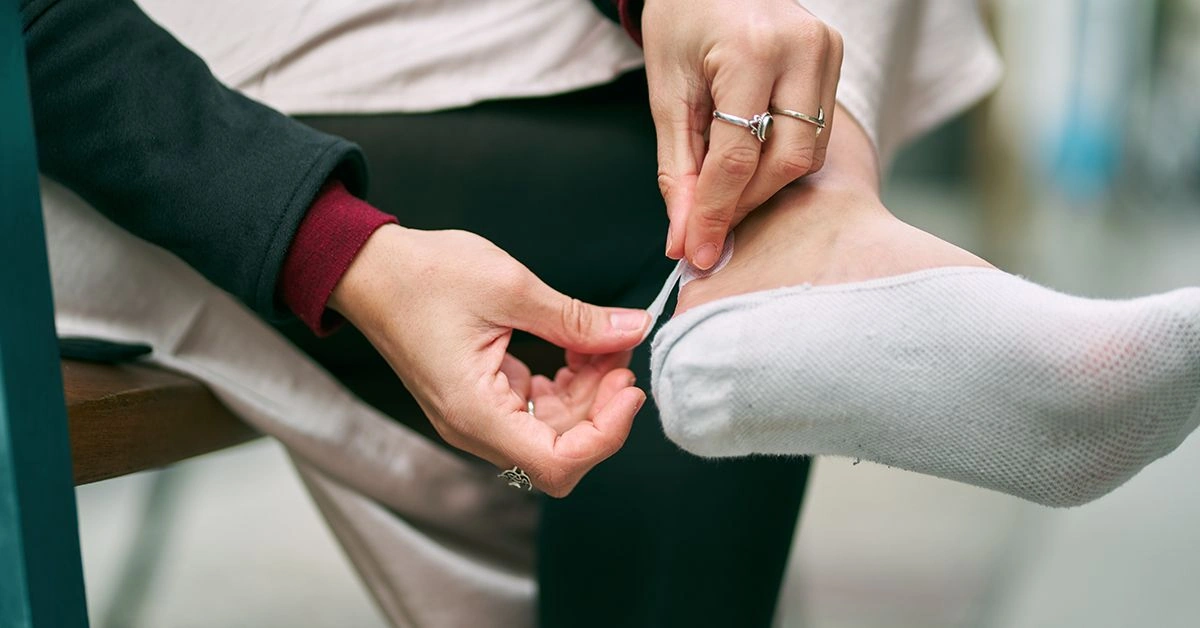
Certain lifestyle habits, such as wearing tight-fitting shoes, can lead to blisters. However, a range of medical conditions may also result in blister formation, including burns and infections like chickenpox, shingles, and impetigo.
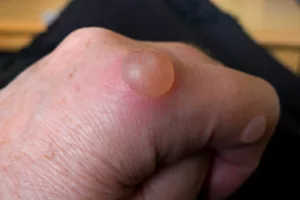
Blisters (vesicles) are elevated areas of skin that contain fluid. They may develop anywhere on the body, including the arms, feet, torso, or legs. In some cases, Water blisters on legs elderly adults experience can be related to friction, fragile skin, circulation problems, or underlying health issues that require closer evaluation.
Most blisters occur due to repeated friction between the skin and a rough surface. For example, a blister may form on your heel after wearing tight shoes or on your palm after yard work without protective gloves.
While blisters can be uncomfortable or painful, the majority resolve on their own within 1 week.
That said, unexplained or recurring blistering—especially Water blisters on legs elderly individuals develop without clear injury—may signal an underlying medical condition. In such cases, evaluation by a healthcare professional is important to determine the cause and appropriate treatment.
If you’re trying to better understand what different types of blisters look like, you may find these Water blisters on legs pictures helpful for comparison.
Below are 13 additional potential causes of blisters.
1. Herpes simplex
The herpes simplex virus causes painful blisters that may appear individually or in clusters. These blisters often release a clear yellow fluid before crusting over.
When they develop around the mouth, they’re known as cold sores. They’re most frequently caused by the HSV-1 virus, though HSV-2 may also be responsible.
When blisters form on the genitals, the condition is known as genital herpes. This is most commonly a sexually transmitted infection (STI) caused by HSV-2, although HSV-1 can also lead to genital herpes.
Outbreaks may recur and are often triggered by stress, menstruation, illness, or sun exposure. Before blisters emerge, the affected area may itch, burn, or tingle.
2. Impetigo

Impetigo is a common bacterial infection, particularly in infants and children. It leads to an itchy rash and fluid-filled blisters that rupture easily and leave behind a honey-colored crust.
The rash is often located around the mouth, nose, and chin.
3. Burns

Burns are classified according to depth as first-degree, second-degree, or third-degree. Blistering typically occurs with second-degree and third-degree burns.
Most second-degree burns can be managed in an urgent care setting.
Third-degree burns, as well as second-degree or more severe burns affecting the face, hands, or genitals, are medical emergencies that require immediate attention.
4. Contact dermatitis

Contact dermatitis occurs when the skin reacts to an allergen or irritant, leading to itching, discoloration, scaling, or raw patches. Fluid-filled blisters may develop and can ooze or crust.
Symptoms generally appear minutes to days after exposure to the triggering substance.
Common irritants include poison ivy, poison oak, certain laundry detergents, nickel, and specific fabrics.
5. Aphthous stomatitis

Aphthous stomatitis, commonly referred to as a canker sore, may be triggered by infection, minor injury, stress, or certain medical conditions.
These lesions are round or oval, featuring a red, inflamed border and a yellow or white center.
Although they may resemble blisters, canker sores are shallow ulcers rather than true fluid-filled vesicles.
6. Frostbite

Frostbite results from prolonged exposure to extreme cold and most often affects the fingers, toes, nose, ears, cheeks, or chin.
Symptoms include numbness, skin discoloration, and in severe cases, fluid- or blood-filled blisters.
Mild frostbite may require urgent care evaluation. Severe frostbite or signs of hypothermia (low body temperature) demand emergency medical care.
7. Shingles

Shingles is caused by the varicella-zoster virus, the same virus responsible for chickenpox.
This condition produces a very painful rash of fluid-filled blisters that typically appears in a band-like pattern on one side of the body. Additional symptoms may include low-grade fever, chills, headache, and fatigue.
8. Chickenpox

Chickenpox causes clusters of itchy, discolored, fluid-filled blisters that appear across the body in various stages of healing.
The rash is accompanied by fever, body aches, sore throat, and reduced appetite. It remains contagious until all lesions have crusted.
The varicella vaccine can significantly reduce the risk of developing chickenpox and shingles.
9. Dyshidrotic eczema

Dyshidrotic eczema leads to intensely itchy blisters, most commonly on the hands, fingers, or feet.
The exact cause is unclear, but it may be linked to allergies. Additional symptoms may include dry, discolored, scaly skin and deep fissures.
10. Pemphigoid

Pemphigoid is an uncommon autoimmune disorder that produces a skin rash and blisters on different areas of the body. It is one possible cause of persistent Water blisters on lower legs in older adults.
There are various types of pemphigoid, each affecting different regions:
- Bullous pemphigoid (BP): Blisters usually develop on the skin, often on the abdomen, groin, or inside joints such as the knees and elbows.
- Mucous membrane pemphigoid (MMPG): This type typically involves the mucous membranes of the eyes, mouth, genitals, throat, or nose.
A discolored rash often appears first. Over time, large, tense blisters filled with clear fluid or blood form. If they rupture, they can be painful.
11. Pemphigus vulgaris

Pemphigus vulgaris is a rare autoimmune disease that affects the skin and mucous membranes, including the face, genitals, throat, and windpipe.
It leads to painful, itchy blisters that break easily and may bleed. Blisters in the mouth can make eating and swallowing uncomfortable.
12. Erysipelas

Erysipelas is a bacterial infection that affects the upper layers of the skin.
It is commonly caused by the group A Streptococcus bacterium (GAS). Symptoms may include fever, chills, swelling, redness, and blisters in the affected area.
13. Dermatitis herpetiformis

Dermatitis herpetiformis is an intensely itchy, blistering skin rash that is associated with celiac disease.
It causes clusters of very itchy bumps filled with clear fluid that appear and heal in cycles of flare-ups and remission.
When to connect with a doctor
Most blisters do not require specific treatment and typically clear up within 1 week.
However, you should speak with a healthcare professional if:
- the blister does not improve after 1 week
- it is painful, warm, or filled with blood or discolored pus
- the surrounding skin is swollen or discolored
- blisters appear without an obvious cause, especially in cases of recurrent Water blisters on legs elderly adults experience
A clinician can review your symptoms and medical history to determine the cause and recommend an appropriate treatment plan.
Treatment depends on the underlying condition and may involve oral medications such as antibiotics or topical therapies like steroid creams.
Avoid puncturing a blister, as the overlying skin helps protect against infection. If the blisters are due to a contagious condition such as shingles, covering active lesions can help reduce spread.
The bottom line
Blisters are raised areas of skin filled with fluid.
They often result from friction, such as from tight footwear, but can also develop due to medical conditions like eczema, chickenpox, shingles, burns, autoimmune disorders, or bacterial infections. In older adults, especially those with delicate skin or circulation concerns, monitoring Water blisters on legs elderly individuals develop is particularly important.
If you notice single or clustered blisters that do not improve, worsen, or occur without a clear reason, consult a healthcare professional for evaluation and guidance tailored to your needs.














Leave a Reply
You must be logged in to post a comment.