
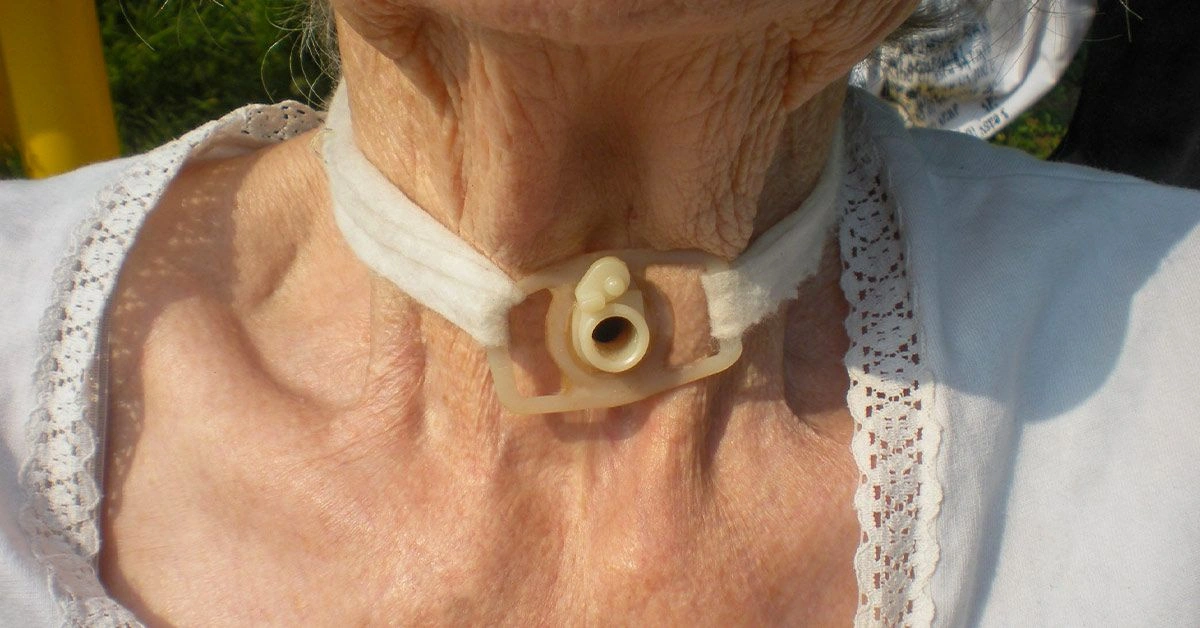
A tracheostomy collar is employed to keep a tracheostomy tube secure. The collar attaches to the tracheostomy plates, which help stabilize the tube. Typically, you’ll replace the collar daily.
A tracheostomy is an operation that creates an opening into your trachea, often called the “windpipe,” through the skin on the front of your neck. This procedure is performed to assist with breathing.
When a tracheostomy is present, air reaches the lungs through a tube placed in the opening created in the neck. Tracheostomies may be temporary or permanent.
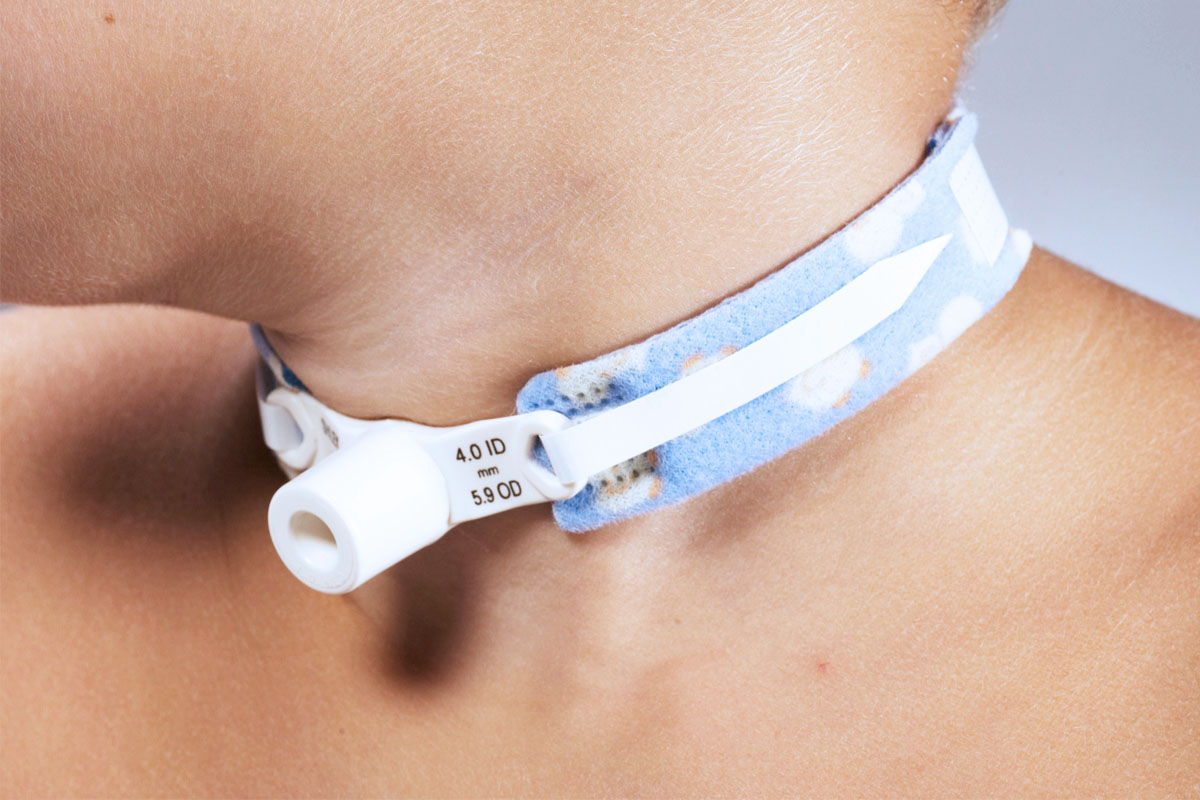
A tracheostomy collar is a device used to keep the tracheostomy tube in position. Tracheostomy tubes are sometimes referred to as “trach ties.”
A tracheostomy tube is supported by pieces known as “tracheostomy plates” or “flanges” that lie against the throat. The tracheostomy collars are then fastened to these plates.
How does a tracheostomy collar function?
Tracheostomy plates surround the tube and rest against the neck. Each plate contains slots on the sides where tracheostomy collars, or “ties,” are threaded. The collars are then wrapped around the neck. Once fastened, they help keep the tracheostomy tube stable.

Different collars operate slightly differently. Most are fastened at the back of the neck. Some collars include padding for added comfort.
What types of tracheostomy collars are available?
There are two main styles of tracheostomy collars: Velcro and twill. Velcro ties fasten using Velcro strips. Twill ties are slimmer and are tied with knots, much like shoelaces. Twill ties can be trimmed to any length for a custom fit.
Numerous manufacturers produce both styles of collars. Sizes for children and adults are offered. You can also find collars to suit personal preferences — for example, collars in various colors and patterns or collars made to be gentler on the skin.
Your health insurance may cover some or all of the cost of tracheostomy collars. Some plans might only cover twill ties or only Velcro ties. If you’re unsure about coverage, contact your plan’s representative.
Your clinician may also suggest a specific collar type best suited to your needs. They may also recommend complementary devices like a tracheostomy speaking valve or a fenestrated tracheostomy tube depending on your situation.
How should you care for a tracheostomy collar?
The exact care routine varies by collar type, but some general steps apply to all tracheostomy collars.
Most importantly, change your tracheostomy collar at least once every day, or more often if it becomes wet, soiled, or your skin appears irritated.
To change a tracheostomy collar:
- Gather all necessary supplies first, including a clean tracheostomy collar.
- Remove any dressing before taking off the collar.
- To keep the tracheostomy tube from dislodging while you replace the collar, hold the flange gently against your neck as you remove the old tie.
- Carefully thread the new collar through the slots in the tracheostomy flange.
- Fasten the new collar securely.
- Slide two fingers under the collar and lay them flat against your neck to confirm the fit is correct.
Report any redness or skin irritation to your healthcare team. If you notice swelling, a foul odor, yellow-green drainage, or a rash around the tubing, contact a physician immediately. These signs may indicate an infection and need urgent attention.
Living with a tracheostomy
Managing life with a tracheostomy at home may require adjustments, but several practical strategies can make it easier. In general:
- Use a humidifier at home to help moisten the air you breathe.
- Stay well-hydrated — aim for about 8 cups of fluids daily unless your doctor advises otherwise.
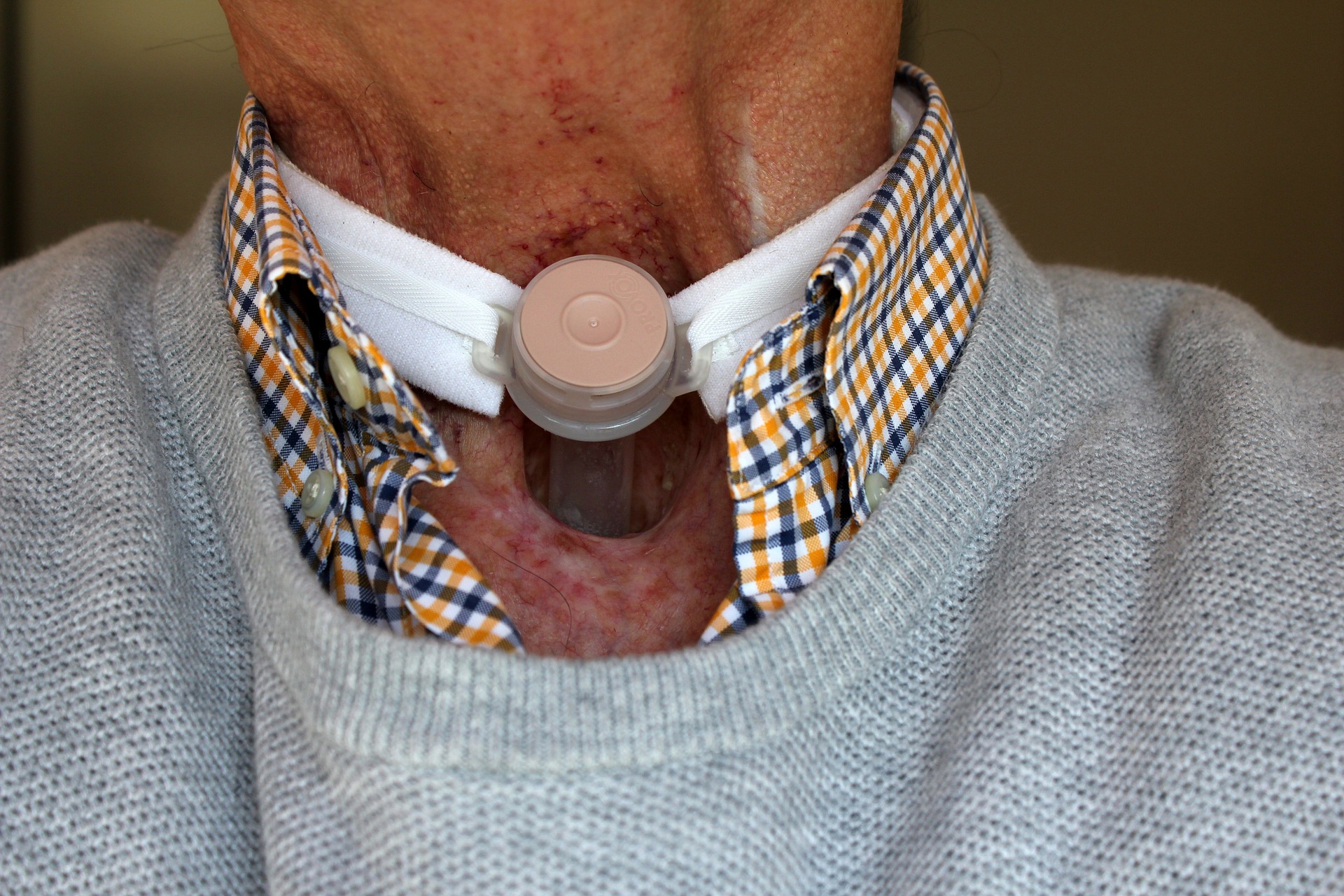
- Use a breathable cover or dressing to shield the stoma when you’re outdoors in extreme heat or cold.
- Be cautious of small debris such as seeds, dust, and insects that can enter the opening of your tracheostomy tube.
- Direct shower water away from the stoma or use a waterproof, breathable shower cover.
- Avoid very smoky or heavily polluted environments.
- Inform your healthcare provider promptly about any changes or concerns.
The bottom line
Tracheostomy collars are used to secure tracheostomy tubes in place. They encircle the neck and fasten either with Velcro or by tying. Collars are generally replaced at least once daily.
Any skin irritation, unusual discharge, swelling, or unpleasant odors noticed while changing the collar should be reported to a medical professional right away.























Leave a Reply
You must be logged in to post a comment.