

If you endure prolonged stress, the muscles in your face can stay tightened or partially tensed. Over time, persistent tension in facial muscles may lead to discomfort.

Tension — whether in the face or other areas like the neck and shoulders — is a normal reaction to emotional or physical stressors.
Humans have a “fight-or-flight” mechanism. In response to intense stress, your body releases hormones that stimulate the sympathetic nervous system. This response causes muscles to contract — preparing you to confront danger or flee.
Symptoms of facial tension
Common signs of facial tension include:
- tingling
- flushing
- lip injury
- headaches
Facial tension headaches
Stress is thought to provoke tension headaches, the most frequent form of headache. Pain from tension headaches typically involves:
- dull, aching discomfort
- a sense of tightness spanning the forehead, the sides of the head, and/or the back of the head

Tension headaches are generally classified into two types: episodic tension headaches and chronic tension headaches. Episodic tension headaches may last from about 30 minutes up to a week. Frequent episodic tension headaches occur fewer than 15 days per month for at least three months and can progress to chronic.
Chronic tension headaches can persist for hours and might endure for weeks. To be classified as chronic, you must experience 15 or more tension headaches per month for a minimum of three months.
If tension headaches interfere with daily life or if you find yourself taking medication for them more than twice a week, schedule a visit with your doctor.
Facial tension and anxiety
Anxiety and stress can produce facial tension, and anxiety can also intensify existing symptoms.
If you have anxiety, facial tension may be less likely to resolve on its own. Worrying about the tension can also amplify discomfort. Examples include:
- Facial tingling can both stem from anxiety and fuel further anxiety. Although a tingling or burning sensation in the face is an uncommon anxiety symptom, it’s not unheard of and can be linked to factors such as hyperventilation. When it happens, people often fear it signals multiple sclerosis (MS) or another neurological condition, and that fear can increase anxiety and tension.
- Face flushing or reddening can be a visible sign of anxiety caused by dilation of facial capillaries. While usually temporary, it can last for several hours or longer.
- Lip injury may result from anxiety. You might bite or chew your lip until it bleeds, or mouth breathing during anxious episodes can dry out the lips.
TMJ (temporomandibular joint) disorders
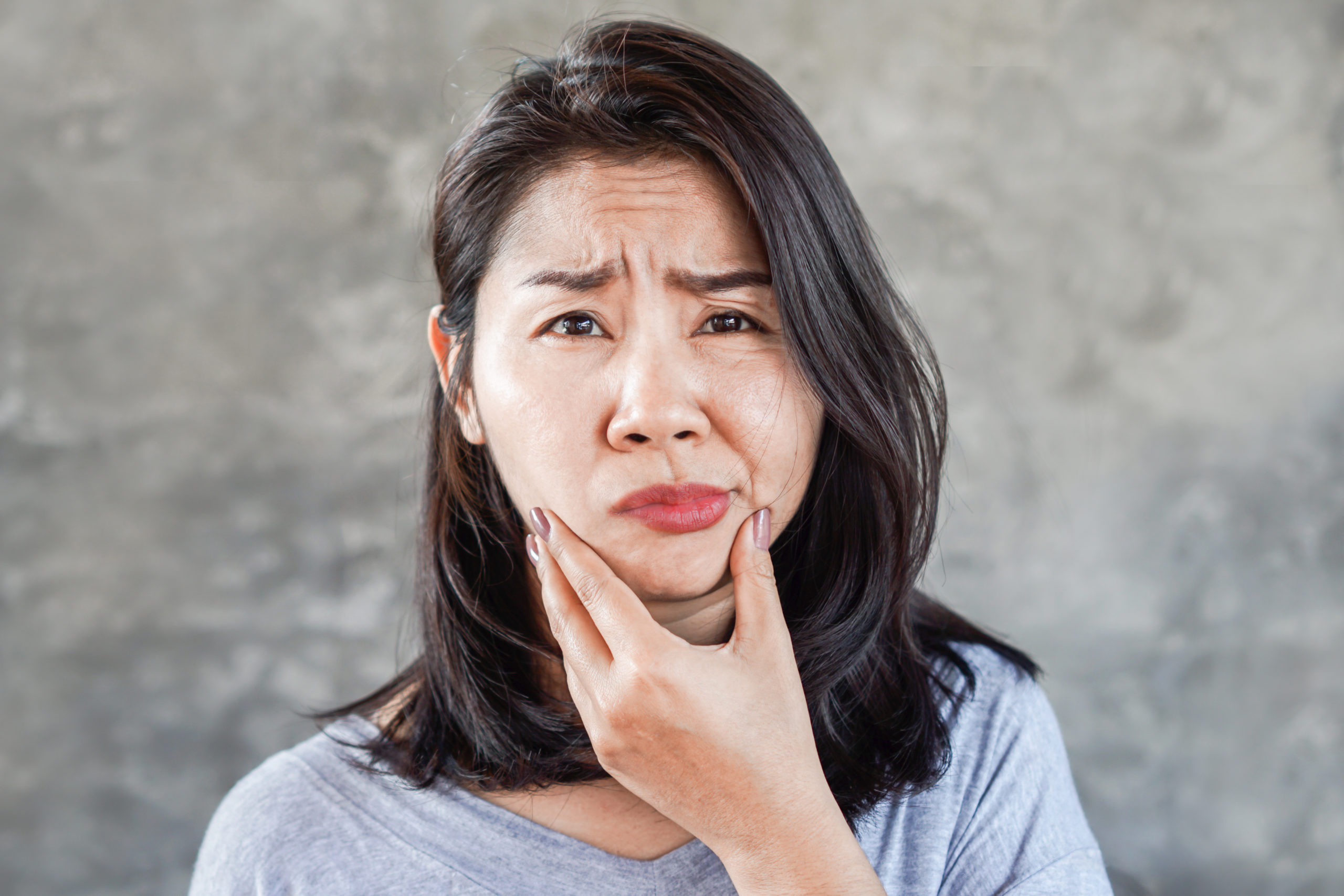
Under stress, you might tighten facial and jaw muscles or clench your teeth. This can cause pain or temporomandibular joint disorder (TMJ), a broad term for persistent jaw pain. TMJ stems from strain on the face and neck muscles surrounding the temporomandibular joint — the hinge linking your jaw to the temporal bones of your skull. TMJ disorders are sometimes called TMD.
If you suspect TMJ, consult your doctor for a proper diagnosis and, if needed, treatment suggestions. While awaiting your appointment, consider:
- eating soft foods
- avoiding chewing gum
- not opening your mouth too wide when yawning
- getting sufficient sleep
- quitting smoking
- exercising regularly
- consuming balanced meals
- staying well hydrated
- reducing intake of alcohol, caffeine, and sugar
6 home remedies to relieve facial tension
1. Reduce stress
Stress produces facial tension, so lowering stress levels will ease facial tightness. The first step toward stress reduction is adopting a healthy lifestyle, which includes:
2. Relaxation methods
You may find several techniques helpful for relieving stress and tension, such as:
- hot showers or baths
- massage
- meditation
- deep breathing
- yoga
3. Facial exercises to ease tension
Over 50 muscles form your facial structure. Working them out may help lessen facial tension.
Try these face exercises to reduce tension:
- Happy face.Smile as broadly as you can, hold for a count of 5, then relax. Perform 10 repetitions per set.
- Slack jaw.Allow your jaw to relax and let your mouth hang open. Press the tip of your tongue to the highest point of the roof of your mouth. Hold for a count of 5, then gently return your jaw to a resting closed position. Do 10 repetitions per set.
- Brow furrow.Crease your forehead by lifting your eyebrows as high as possible. Hold for a count of 15, then release. Do 3 repetitions per set.
- Eye squeeze.Tightly close your eyes and hold for 20 seconds. Then, let the tiny muscles around your eyes go slack and stare blankly for 15 seconds. Do 3 repetitions per set.
- Nose scrunch.Wrinkle your nose and flare your nostrils, holding for a count of 15 before releasing. Do 3 repetitions per set.
4. Cognitive behavioral therapy (CBT)
CBT, a structured, goal-focused talk therapy, offers practical strategies to help you manage the stress that’s producing the tension.
5. Biofeedback training
Biofeedback uses instruments to measure muscle tension, heart rate, and blood pressure so you can learn to control certain bodily responses. With training, you can lower muscle tension, slow your heart rate, and regulate your breathing.
6. Medication
Your doctor may prescribe anti-anxiety medication to use alongside stress-management methods. Combining medication with behavioral strategies can be more effective than using either alone.
The takeaway
Facial tension can be a natural reaction to emotional or physical stress. If you experience facial tension, try simple stress-reduction approaches such as facial exercises.
Seek medical advice if the tension is prolonged, becomes increasingly painful, or happens frequently. If you don’t already have a primary care provider, you can search for doctors near you using the Healthline FindCare tool.




















Leave a Reply
You must be logged in to post a comment.