

Your forehead veins can become more prominent due to age, stress, or increased pressure. They tend to stand out more in people who are very thin or have low body fat.
Protruding veins, especially on the face, are usually harmless. They most commonly appear on the middle of the forehead or along the sides near the temples. While aging is a frequent factor, pronounced forehead veins may also indicate elevated pressure or stress.
Bulging forehead veins are common. If they occur with pain, however, you should see your doctor.
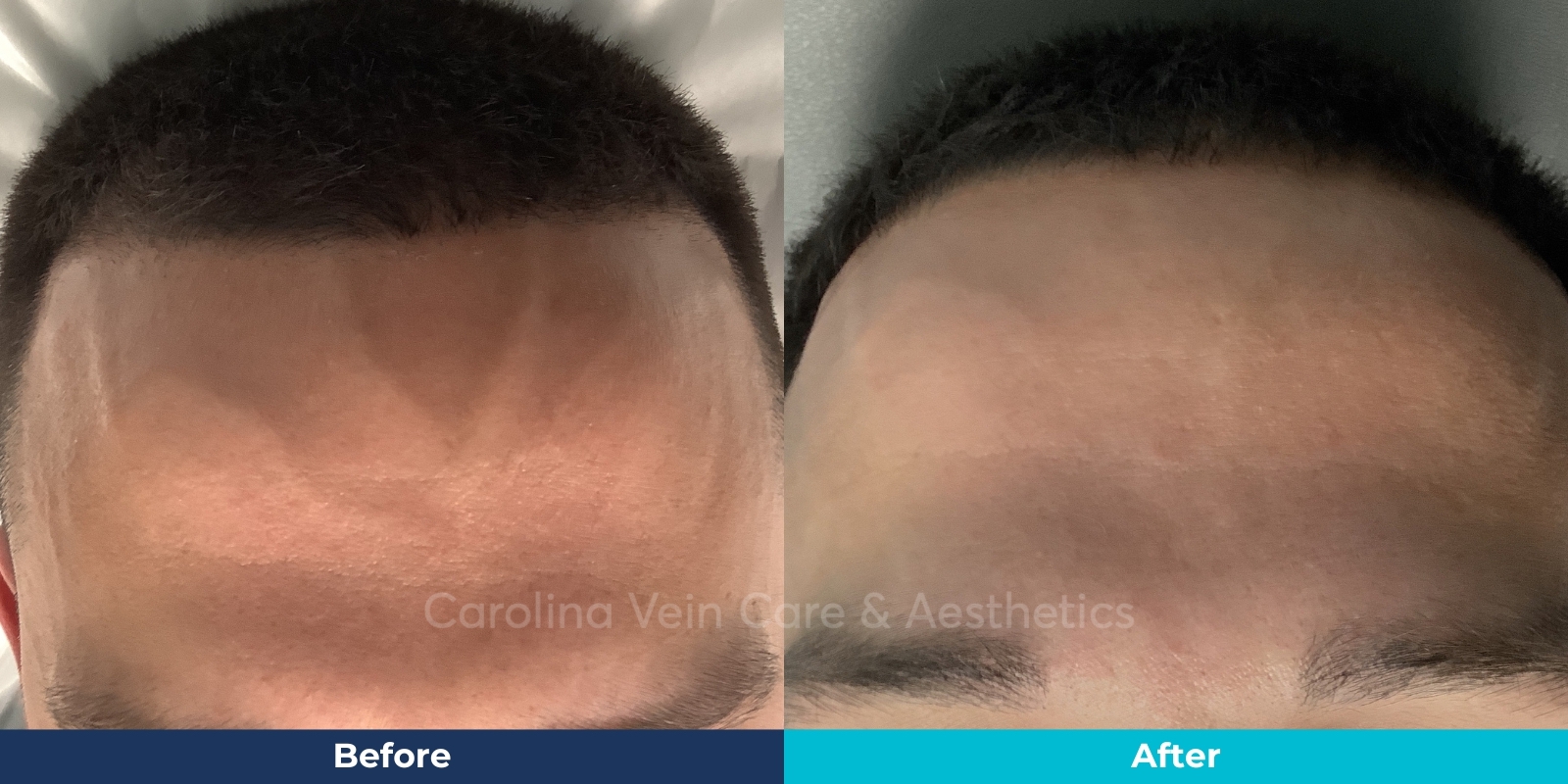
What leads to bulging forehead veins?
Noticeable forehead veins often result from heredity or aging. As skin thins over time, the veins underneath become easier to see. Aging also raises the likelihood of vascular problems. Those with lighter skin may observe veins with a blue tint.
Veins are also more noticeable in people with lower body weight. Individuals who are underweight or have minimal fat may have tighter, thinner skin, making forehead veins — and veins elsewhere — more visible.
Other factors that can make forehead veins protrude include the following.
Pressure or strain
A hearty laugh can temporarily make your forehead veins more visible. Laughing increases chest pressure, causing veins to expand. The same effect can happen with repeated sneezing, physical exertion, or severe vomiting.
Tension headaches and eye strain can elevate pressure in the head and veins. Some signs require medical evaluation. See your physician if you experience:
- pain
- dizziness
- vision problems
Pregnancy
Pregnancy brings many hormonal shifts. Rising estrogen and progesterone levels can dilate and weaken veins. Additionally, blood volume increases during pregnancy.
This greater blood flow can enlarge veins and cause blood to pool, creating the appearance of swollen facial veins.
High blood pressure
High blood pressure or any condition that boosts blood flow to the head can make veins protrude. It may also point to an underlying cardiac issue.
If a bulging forehead vein appears along with chest pain or other concerning symptoms, seek immediate medical care.
Sun exposure
Excessive time in the sun or repeated sunburns can make spider veins on the face more evident. Ultraviolet exposure can dilate blood vessels and weaken nearby skin tissue, preventing veins from returning to their usual size.
Spider veins may show up as blue, red, or purple. Besides the forehead, they commonly appear on the cheeks and nose, especially in fair-skinned people and older adults.
Treating forehead veins
Although common, some people dislike the look of facial veins. Treatments exist to reduce their prominence, and in some cases veins may shrink naturally.
Before pursuing treatment, review the risks with your healthcare provider and confirm there are no underlying health problems.
Typical treatments for forehead veins include:
- Electrosurgery. A minimally invasive method that uses an electric current delivered through a needle to destroy the vessel. The procedure is quick but can be painful.
- Sclerotherapy. A solution is injected into the enlarged vein to make it collapse, close, and be reabsorbed. Sclerotherapy on facial veins can carry significant risks; complications could be serious. Discuss this option thoroughly with your doctor before proceeding.
- Laser therapy. Short bursts of laser light are used to close off veins. Over time they fade and may disappear.
- Surgery. For larger veins, surgical removal or closure may be necessary.
Outlook
There are multiple natural and medical reasons forehead veins might bulge. While they’re generally not dangerous, facial veins that occur with head pain could signal a problem.
If you notice any unusual symptoms, contact your healthcare provider.




















Leave a Reply
You must be logged in to post a comment.