
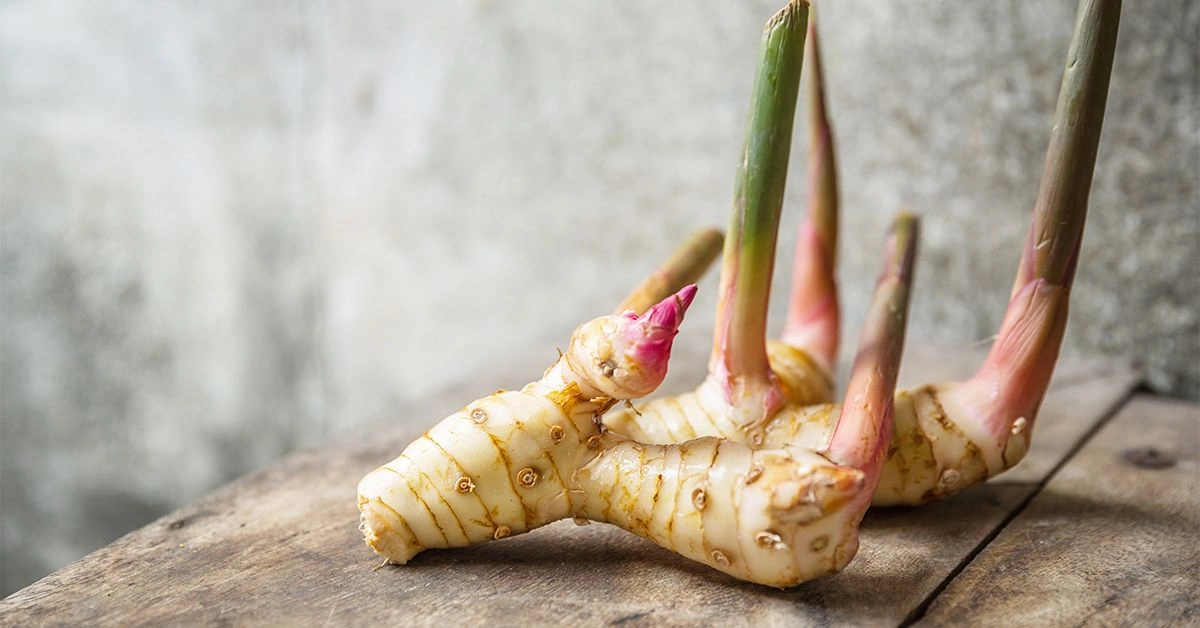
Galangal root is a spice originating from Southeast Asia. Closely related to ginger and turmeric, it has been incorporated into Ayurvedic and traditional Chinese remedies for many centuries.
:max_bytes(150000):strip_icc()/what-is-galangal-5186943_Hero_01-9decd6d115ce495ab7d04464269ff5ef.jpg)
The term galangal refers to the rhizome of several plants within the Zingiberaceae family. Lesser galangal, or Alpinia officinarum, is the variety most frequently used.
Like ginger and turmeric, galangal can be consumed fresh or cooked and is a common ingredient in Chinese, Indonesian, Malaysian, and Thai cuisines (2).
Beyond culinary uses, this spice is employed for certain health issues; it’s thought to help fight infections, lower inflammation, enhance male fertility, and possibly combat several types of cancer.
This article examines the advantages and safety of galangal root and contrasts it with ginger and turmeric.
Potential benefits
Galangal root has a long history in traditional medicine for treating various conditions, and a growing body of scientific research supports some of these applications.
High in antioxidants
Galangal root provides a significant amount of antioxidants — plant-derived compounds that help protect cells from harmful free radicals and may lower disease risk.
It is particularly abundant in polyphenols, a category of antioxidants associated with benefits like better memory and reduced blood sugar and LDL (bad) cholesterol (3, 4, 5, 6).
Polyphenols are also believed to help prevent cognitive decline, type 2 diabetes, and cardiovascular disease. Ginger and turmeric — close botanical relatives of galangal — are likewise rich in polyphenols and have been associated with these advantages (7, 8, 9, 10, 11).
That said, no direct human studies have definitively tied galangal root to these outcomes, so further research is necessary before firm claims can be made.
May protect against some cancers
Galangal root might help defend the body against certain cancers.
In vitro studies indicate that galangin, a bioactive constituent of galangal root, can kill cancer cells or halt their spread (12, 13, 14, 15, 16).
For example, one laboratory study found the spice could kill two strains of human colon cancer cells. Other research suggests activity against breast, bile duct, skin, and liver cancer cells (12, 17, 18, 19, 20).
However, results from test-tube experiments don’t always translate to humans. Although the findings are encouraging, more human research is required.
May improve male fertility
Preliminary evidence indicates galangal root might improve male reproductive health.
In an animal experiment, rats given galangal extract showed increases in sperm count and motility (21).
Also, in a 3-month trial of 66 men with poor sperm quality, those taking a daily supplement containing galangal root and pomegranate extract experienced a 62% improvement in sperm motility, compared with a 20% increase in the placebo group (22).
Although promising, it’s unclear whether the benefits were due to galangal root or the pomegranate extract.
More controlled human studies are needed to clarify galangal root’s impact on male fertility.
May reduce inflammation and pain
Galangal root may lessen harmful inflammation because it contains HMP, a plant chemical that test-tube and animal research suggest has strong anti-inflammatory effects (23, 24, 25, 26).
Members of the Zingiberaceae family, including galangal, appear to modestly relieve pain, which is often a symptom of inflammation (27).
For instance, in a 6-week trial of 261 people with knee osteoarthritis, 63% of participants taking a daily ginger and galangal extract reported less knee pain when standing, versus 50% in the placebo group (28).
Still, more research focusing specifically on galangal’s pain-relieving effects is necessary before drawing firm conclusions.
May guard against infections
Essential oils derived from galangal root may target a variety of microbes.
Consequently, galangal might extend the shelf life of certain foods. Adding fresh galangal to dishes may also lower the risk of vibriosis, an infection from consuming undercooked shellfish (29, 30).
Additionally, laboratory studies indicate galangal may kill harmful bacteria such as E. coli, Staphylococcus aureus, and Salmonella Typhi, though effectiveness varies across studies (4, 31, 32).
Some research also suggests galangal may be active against fungi, yeasts, and parasites, although findings are not consistent (4, 33).
Summary: Galangal root is packed with antioxidants and may enhance male fertility, reduce inflammation and pain, and help defend against infections and some cancers. However, more research is needed.
How it stacks up against ginger and turmeric
Galangal is closely related to ginger and turmeric; all three can be used fresh or dried to flavor dishes.

Ginger has a fresh, sweet-spicy taste, while galangal is sharper, spicier, and a bit more peppery. Turmeric is the most pungent and bitter of the trio.
Studies associate all three spices with similar health effects. Like galangal, ginger and turmeric are antioxidant-rich and have anti-inflammatory qualities that may ease joint stiffness and pain (28, 34, 35, 36).
Moreover, all three contain constituents that may help prevent or fight various cancers (37, 38).
However, galangal is the only one shown to possibly enhance male fertility. Conversely, ginger’s known anti-nausea and gastric-emptying effects have not been matched by galangal or turmeric (21, 22, 39, 40, 41).
Ginger and turmeric have been associated with a lower risk of type 2 diabetes and heart disease, protection against cognitive decline, and preservation of age-related brain function (7, 8, 9, 10, 11).
Given their similarities, galangal may offer comparable advantages.
Summary: Galangal root is closely allied to ginger and turmeric. All three enhance flavor and may confer similar health benefits, but ginger and turmeric have been examined more extensively than galangal.
Precautions and side effects
Galangal root has a long history of use in Ayurvedic and traditional Chinese medicine and is probably safe when consumed at culinary amounts (1).
However, data on safe dosages and possible adverse effects from larger intakes, such as those in supplement form, are limited.
In one animal study, very high doses (909 mg per pound or 2,000 mg per kg of body weight) produced severe adverse effects, including lethargy, loss of appetite, excessive urination, diarrhea, coma, and death (42).
These negative effects were not seen at much lower doses of 136 mg per pound (300 mg per kg) of body weight (42).
Still, human data on the safety and side effects of galangal supplements are lacking.
Summary: Galangal root is likely safe in typical dietary amounts, but there’s little research on the safety or adverse effects of high-dose supplements.
The bottom line
Galangal root is a spice closely related to ginger and turmeric and is widely used in Ayurvedic and traditional Chinese practices.
It can contribute flavor, antioxidants, and anti-inflammatory compounds to your meals and may offer various health benefits, such as improving male fertility and protecting against infections and possibly certain cancers.
Fresh galangal may require a visit to an Asian or specialty grocery, but dried slices and powdered forms are commonly available online.
Overall, this flavorful spice is worth incorporating into your cooking.





















Leave a Reply
You must be logged in to post a comment.