
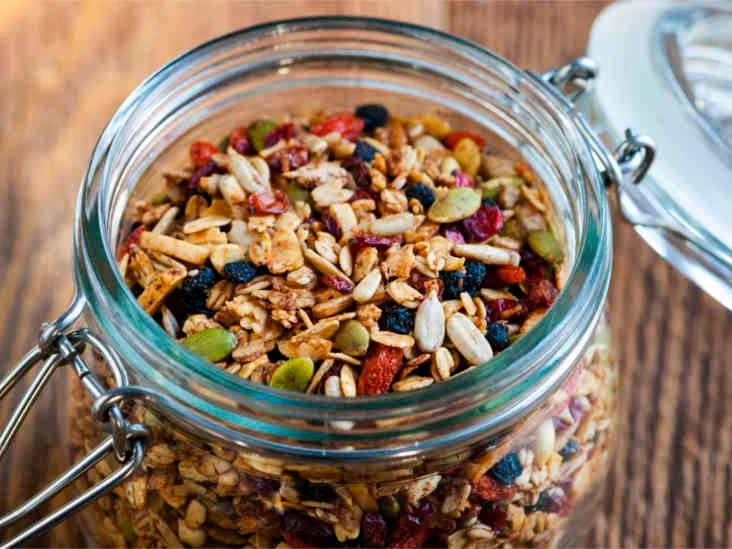
Cereal remains one of the most widely chosen breakfast options, yet many varieties are loaded with added sugar and overly processed ingredients. For older adults searching for a Healthy cereal for Seniors, selecting nutrient-dense, fiber-rich choices is especially important to support heart health, digestion, and stable energy levels.
Cereal is incredibly convenient, particularly for people with busy routines.
However, traditional boxed cereals are often high in added sugar and refined grains, which may not align with long-term wellness goals.
In addition, cereal can be easy to overconsume since many types lack adequate fiber and protein — two nutrients essential for satiety and appetite control (1, 2). This is particularly relevant for seniors who need balanced blood sugar and sustained fullness throughout the morning.
Fortunately, there are many wholesome cereal options available — including homemade (DIY) varieties and healthier store-bought brands.
Below, you’ll find 14 of the healthiest cereals you can incorporate into your breakfast routine.
1. Oats
Oats are one of the most nutritious cereal choices available and are often recommended as a Healthy cereal for Seniors due to their fiber content and heart-supportive nutrients.
They are typically rolled or steel-cut and prepared as oatmeal, also known as porridge.
Because oats are whole grains, they are naturally high in fiber and essential nutrients. One cup (234 grams [g]) of cooked oats contains 4 g of fiber and delivers 59% of the Daily Value for manganese, 23% for selenium, 21% for zinc, and 14% for phosphorus (3).
They also provide notable amounts of iron and magnesium (3), both important for energy metabolism and muscle function.
Some commercial oat products are fortified with additional vitamins and minerals.
Although pre-packaged flavored oatmeal is widely available, preparing your own is usually the healthier choice. Many instant varieties contain high levels of added sugars and artificial flavorings.
Oatmeal is highly adaptable. It can be cooked with water or milk and topped with berries, apples, nuts, seeds, or cinnamon for added antioxidants and healthy fats.
You can also prepare “overnight oats” by soaking oats in milk or yogurt for several hours, creating a ready-to-eat breakfast the next morning — ideal for maintaining consistent nutrition with minimal effort.
2. DIY muesli
Muesli is both nourishing and flavorful. It is commonly made from rolled oats combined with nuts, seeds, and dried fruit.
While similar to granola, muesli is eaten raw and is not baked. Many versions are free from added oils and sweeteners, making them suitable for individuals limiting sugar intake.
The blend of whole grains and nuts provides plant-based protein and dietary fiber. For instance, Alpen muesli offers approximately 6 g of protein in a 2/3-cup (55-g) serving, along with fiber, vitamins, and minerals (4).
To further reduce carbohydrate content, you can prepare a grain-free version using coconut flakes, nuts, and raisins. This modification may be helpful for individuals managing blood sugar levels.
3. Homemade granola
Homemade granola can be a wholesome cereal alternative when prepared thoughtfully.
It is usually created by baking rolled oats, nuts, and dried fruit until crisp.
Granola naturally contains protein and healthy fats and can supply important nutrients such as phosphorus, magnesium, manganese, and B vitamins (5).
Store-bought versions, however, often contain substantial amounts of added sugar. Making granola at home allows you to control ingredients and sweetness.
Keep in mind that granola is calorie-dense. A 1-cup (122-g) portion provides nearly 600 calories. If you are monitoring calorie intake, consider limiting servings to about 1/4 cup (85 g) (5).
4. DIY cinnamon crunch cereal
Many commercial “cinnamon crunch” cereals are high in added sugar. Preparing a homemade version using flaxseed, hemp seeds, cinnamon, coconut oil, and apple juice or a sugar substitute can provide a more balanced alternative. Find instructions here.
One serving of this homemade cereal can supply around 5 g of protein and significantly fewer carbohydrates compared to popular store brands.
For comparison, a 28-g serving of Cinnamon Toast Crunch cereal contains 22 g of carbs. The homemade version made with a sugar substitute contains only 3 g of carbs, according to the recipe developer (6, 7).
5. Post Foods Grape Nuts
Grape Nuts are another nutritious store-bought cereal.
The Original flavor is made with four ingredients: whole grain wheat flour, malted barley flour, salt, and dried yeast.
Each 1/2-cup (58-g) serving delivers 7 g of fiber along with iron, B vitamins, zinc, magnesium, and copper (8).
You can also prepare a homemade version using almond and coconut flours instead of wheat flour. Try this recipe.
6. Bob’s Red Mill Paleo-Style Muesli
Bob’s Red Mill Paleo-Style Muesli is both nutritious and gluten-free.
Unlike conventional muesli, it contains no grains and is instead crafted from coconut, dried fruit, nuts, and seeds.
A 1/4-cup (24-g) serving supplies 16% of daily fiber requirements and 3 g of protein, along with minerals such as iron and calcium (9).
7. Ezekiel 4:9 Sprouted Grain Cereals
Ezekiel 4:9 produces sprouted whole grain cereals that offer enhanced nutritional value.
Sprouted grains are allowed to germinate, which may improve digestibility and increase nutrient availability compared to non-sprouted grains (10, 11, 12).
These cereals are rich in fiber and protein and contain no added sugar. A 1/2-cup (57-g) serving provides 23% of daily fiber needs and 8 g of protein (11).
They also provide potassium, an essential mineral for maintaining heart health (11, 13).
8. Nature’s Path Organics Superfood Cereals
Nature’s Path Organics Superfood Cereals feature nutrient-dense ingredients such as chia seeds, buckwheat, and hemp seeds.
These components are high in protein and fiber (14, 15, 16).
Chia seeds are particularly rich in omega-3 fatty acids, which may help reduce inflammation and support brain health (14, 17, 18, 19, 20).
9. Barbara’s Shredded Wheat Cereal
Barbara’s Shredded Wheat is notable for its simplicity, containing just one ingredient: 100% whole wheat.
The wheat is formed into biscuits that can be broken apart and served with milk. Importantly, this cereal contains no added sugar.
A 2-biscuit serving supplies 20% of daily fiber needs and 5% of daily potassium requirements (21).
10. Arrowhead Mills Spelt Flakes
Arrowhead Mills Spelt Flakes are made with a short list of organic ingredients and contain no refined added sugars.
Each serving provides 4 g of protein, along with fiber, vitamin C, phosphorus, B vitamins, and iron (22).
11. Cauliflower “oatmeal”
For a lower-carb approach, consider making cereal from cauliflower.
Cauliflower “oatmeal” is prepared by cooking riced cauliflower with milk or an unsweetened milk alternative, then adding preferred toppings. Explore this recipe for guidance.
This option can significantly reduce carbohydrate intake while maintaining a texture similar to oatmeal.
One cup (234 g) of cooked oats contains more than five times the carbs found in one cup of cooked cauliflower (3, 23).
Cauliflower also supplies fiber, antioxidants, and a range of essential nutrients (23).
12. DIY peanut butter puffs cereal
Homemade peanut butter puffs can replace sugary boxed versions.
They are made by forming a dough from almond flour, peanut butter, cocoa powder, coconut oil, and other ingredients, shaping into small balls, and baking. See this recipe for an example.
Using almond flour instead of wheat flour lowers carbohydrate content. One hundred grams of almond flour contains 16 g of carbs, while 1 ounce of wheat flour contains 77 g.
Peanut butter contributes protein, healthy fats, and key vitamins and minerals (24, 25, 26).
Because almond flour is calorie-dense at 622 calories per 100 g, keep portions to about 1/4–1/2 cup (24).
13. Love Grown Original Power O’s
Love Grown Original Power O’s contain minimal ingredients, including brown rice and garbanzo beans, with no added sugar.
A 1-cup (35-g) serving provides 4 g of fiber (27).
It also delivers 12% of daily protein needs, along with vitamin C, iron, and calcium (27).
14. DIY flax chia cereal
You can create a nutrient-packed cereal using flax and chia seeds.
Combine flax meal, chia seeds, coconut oil, and cinnamon to form a dough, optionally adding stevia. Cut into squares and bake.
Flax and chia seeds provide omega-3 fatty acids and protein to support fullness. They are also rich in magnesium and manganese (14, 16).
The bottom line
Cereal can be part of a balanced breakfast when chosen carefully.
Many conventional options are made with refined grains and added sugars that may not support long-term health.
Instead, look for varieties high in fiber and protein with no added sugar. If you need additional guidance, review Consumer reports best breakfast cereal for seniors for more insight into selecting a Healthy cereal for Seniors that aligns with your dietary needs.
Always review the ingredient list and nutrition label before purchasing.
Preparing cereal at home is another excellent way to boost nutrient quality and avoid less-healthy additives while tailoring flavors and textures to your preferences.






















Leave a Reply
You must be logged in to post a comment.