

Overview
There’s currently no cure for the common cold, so treatment focuses on relieving uncomfortable symptoms while your body fights off the virus. If you’re dealing with congestion and nighttime coughing, you may be wondering, How long after Afrin can I take nyquil safely without risking side effects or interactions.
Over-the-counter (OTC) medications can ease a wide range of cold symptoms, but not every cold brings the same issues. The medication you select should be based on the specific symptoms you’re experiencing—such as nasal congestion, cough, sore throat, or body aches. Understanding how these drugs work together is key to using them safely and effectively.
Nasal decongestants
Nasal decongestants are designed to relieve a stuffy nose. They work by constricting the blood vessels inside the nasal passages, which reduces swelling and limits mucus production. As inflammation decreases, airflow improves and breathing becomes easier.
These medications may also help reduce postnasal drip, which can contribute to throat irritation and coughing.
Nasal decongestants are available in tablet form, liquid solutions, and nasal sprays. In general, they’re not recommended for children under 3 years old.
Active ingredients found in OTC nasal decongestants include:
- oxymetazoline nasal (Afrin, Dristan 12-Hour Nasal Spray)
- phenylephrine nasal (Neo-Synephrine)
- phenylephrine oral (Sudafed PE, Triaminic Multi-Symptom Fever and Cold)
- pseudoephedrine (Sudafed)
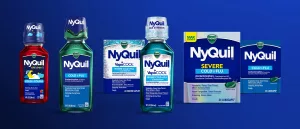
If you’re using oxymetazoline nasal (Afrin), a common question is, How long after Afrin can I take nyquil? Since Afrin is a topical nasal spray and NyQuil typically contains doxylamine and acetaminophen (and sometimes dextromethorphan), they act differently in the body. For more detailed guidance, you can review this resource on Can I take NyQuil after using nasal spray?.
Cough suppressants
Coughing serves a protective purpose by clearing mucus, irritants, and microbes from the airways. However, the cough reflex can sometimes become persistent or disruptive, especially at night.
Cough suppressants may be helpful when a cough interferes with daily activities or sleep. For this reason, healthcare professionals often suggest taking them in the evening.
These medications reduce coughing by suppressing the nerve signals that trigger the cough reflex, offering temporary symptom relief.
The most widely used OTC cough suppressant is dextromethorphan. It’s the active ingredient in products such as:
- Triaminic Cold and Cough
- Robitussin Cough and Chest Congestion DM
- Vicks 44 Cough & Cold
Expectorants
Expectorants function by thinning and loosening mucus in the respiratory tract, making it easier to cough up. This process helps your body eliminate excess mucus more efficiently.
The primary active ingredient in OTC expectorants is guaifenesin, which is found in Mucinex and Robitussin Cough and Chest Congestion DM.
If you’re considering multiple symptom relief products, it’s important to evaluate ingredient overlap. For example, when using Afrin during the day, some people ask not only How long after Afrin can I take nyquil, but also whether combining other products is appropriate. You can learn more about related combinations in this guide on Can I take Afrin and dayquil together.
Antihistamines
Antihistamines work by blocking histamine, a chemical released by the immune system during allergic reactions. By limiting histamine’s effects, these medications can ease symptoms such as:
- sneezing
- itchy ears and eyes
- watery eyes
- coughing
- nasal discharge
Active ingredients in OTC antihistamines include:
- brompheniramine (Dimetapp)
- chlorpheniramine (Sudafed Plus)
- diphenhydramine (Benadryl)
- doxylamine, which is one of the three active ingredients in Nyquil
These are known as first-generation antihistamines and often cause drowsiness. That’s why they’re commonly included in nighttime or “PM” cold formulas.
Second-generation OTC antihistamines, which are less likely to cause sleepiness, include:
- cetirizine (Zyrtec)
- fexofenadine (Allegra)
- loratadine (Claritin)
Some healthcare professionals caution that antihistamines may relieve certain symptoms but do not eliminate the virus responsible for a cold. They should be used strategically as part of a broader symptom management plan.
Pain relievers
Pain relievers can address various discomforts associated with the common cold, including:
- muscle aches
- headaches
- sore throat
- earaches
Common active ingredients in OTC pain relievers include:
- acetaminophen (Tylenol)
- ibuprofen (Advil, Motrin)
- naproxen (Aleve)
Because NyQuil often contains acetaminophen, it’s especially important to check labels carefully before combining it with other medications. Taking multiple products that contain acetaminophen can increase the risk of liver damage.
Warnings for use in children
Use extra caution when giving OTC cold medications to children. It’s easy to unintentionally exceed the recommended dose, and some OTC cold products can cause serious side effects. In rare cases, accidental overdoses may be fatal.
If you’re unsure whether a specific cold medication is safe for your child, consult your child’s doctor or pharmacist before giving it.
Children younger than 7 years old should not administer nasal decongestant sprays to themselves. Saline nasal drops may be a safer alternative to relieve congestion. Speak with their healthcare provider for individualized advice.
Never give aspirin to children. Aspirin has been associated with Reye’s syndrome, a rare but potentially life-threatening condition in children. Instead, consider ibuprofen or acetaminophen, which are generally safe when dosed appropriately based on age and weight.
Cold drug precautions
Always follow the product instructions or your healthcare provider’s recommendations when using cold medications. Proper dosing and timing are essential for safety.
Some cold medications require particular caution:
Nasal decongestants
If you have high blood pressure, consult your doctor before using nasal decongestants. These medications can raise blood pressure and heart rate.
Do not use decongestant nasal sprays or drops for more than three consecutive days. After that period, they may lose effectiveness. Prolonged use can lead to rebound congestion, a condition where nasal tissues become chronically inflamed.
When considering How long after Afrin can I take nyquil, it’s also wise to factor in your overall medication schedule and any underlying conditions, such as hypertension or liver disease, that could affect safe use.
Pain relievers
Acetaminophen may cause liver damage if taken in excessive amounts or used too frequently over time.
Acetaminophen is available as a single-ingredient medication (such as in Tylenol), but it’s also included in many OTC combination products. Always review ingredient labels before taking multiple medications to avoid exceeding safe limits.
Although recommendations may differ slightly among providers, the usual daily maximum falls between 3,000 and 4,000 milligrams (mg).
Q&A: Combining medicines
Q:
Is it safe to combine different cold medicines to address all of my symptoms?
A:
In many cases, yes, combining cold medicines can be safe if each product targets different symptoms. However, many OTC cold remedies contain multiple active ingredients, which increases the risk of accidentally taking too much of one component. Before mixing products—especially when asking questions like How long after Afrin can I take nyquil—consult your pharmacist or doctor to ensure the combination is appropriate and safe for your specific situation.






















Leave a Reply
You must be logged in to post a comment.