How Many Teeth Should I Have?


Depending on whether all of your adult teeth have erupted, or if you’ve ever had teeth removed or lost due to injury, adults generally possess 32 teeth. Babies and young children have fewer teeth.
Do you know how many teeth you have? Whether every permanent tooth has come in or not, most adults should have roughly the same number of teeth. Teeth play a key role in both facial structure and the digestive process.
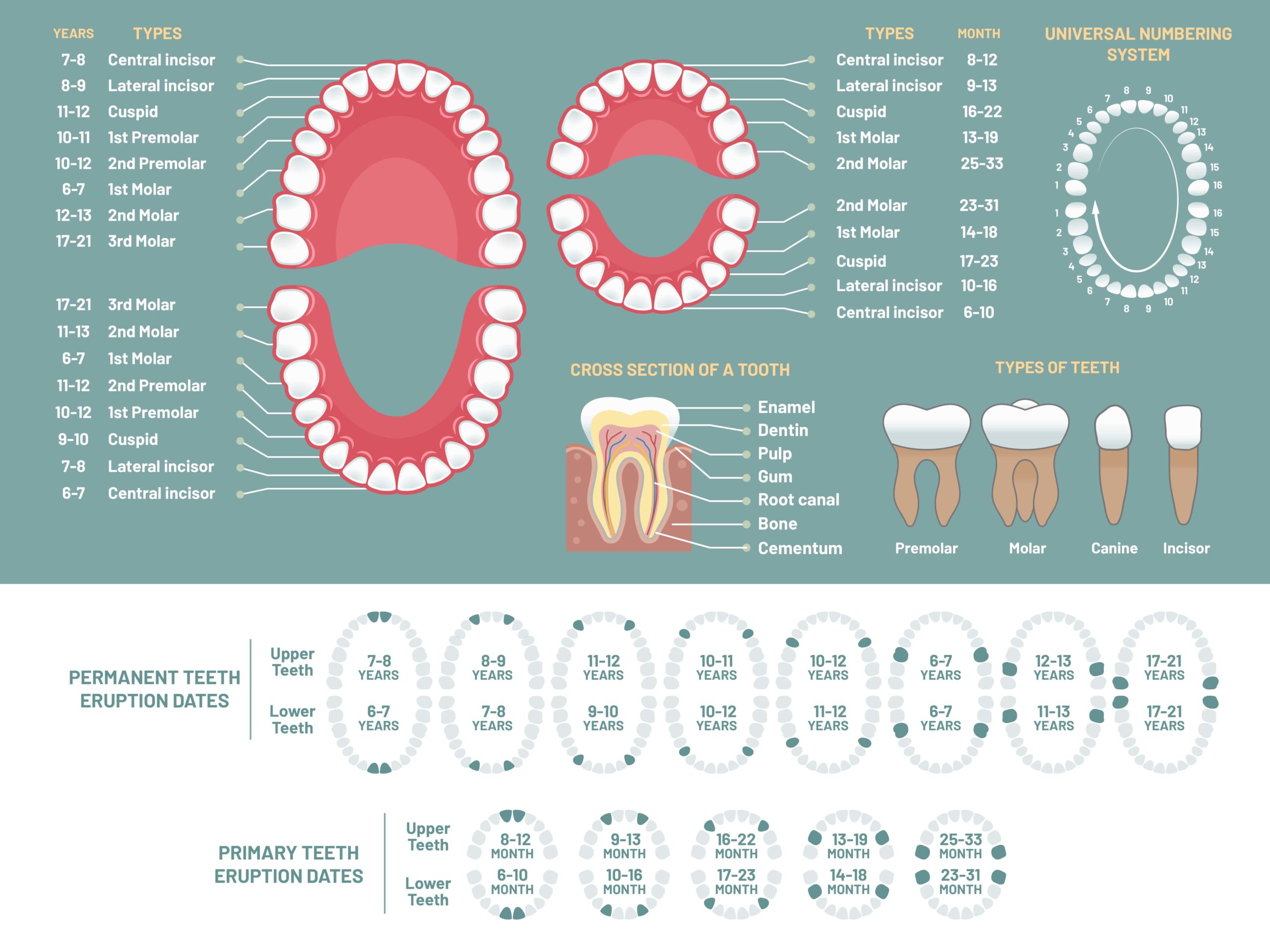
Each tooth is composed of three layers: enamel, dentin, and pulp.
- Enamel. Enamel is the visible, white exterior layer. This tough coating shields the inner portions of the tooth from decay and trauma. Enamel is the hardest tissue in the human body.
- Dentin. The dentin is the middle layer and resembles bone tissue the most. Dentin forms the bulk of the tooth’s structure and contains millions of microscopic tubules connecting it to the tooth’s living core: the pulp.
- Pulp. Pulp is the living center of the tooth and the deepest layer. It consists of blood vessels and nerves.
The portion of the tooth visible above the gumline is called the crown. The portion beneath the gumline is the root, which anchors the tooth to the jawbone.
How many teeth do babies have?
On average, babies begin to get their first teeth at about 6 months old. However, it’s not unusual to see a tooth as early as 3 months, or for a 1-year-old to have just one tooth. By age 2 to 3, a child should typically have all of their primary teeth.
Baby teeth are also known as primary or deciduous teeth because they are temporary and eventually fall out. A full set of primary teeth consists of 20 teeth: 10 in the upper jaw and 10 in the lower jaw.
We develop primary teeth because a child’s mouth is too small to accommodate a full set of permanent teeth, yet they still need teeth for chewing. Humans are born with both sets of teeth present in the jaws; the primary teeth erupt first and are later replaced by larger permanent teeth as the child grows.
Although baby teeth are temporary, it’s important to keep them clean and healthy to support lifelong oral health. Tooth decay in childhood can negatively affect permanent teeth.
Brush your child’s baby teeth for a full 2 minutes, the same amount of time you should spend brushing your own teeth.
How to care for baby teeth
- Begin a brushing routine as soon as your baby’s first tooth appears.
- Use a clean, soft cloth with warm water to wipe each tooth, and you can also gently clean the gums.
- Allow your child to gnaw on a cold, wet cloth to help ease teething discomfort.
- Once most of your toddler’s teeth have come in, switch to a child-sized toothbrush (typically with soft bristles). Choose one with a small head so you can comfortably and effectively clean all their teeth.
How many teeth do adults have?
Children begin losing their primary teeth and gaining permanent teeth as early as 5 years old. Adults typically have 32 teeth. You should have this complete set by your late teens.
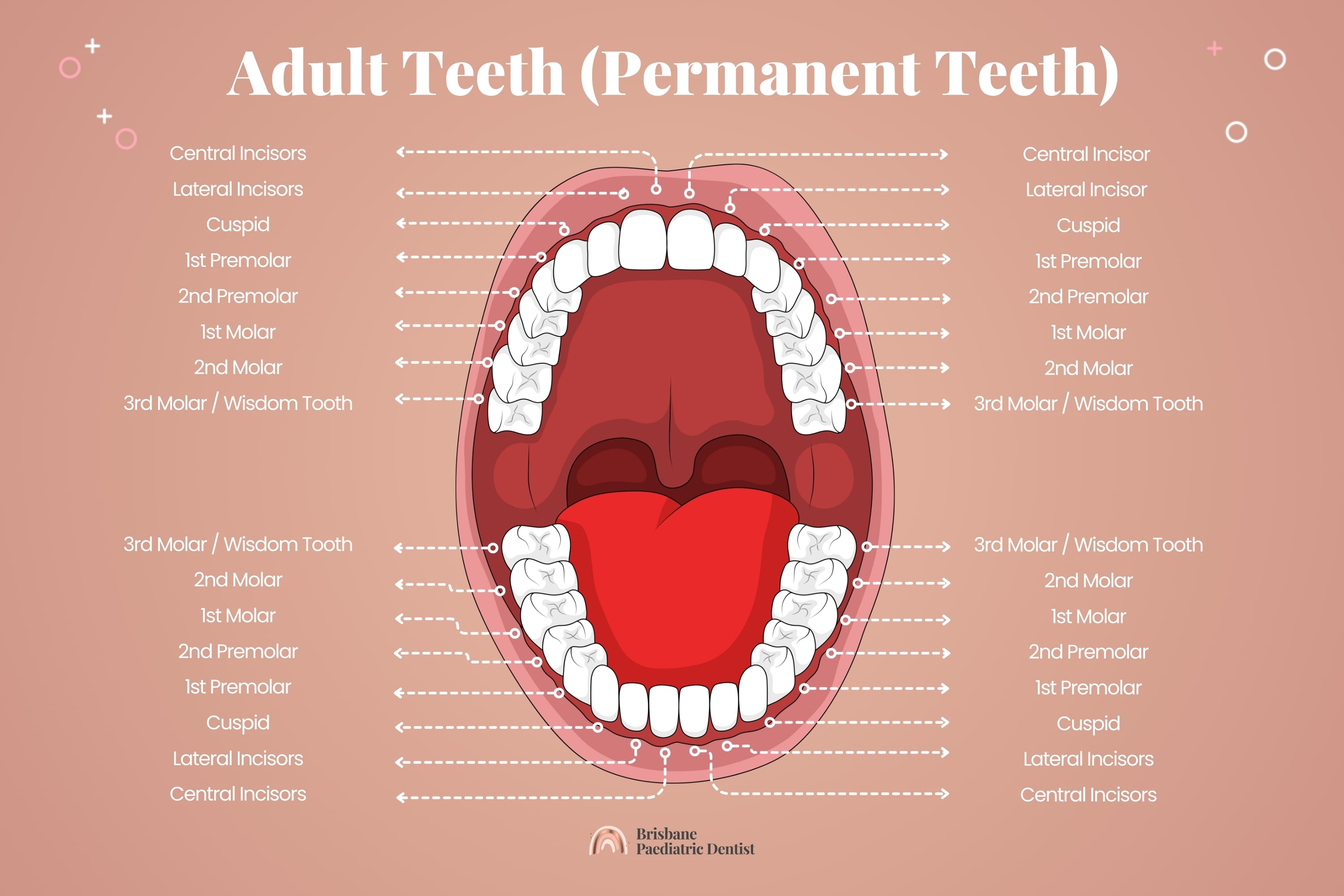
Permanent teeth include incisors, canines, premolars, and molars:
- 8 incisors. The four front teeth on both the top and bottom are sharp and designed for biting and cutting food. Incisors also help you detect the texture and type of food.
- 4 canines (cuspids). The pointed teeth at the corners of the dental arches are canines, or cuspids. Their cusps are used for grasping and tearing food.
- 8 premolars. Positioned between the cuspids and molars in both position and shape, premolars resemble molars but typically have two cusps and are sometimes called bicuspids. They tear and slice food.
- 12 molars. There are twelve molars in total, with six on the top and six on the bottom. They have broad surfaces for grinding food before swallowing. This group includes wisdom teeth — the third molars — which may appear as late as the early 20s and are frequently removed.
Not everyone can comfortably accommodate all 32 permanent teeth in their mouth. Research indicates human jaws began to shrink when societies transitioned from hunter-gatherer lifestyles to settled agriculture. One possible reason is that softer, cooked foods required less robust jaws for chewing, reducing evolutionary pressure for large jaws.
Having too many teeth, or overcrowding, can lead to:
- misaligned teeth
- greater risk of tooth decay
- impacted wisdom teeth
- increased risk of periodontal disease
For these reasons, many people opt to have their wisdom teeth removed.
Take care of your teeth
Over your lifetime you’ll have two complete sets of teeth. As a child you possess 20 primary teeth, and as an adult you should have 32 permanent teeth.
Each of the 32 permanent teeth plays a specific role in chewing and digestion. Maintain good oral hygiene and healthy gums to prevent cavities and protect your overall health.
Frequently Asked Questions
Most adults have 32 permanent teeth: 8 incisors, 4 canines, 8 premolars, and 12 molars (including wisdom teeth) once all have erupted.
Adults typically have all permanent teeth by their late teens to early 20s, though wisdom teeth may emerge later and sometimes are removed.
No. Many people have their wisdom teeth removed due to impaction, overcrowding, or risk of dental problems; not everyone develops usable third molars.
Yes. Teeth can be congenitally missing, extracted due to decay or trauma, or never erupt, resulting in fewer than 32 teeth.
Practice good oral hygiene—brush twice daily, floss, attend regular dental check-ups, manage diet and avoid tobacco—to protect teeth and gums long-term.
Read Next
Hyperdontia: Do I Need to Have My Extra Teeth Removed?
How Long Will I Have to Sit in the Dentist Chair During a Root Canal?

What You Need to Know About Snap-In Dentures
The 9 Best Mouthwashes For Whitening, Cavities, Gums, Breath, and More

What Exactly Is a Tooth Piercing?

Debunking the Myth of Tooth Worms and Other Cavity Causes
Related Posts

How Regularly Should You Get Your Teeth Cleaned?
Aug 2, 2026 • 3 min read
Veneers vs. Lumineers: What’s the Difference?
Sep 11, 2026 • 33 min read
How Does Drinking Soda Affect Your Dental Health?
Aug 26, 2026 • 4 min read
What Should I Do About a Molar Broken Off at the Gum Line
Aug 8, 2026 • 32 min read
Everything You Need to Know About Fever Blister Remedies, Causes, and More
Sep 6, 2026 • 19 min read