Knee Pain Location Chart: Front, Side & Behind the Knee

- Knee Pain Location Chart
- What Does Pain in the Front of the Knee Mean?
- What Causes Pain on the Inside of the Knee?
- What Causes Pain on the Outside of the Knee?
- What Does Pain Behind the Knee Mean?
- How to Narrow It Down: Sudden Injury or Gradual Onset?
- What Movement Triggers Your Knee Pain?
- What to Do First at Home for Knee Pain
- When to See a Doctor About Knee Pain
Where your knee hurts is the best first clue to what is causing the pain. Pain at the front, around the kneecap, most often means patellofemoral pain (runner’s knee) or a tendon problem. Pain on the inner side often points to the MCL, the medial meniscus or arthritis. Pain on the outer side is most often iliotibial band syndrome. Pain behind the knee is commonly a Baker’s cyst or a hamstring problem, and in rare cases a blood clot. This knee pain location chart matches each spot to its likely causes, the signs that tell them apart, and the red flags that mean you should see a doctor.
Use the chart as a starting point, not a diagnosis. Several conditions overlap, pain can spread from one area to another, and only an exam, sometimes with imaging, can confirm the cause. The Cleveland Clinic puts it the same way: where your knee hurts can be a good sign of what is causing it, but location alone is never the whole answer.
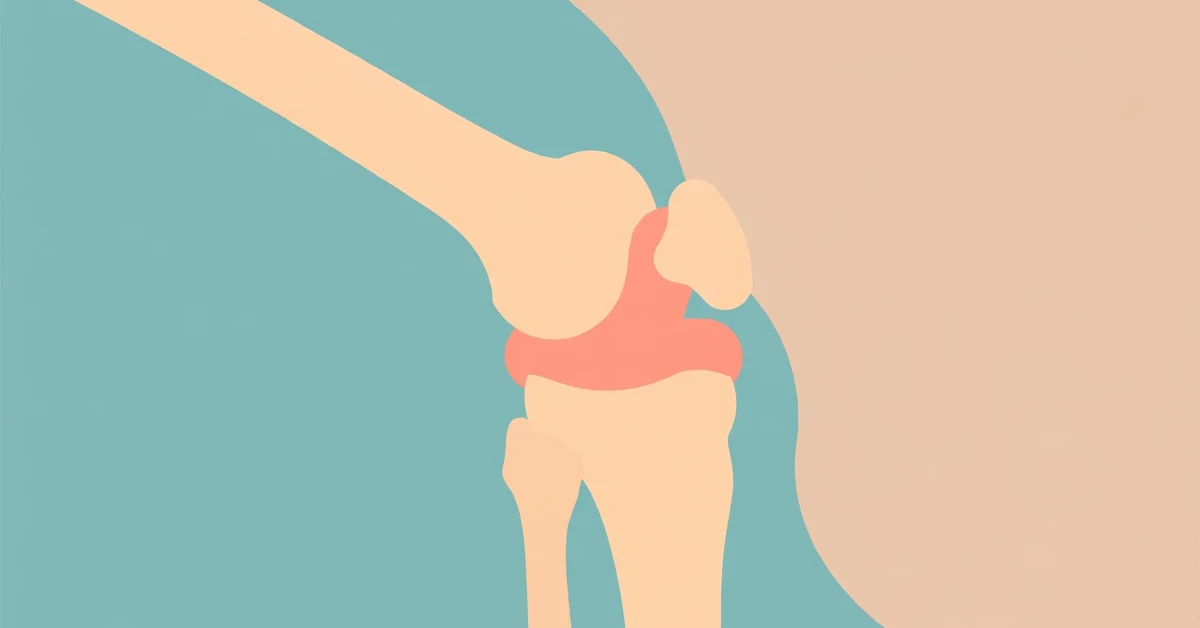
Knee Pain Location Chart
Find the row that matches where your knee hurts most. The “see a doctor if” column is the part people skip, and the part that matters most.
| Where it hurts | Likely causes | How it usually feels | See a doctor if |
|---|---|---|---|
| Front, around the kneecap | Patellofemoral pain syndrome (runner’s knee), chondromalacia, prepatellar bursitis | Dull ache around or behind the kneecap; worse on stairs, squatting or after sitting with bent knees | Pain lasts more than a few days, or swelling appears over the kneecap |
| Just below the kneecap | Patellar tendinitis (jumper’s knee); Osgood-Schlatter disease in teens | Tender ache between the kneecap and the shin; starts with jumping or hard workouts; a tender bump in a teenager | Pain spreads to everyday tasks like stairs, or keeps getting worse |
| Just above the kneecap | Quadriceps tendinitis; quadriceps tendon tear (rare) | Ache at the top of the kneecap with running or jumping; a tear brings a pop and trouble straightening the leg | Right away if you cannot straighten your knee after a pop or fall |
| Inner side | MCL sprain, medial meniscus tear, pes anserine bursitis, osteoarthritis | Sharp pain after a twist or blow, or a gradual ache 2 to 3 inches below the joint; the knee may catch, lock or give way | The knee gives way, locks, or will not fully straighten |
| Outer side | IT band syndrome, LCL sprain, lateral meniscus tear | Aching or burning that builds during runs or rides and eases with rest; a sprain follows a blow to the inside of the knee | Pain keeps returning with activity, or follows an injury with instability |
| Behind the knee | Baker’s cyst, hamstring tendinitis, meniscus tear, PCL injury | Fullness or a soft lump behind the knee, tightness when bending fully, pain after sprinting or an awkward step | Right away if there is pain and swelling behind the knee, especially with calf pain or swelling |
| All over the knee | Osteoarthritis, gout, septic arthritis (infection) | Gradual stiffness and aching (arthritis) or sudden, hot, red, very painful swelling (gout or infection) | Same day if the knee is hot, red and swollen and you have a fever |

One caution before the details: a knee that hurts all over, is hot and red, and comes with a fever needs same-day care. That combination can mean an infection inside the joint, which is treated as an emergency.
What Does Pain in the Front of the Knee Mean?
Front-of-knee pain is the most common kind, and it usually comes from how the kneecap tracks and takes load. The leading cause is patellofemoral pain syndrome, often called runner’s knee. The American Academy of Orthopaedic Surgeons (AAOS) describes it as a dull, aching pain in the front of the knee that tends to come on gradually. It usually gets worse with stairs, running, jumping, squatting or sitting for a long time with your knees bent, and it is common in athletes, especially women and young adults. You may also hear popping or crackling when you stand up.
Closely related is chondromalacia, a softening of the cartilage under the kneecap. It often travels with patellofemoral pain and produces the same kind of ache, sometimes with a grinding feeling when you bend the knee. It is not a separate injury in most cases, but a description of worn cartilage behind the kneecap.
Pain just below the kneecap, tender to the touch, points more to patellar tendinitis, or jumper’s knee. The Cleveland Clinic notes that it builds up slowly from repeated strain, usually hurts most when you straighten the knee, and starts with jumping or hard workouts before creeping into everyday tasks like stairs. In children and teenagers, a sore, hard bump in exactly the same spot is the classic sign of Osgood-Schlatter disease. It shows up during growth spurts and usually settles once growth finishes, around age 14 for girls and 16 for boys.

A soft, visible swelling sitting right on top of the kneecap is more likely prepatellar bursitis. The bursa is a small fluid-filled sac that cushions the kneecap, and it swells when it is irritated, often from frequent kneeling. It usually hurts to kneel or bend, and the area may feel warm. Most cases settle in a couple of weeks with rest, ice and keeping weight off the knee. See a doctor straight away if you have a fever or chills with it, because an infected bursa needs urgent treatment.
An ache at the very top of the kneecap often comes from the quadriceps tendon, which connects the big thigh muscle to the kneecap. Quadriceps tendinitis is most common in people who run and play jumping sports. A full quadriceps tendon tear is a different situation: it usually comes with a pop, an inability to straighten the knee, and sometimes a dent just above the kneecap. A complete tear almost always requires surgery, so get it checked promptly. If your pain sits mainly above the knee rather than on it, our guide to pain above the knee covers the causes in more detail.
What Causes Pain on the Inside of the Knee?
Pain on the inner (medial) side of the knee usually comes from one of four things, and how it started is the biggest clue. If it followed a twist or a blow, think ligament or meniscus first. If it crept up slowly, think bursitis or arthritis.
An MCL sprain happens when a force pushes the knee sideways, for example a tackle or a bad landing. The medial collateral ligament runs along the inside of the knee, and a sprain brings pain along the inner side, swelling and sometimes a feeling that the knee might give out. The AAOS notes that a pop at the time of injury is common.
A medial meniscus tear can start the same way, with a pop during a twist. Over the next two to three days the knee gets stiffer and more swollen, and it may catch or lock. Pain when twisting, trouble fully straightening the knee, and a feeling of giving way are the classic signs. In older adults the meniscus is worn and can tear with very little force, sometimes from an awkward twist getting up from a chair.
Pes anserine bursitis sits a little lower: the pain shows up on the inner side of the knee about 2 to 3 inches below the joint. It is common in runners, swimmers and cyclists, and in people with knee osteoarthritis. It hurts more on stairs or getting up from a chair and eases with rest. The Cleveland Clinic notes that most people heal in about six to eight weeks.
Osteoarthritis of the inner compartment is the most common cause of inner knee pain in adults over 50, because the inner side of the joint bears the greatest load during walking. It builds gradually, with pain and stiffness that are often worse in the morning or after resting, and the knee may creak or grind.
What Causes Pain on the Outside of the Knee?
Pain on the outside (lateral side) of the knee is most often iliotibial band syndrome, especially in runners and cyclists. The iliotibial band is a thick strip of tissue running down the outside of the thigh to the knee. When it is irritated it causes an aching or burning pain on the outer knee that builds during exercise and eases with rest. At first it starts after exercise; later it appears during exercise and then at rest. Sudden jumps in training distance, uneven surfaces and weak hip muscles all contribute, and some people feel a snap or click on the outside of the knee.
An LCL sprain is the outer-side counterpart of an MCL sprain. It usually follows a blow to the inside of the knee that pushes the joint outward, with a pop, swelling and tenderness on the outer side. A lateral meniscus tear can also hurt on the outside, typically after a twist, with the same catching or locking pattern as a medial tear. Arthritis can affect the outer compartment too, though it is less common there than on the inner side.
Because outer knee pain is so often activity-related, the pattern matters more than the pain itself: pain that appears at a predictable point in a run and fades with rest points to the IT band, while pain that starts with a single twist or blow points to a ligament or meniscus injury.
What Does Pain Behind the Knee Mean?
Pain behind the knee has a longer list of possible causes than the other zones, and one of them needs same-day attention. The most common cause is a Baker’s cyst, also called a popliteal cyst: a fluid-filled swelling behind the knee. The NHS describes the main sign as a soft lump at the back of the knee that may be easier to see when you stand. You may also feel tightness, aching or clicking, find it hard to bend your knee fully, and notice it is worse after walking. A Baker’s cyst usually develops because something else inside the joint, such as arthritis or a meniscus tear, is producing extra joint fluid, so treating the cyst alone rarely solves it.
Hamstring tendinitis causes pain behind the knee after sprinting, deep bending or an awkward step, and it is often tender where the hamstring tendons attach. A PCL injury is less common and usually follows a hard blow to the front of the shin, such as hitting a dashboard in a car accident. A meniscus tear in the back part of the cartilage can also be felt mainly behind the knee.
The warning that matters here is about blood clots. Pain or swelling in the leg that suddenly gets worse, with warm, red or darkened skin, could be a burst cyst or a deep vein thrombosis (DVT). A DVT usually causes throbbing pain and swelling in one leg, often in the calf or thigh. Get help the same day for those signs, and call 911 if leg swelling comes with breathlessness or chest pain, because a clot may have reached the lungs. If your pain started after a knee replacement, our guide to pain behind the knee after knee replacement covers that specific situation.
How to Narrow It Down: Sudden Injury or Gradual Onset?
When the pain started is often more useful than where it is. A knee problem that began in a single moment behaves very differently from one that built up over weeks.
| How it started | Typical pattern | Most likely causes | Next step |
|---|---|---|---|
| Sudden: a twist, blow or fall, often with a pop | Sharp pain at the moment of injury, swelling within hours, trouble bearing weight or straightening the knee | MCL or LCL sprain, meniscus tear, quadriceps tendon tear, fracture | Get checked promptly, especially if the knee locks, gives way or will not straighten |
| Gradual: builds over days or weeks, no single injury | Ache that grows with activity and eases with rest, stiffness after sitting, slowly worsening | Patellofemoral pain, tendinitis, bursitis, IT band syndrome, osteoarthritis | Ease off the aggravating activity, try the home steps below, and see a doctor if it does not improve in 2 to 3 weeks |
Two more patterns help. Pain that moves around the knee, or affects both knees, is more often arthritis or an overuse pattern than a single injury. And pain felt at the knee does not always start at the knee: hip problems and lower back problems can send pain down to the knee, which is why a good exam looks at the hip and ankle as well as the knee itself.
What Movement Triggers Your Knee Pain?
Different movements load different parts of the knee, so the movement that hurts is itself a clue. Match yours below.
| Movement | Hurts most with | Points to |
|---|---|---|
| Going down stairs | Dull ache around the kneecap, worse step by step | Patellofemoral pain syndrome, patellar tendinitis |
| Going up stairs | Ache and stiffness, worse after resting | Osteoarthritis, quadriceps weakness |
| Squatting or kneeling | Pain or pressure on the kneecap, or a pinching feeling inside | Prepatellar bursitis, meniscus tear, patellofemoral pain |
| Sitting a long time | Ache that builds with bent knees, eases when you stand and move | Patellofemoral pain syndrome (“movie-goer’s knee”) |
| Running, especially downhill | Burning on the outer knee that grows with distance | IT band syndrome, patellofemoral pain |
| Twisting or pivoting | Sharp pain, a pop, catching or locking | Meniscus tear, ligament sprain |
| Pain at night | Aching that disturbs sleep, or sudden severe pain that wakes you | Osteoarthritis or inflammatory arthritis; sudden night pain can be gout |
If bending itself is the problem rather than a specific movement, our guide to knee pain when bending goes deeper on that pattern.
What to Do First at Home for Knee Pain
For overuse pain without a clear injury, the first steps are the same whatever the location. Rest the painful activity rather than stopping all movement: cut distance, hills or intensity for a while, and avoid the specific movement that triggers the pain. Ice the sore area for 15 to 20 minutes after activity when the knee is swollen or aching. Compression with an elastic bandage and raising the leg can help with swelling in the first days. This is the RICE approach: rest, ice, compression and elevation.
Over-the-counter pain relief, such as acetaminophen or an anti-inflammatory like ibuprofen, can ease pain and swelling for most people. Follow the label, and talk to a pharmacist first if you take other medicines or have stomach, kidney or liver problems. Do not use heat on a hot, swollen knee, and do not push through sharp pain: pain that is sharp or makes the knee give way is a signal to stop, not to work through.
Strengthening is the part most people skip and the part that helps most in the long run. Quadriceps and hip strengthening are especially helpful for runner’s knee and IT band syndrome, and the international consensus recommends combined hip and knee strengthening over knee exercises alone. Two or three short sessions a week, with moves such as step-ups, sit-to-stands and bridges, is a reasonable start. Our guide to exercises for knee pain lists ten moves with guidance on how to do them. Supportive footwear matters too: worn-out shoes and sudden changes in training surface can both change how the knee is loaded.
When to See a Doctor About Knee Pain
See a doctor if knee pain lasts more than a few days, makes it hard to move, or gets in the way of your daily routine. Get urgent medical help the same day if any of these apply:
- You cannot put weight on the leg, or the knee will not move.
- Your knee locks, gives way or clicks painfully.
- The knee is badly swollen or has changed shape.
- The knee is hot and red and you have a fever or feel shivery, which can mean an infection.
- One leg suddenly becomes painful, swollen and warm, which can mean a blood clot.
- You heard a pop and now cannot straighten the knee.
- The pain followed a serious fall or crash, or you think you may have broken a bone.
When you see your doctor, it helps to describe five things: where exactly it hurts, when it started and whether it was sudden or gradual, what it feels like and whether you felt a pop or click, what makes it better or worse, and whether the knee swells, locks or gives way. That short description is usually enough for a doctor to narrow the chart down to two or three likely causes before any imaging.
This article is general information only and is not medical advice. Where your knee hurts is a clue, not a diagnosis. If your knee is hot and swollen with a fever, you cannot put weight on it, or one leg is suddenly painful and swollen, get urgent medical help. Call 911 if leg swelling comes with chest pain or breathlessness.
Frequently Asked Questions
Common signs include a pop at the time of injury, swelling or stiffness over the next two to three days, pain when twisting, trouble fully straightening the knee, and a catching or locking feeling. An exam, and sometimes imaging, is needed to confirm it, because ligament injuries and arthritis can feel similar.
The most common reason is iliotibial band syndrome, which causes aching or burning on the outer knee that builds during runs and eases with rest. Sudden increases in mileage, uneven surfaces and weak hip muscles can all contribute. Pain that appears at a predictable point in a run and fades with rest points to the IT band rather than a ligament injury.
Pain behind the knee when you bend it is often a Baker’s cyst, a soft fluid-filled lump that the NHS says can make bending hard and feel worse after walking. Tendon or ligament injuries, arthritis and tight muscles can also cause it. Get any new lump checked by a doctor, and get same-day care if the pain comes with calf swelling.
Knee pain on stairs is a common sign of patellofemoral pain syndrome, a dull ache around the kneecap that the AAOS says builds gradually with activity. Patellar tendinitis and pes anserine bursitis can also hurt on stairs. Holding the handrail and going down with your sore leg first can ease the load.
Yes, pain behind the knee can sometimes be a blood clot (DVT). The NHS says a DVT usually causes throbbing pain and swelling in one leg, often in the calf or thigh, with red or darkened skin. Get urgent help for those signs, and call 911 if you are also breathless or have chest pain.
Worry about knee pain if you cannot put weight on the leg, the knee gives out or locks, it swells a lot or changes shape, or you have a fever with a hot, red, swollen knee. Pain and swelling behind the knee needs care right away, especially if your calf is also sore or swollen. Pain that lasts more than a few days or keeps coming back also deserves an exam.
Arthritis pain usually builds gradually rather than starting with a single injury. Osteoarthritis often hurts more at the end of the day or after activity, with morning stiffness that usually lasts no more than half an hour, and the knee may creak, grind, lock or stick. Sudden pain with a pop after a twist points more to a meniscus or ligament injury than to arthritis.
Read Next
How to Identify and Treat Spider Bites

Does Medicare Cover Ozempic? Part D Rules, 2026 Costs and Alternatives
The Best Alternatives to the Leg Press
Weight Management Retreats: How to Choose the Right Programme for Sustainable Health

9 of the Best Keto-Friendly Protein Bars You Can Buy
Derma Roller for Hair Growth: Here’s What You Need to Know
Related Posts
Knee Replacement Recovery Timeline: What to Expect Week by Week
Nov 11, 2026 • 32 min read
Does Medicare Cover Knee Replacement Surgery? Costs Explained
Nov 14, 2026 • 10 min read
7 Best Knee Pillows for Back and Side Sleepers in 2025
Oct 1, 2026 • 28 min read
Shea Butter for Your Face: Benefits and Uses
Aug 27, 2026 • 29 min read
Dementia Stages Chart: The 7 Stages of Dementia and What to Expect at Each One
Nov 11, 2026 • 21 min read