The Best Alternatives to the Leg Press

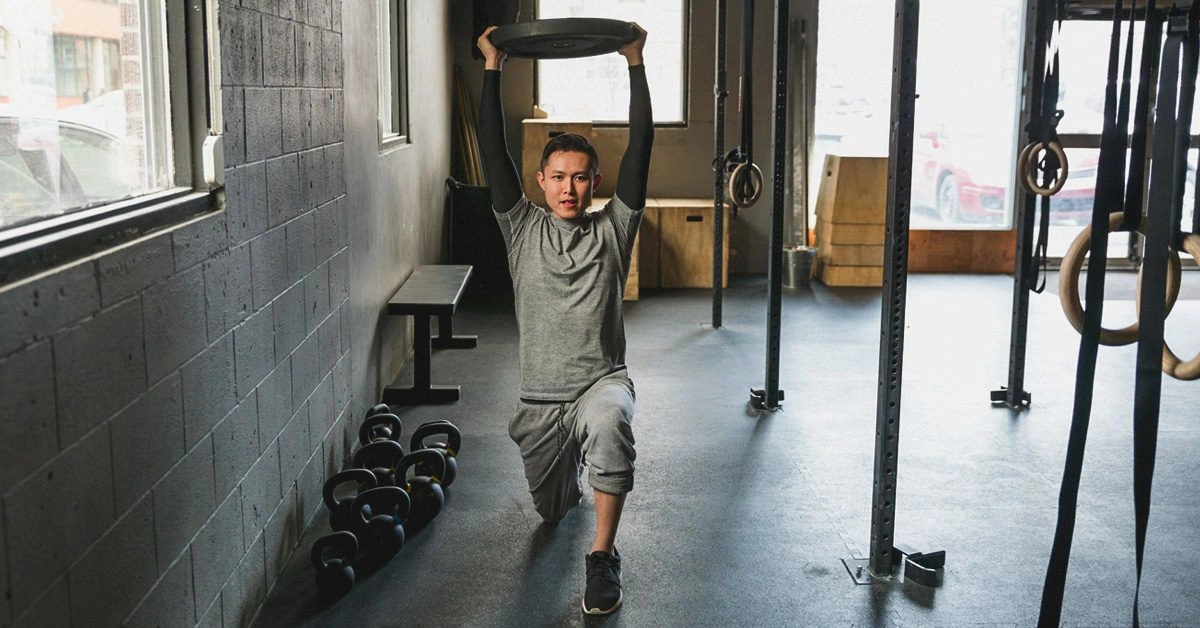
Alternatives to leg presses include using resistance bands to replicate the load of a leg press machine, as well as squats, lunges, and broad jumps.
Leg strength
Whether you’re training for a race or just stepping outside for the mail, powerful legs matter.
The leg press, a compound resistance exercise, is an effective method to develop lower-body strength. It involves pushing against weighted resistance while seated on a leg press apparatus.
As with other strength training movements, leg presses increase muscle size, lower injury risk, and combat age-related muscle decline. These benefits help with everyday tasks like rising from a chair or carrying groceries.
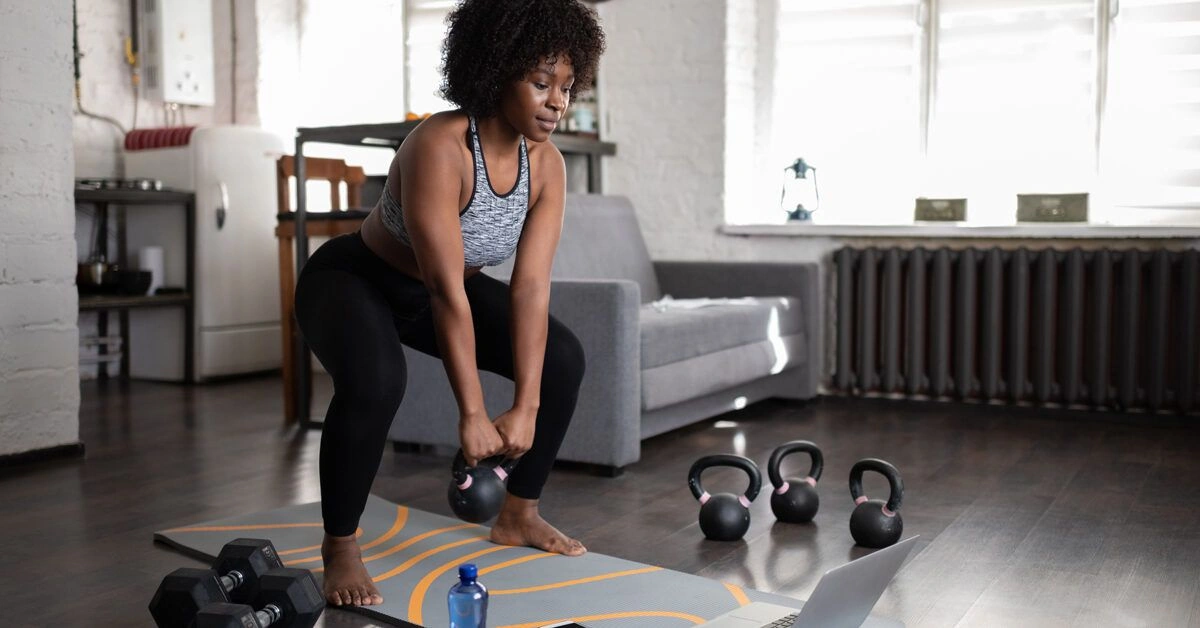
That said, you don’t need an expensive machine or gym access to build leg strength. These five machine-free moves let you strengthen your legs at home.
What do leg presses do?
Leg presses are performed seated, repeatedly pushing the legs against adjustable weights. This movement targets the quadriceps, glutes, hamstrings, hips, and calves.
The seated setup stabilizes the upper body and torso and requires less balance to move the load, according to a 2016 study.
There are several ways to reproduce the effects of a leg press without a machine. Many alternatives are variations of the following five exercises:
1. Leg press with resistance bands
A resistance band can stand in for the weight stack of a leg press machine. Banded leg presses target the same muscle groups and are portable and space-saving, so you can do them almost anywhere.
Equipment needed: Resistance band and mat or chair
Muscles worked: Quads, hamstrings, glutes, calves
Resistance band leg press — lying

This variation has you working against gravity in a way similar to a seated leg press.
- Lie on your back on a mat. Lift your feet off the mat and bend your knees to about 90 degrees. Flex your feet so your toes point upward.
- Loop the band around both feet and hold the ends. Keep your feet together.
- Press your feet away from you against the band until your legs are straight.
- Return by bending your knees back to roughly 90 degrees.
- Begin with one set of 8–12 repetitions.

If your back needs support, perform banded leg presses while seated in a chair.
- Sit tall on a chair, brace your core and keep your spine neutral.
- Wrap the band around your feet and hold the ends just above your thighs.
- Press your feet forward against the band until your legs straighten.
- Bend your knees to return to the starting position.
- Begin with one set of 8–12 repetitions.
Advanced resistance band leg press
To up the challenge, switch to a shorter or thicker band for greater resistance.
2. Squats

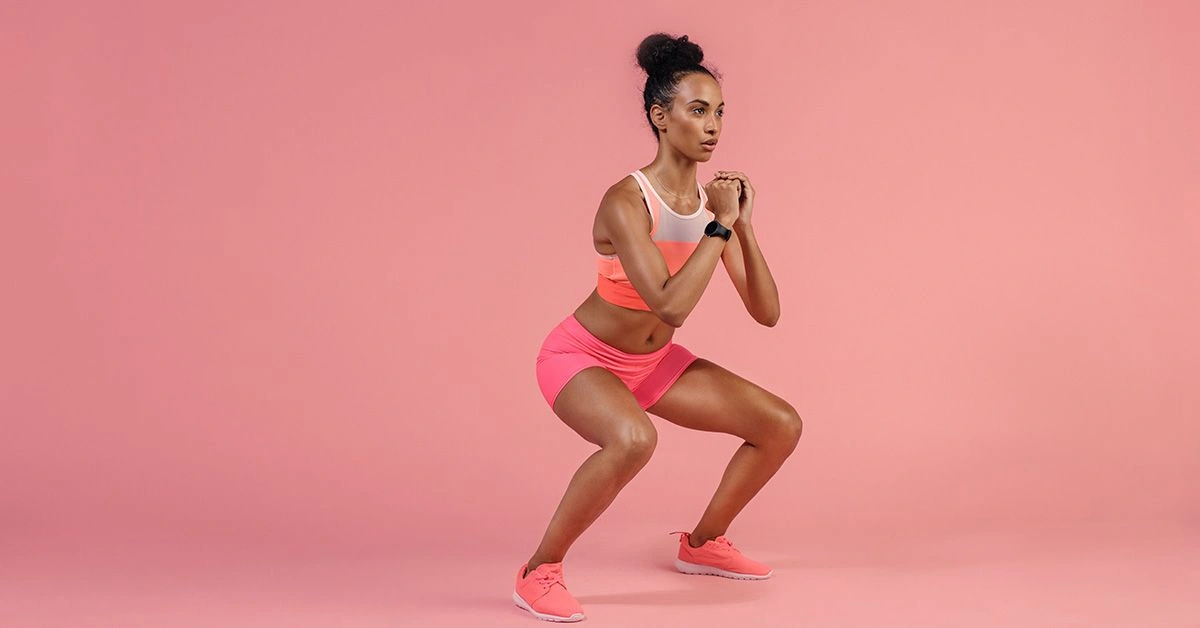
Squats replicate the leg press motion in a vertical orientation, which can reduce lumbar loading. If you have lower-back discomfort or injuries, squats are often a suitable alternative.
Equipment needed: None
Muscles worked: Quads, glutes, hamstrings
- Stand with feet hip-width apart, heels pressed into the floor and toes pointing forward.
- For balance, extend your arms in front of you or clasp your hands.
- PUSH your hips back and bend your knees while keeping a neutral spine and lifted chest.
- Lower until your thighs are parallel to the floor, ensuring knees track over ankles.
- Drive through your heels to return to standing.
- Start with one set of 8–12 reps.
Advanced squats
When you’re stronger, add load by holding a dumbbell or kettlebell while squatting.
Sumo squats
To make squats more challenging, try a sumo stance. The wider foot placement emphasizes the inner thighs.
- Stand with feet wider than hip-width and toes angled outward. Press your heels into the floor.
- Clasp your hands or hold a weight in front of you.
- Push your hips back, bend your knees, and lower your glutes while keeping your core engaged and chest upright.
- Lower until your thighs are roughly parallel to the floor, maintaining knee alignment over ankles.
- Press into your heels to rise.
- Begin with one set of 8–12 reps.
Split squats
To single out one leg, perform split squats. This unilateral version targets quads and glutes intensely.
- Place one foot forward and the other back, shifting most weight to the front leg. Lift the heel of the back foot.
- Face your toes forward and maintain a stable upper body.
- Bend both knees to lower your hips while keeping them aligned with your shoulders.
- Lower until the back knee hovers just above the ground.
- Squeeze your glutes to return to the start.
- Begin with one set of 8–12 reps, then switch legs.
3. Lunges

Lunges, like squats, activate the major leg muscles without loading the spine heavily. The stepping motion particularly emphasizes the quads and glutes.
The lunge differs from the split squat in that both legs are moving and absorbing force during the step, whereas the split squat keeps one foot stationary.
Equipment needed: None
Muscles worked: Quads, glutes, hamstrings
- Stand with feet hip-width apart.
- Step one foot forward and lower your hips so both knees bend to about 90 degrees.
- Descend until the front thigh is parallel to the floor, keeping the front knee over the ankle.
- Press through the front foot to return to standing.
- Begin with one set of 8–12 reps, then switch legs.
Advanced lunges
To increase intensity, hold dumbbells at your sides or position them at shoulder level while lunging.
For guidance on choosing the right resistance training tools for your goals, read about free weights vs machines.
4. Broad jumps

Broad jumps, also known as standing long jumps, develop explosive leg power. The move fuses a squat with a full extension of the lower body, making it an excellent leg-press substitute.
If you experience joint pain, approach broad jumps cautiously because they produce high-impact forces.
Equipment needed: None
Muscles worked: Quads, hamstrings, glutes, calves
- Stand with feet shoulder-width apart.
- Drop into a squat by bending your knees and pushing your hips back; swing your arms behind you.
- Swing your arms forward and drive your feet into the ground to explode forward.
- Land softly on both feet, flexing hips, knees, and ankles to absorb impact.
- Begin with one set of 8–12 reps.
5. Bridge exercise

The bridge stabilizes and strengthens the posterior chain and core. It activates the glutes and hamstrings, offering many of the benefits of a machine leg press.
Equipment needed: Mat
Muscles worked: Quads, glutes, hamstrings, hips
- Lie on your back with knees bent and feet planted on the floor just beneath the knees. You can also place feet on an exercise ball or bench.
- Place your arms by your sides with palms down.
- Engage your core and glutes.
- Lift your hips to form a straight line from knees to shoulders, pause, then lower back down.
- Begin with one set of 8–12 reps.
Advanced bridge
If the standard bridge is too easy, add a resistance band across your hips or place a weight on your pelvis for extra load.
The takeaway
These exercises let you strengthen your lower body without needing a leg press machine. They recruit multiple muscle groups simultaneously, helping your body perform daily tasks and other workouts more effectively.
Even without machines, safety matters. If you’re new to resistance training, consult your doctor first. Begin with lighter loads and fewer repetitions.
Always warm up before training to reduce injury risk and increase muscle oxygenation. For balanced development, rotate which muscle groups you target on different days.
Frequently Asked Questions
Resistance band leg presses, squats, lunges, broad jumps, and bridges are effective home alternatives that target quads, glutes, hamstrings, and calves without a machine.
Squats reproduce similar muscle activation and can replace the leg press for many people; they also reduce lumbar loading and improve functional strength when performed correctly.
Resistance bands provide progressive tension and portability, allowing similar muscle recruitment to a leg press while offering more variability in setup and range of motion.
Broad jumps build explosive power but are high-impact; they’re safe when performed with good landing mechanics and should be used cautiously if you have joint issues.
Increase resistance (thicker bands, added weights), raise repetitions or sets, use unilateral variations (split squats), and add advanced versions to steadily overload muscles and build strength.

Related Posts
How to Get Toned Arms: 7 Exercises
Sep 29, 2026 • 36 min read
Which Is Better — Using Free Weights or Machines?
Sep 15, 2026 • 23 min read
Resistance Band Chest Workout: 7 Exercises You Can Do Anywhere
Sep 14, 2026 • 21 min read
Tire Workouts: What You Need to Know Before Starting
Sep 14, 2026 • 34 min read
12 Bench Press Alternatives to Build Size and Strength
Sep 14, 2026 • 19 min read