

Key takeaways
- A nutritious, balanced eating pattern abundant in fruits, vegetables, whole grains, and lean proteins is advised to enhance Mounjaro’s benefits.
- To help Mounjaro function optimally, it’s wise to limit or avoid certain foods.
- Pairing Mounjaro with helpful lifestyle adjustments can further assist with blood sugar control.
Mounjaro (tirzepatide) is a glucagon-like peptide-1 (GLP-1)/GIP receptor agonist. It’s approved by the U.S. Food and Drug Administration (FDA) for use alongside diet and physical activity to help manage blood glucose in people with type 2 diabetes.
If you’ve been prescribed Mounjaro, you might wonder what to eat to get the most from the medication. Read on to find out more.
Is there a recommended Mounjaro diet plan?
Mounjaro is intended to be used together with a wholesome diet and exercise. However, there’s no single universal diet that everyone on Mounjaro must follow.
Each person taking Mounjaro is unique. It’s important to collaborate with your healthcare provider or a registered dietitian to develop a tailored nutrition plan that meets your individual needs.
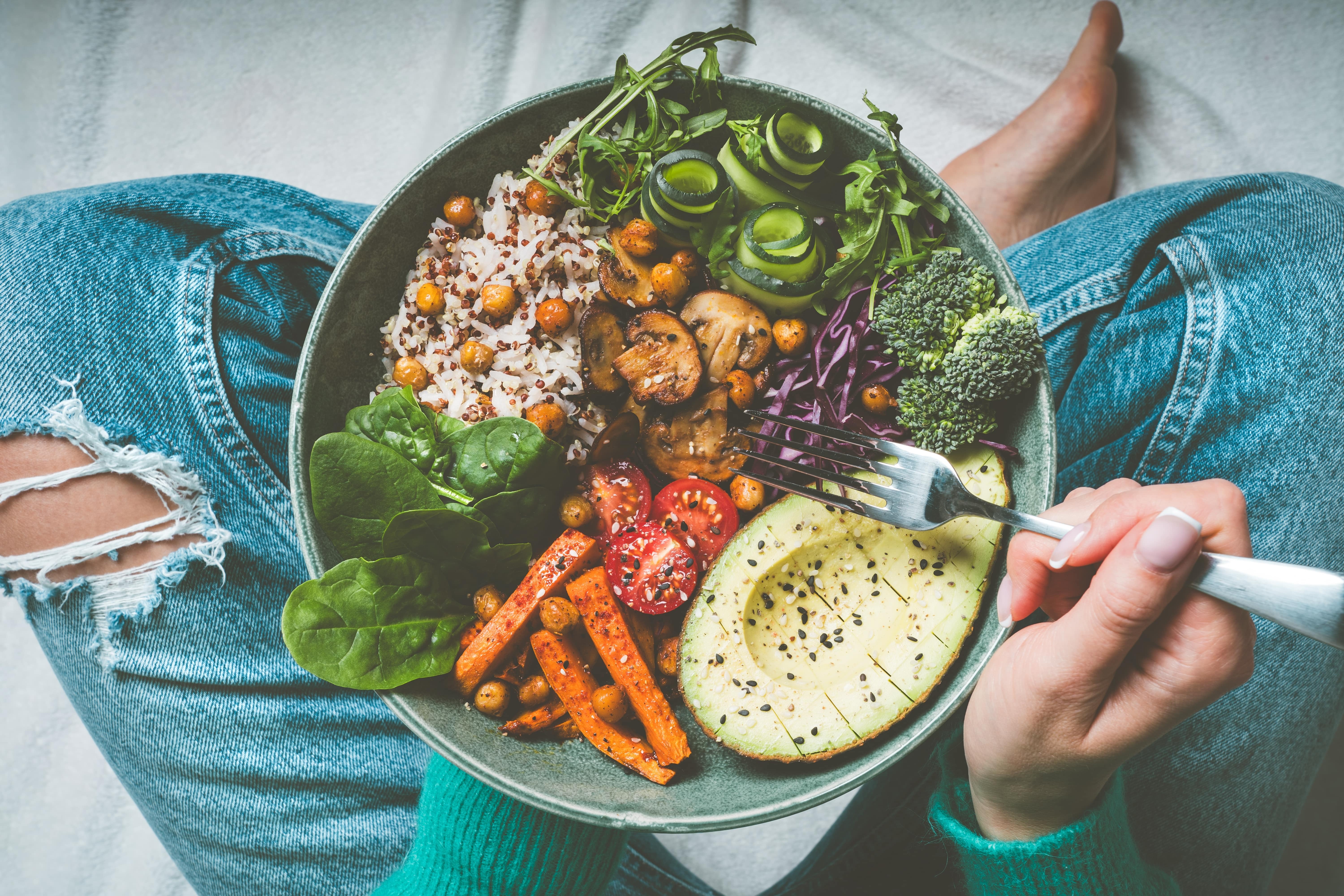
In general, following a healthy, balanced eating plan can help you get the most from Mounjaro. That typically means prioritizing foods from the following categories, based on the Dietary Guidelines for Americans.
Vegetables
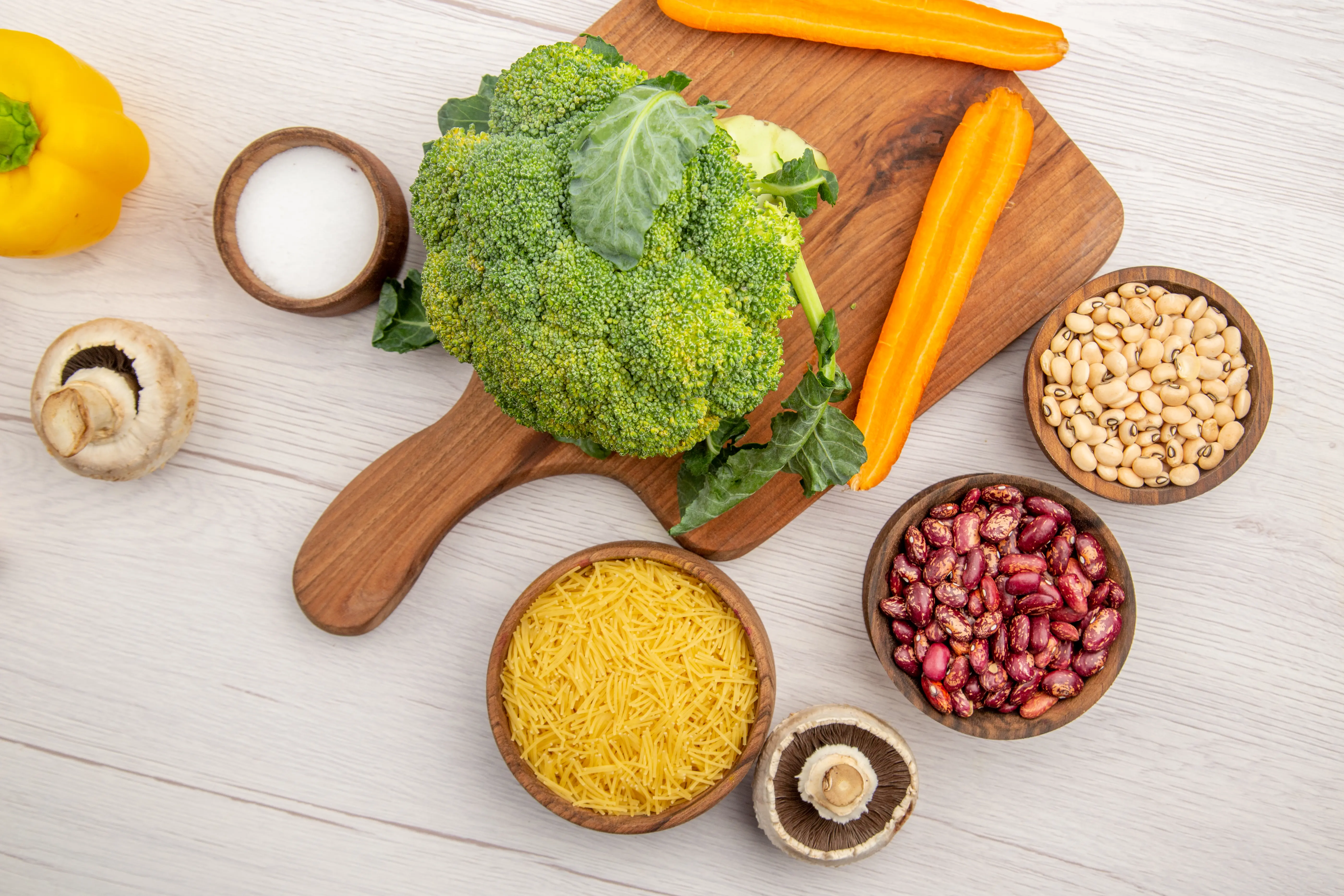
Vegetables can be eaten fresh, frozen, or canned. Examples to include in your meals are:
- leafy, dark-green vegetables like spinach, broccoli, lettuce, and kale
- red and orange vegetables such as carrots, sweet potatoes, and bell peppers
- legumes like beans, peas, and lentils
- starchy vegetables such as potatoes and corn
- other vegetables, for example asparagus, Brussels sprouts, okra, and onions
If you’re taking Mounjaro for diabetes, consider emphasizing non-starchy vegetables, which usually contain fewer carbohydrates than starchy varieties.
Fruits
Fruits may be enjoyed fresh, frozen, canned, or dried, and the group includes 100% fruit juice. At least half of your daily fruit servings should be whole fruits. Examples include berries, apples, bananas, citrus fruits, and peaches.
The American Diabetes Association (ADA) states that the best fruit choices for people with diabetes are fresh, frozen, or canned without added sugars. The ADA also notes that most fruits—aside from melons, pineapple, and some dried fruits—have a low glycemic index.
Grains
At least half of your daily grain intake should be whole grains, such as brown rice, oats, and barley. This includes foods made from whole grains, like whole wheat bread.
Other grains are refined and include items like white rice or products made with refined flour such as white bread or many pastas. It’s generally advised to limit refined grains.
Protein
Healthful protein choices include items such as:
- lean cuts of beef, pork, or poultry
- seafood
- eggs
- seeds and nuts
- soy-based products
Dairy
Dairy encompasses milk, cheese, and yogurt. In a balanced diet, most dairy options should be low-fat or fat-free.
What foods should I avoid with Mounjaro?
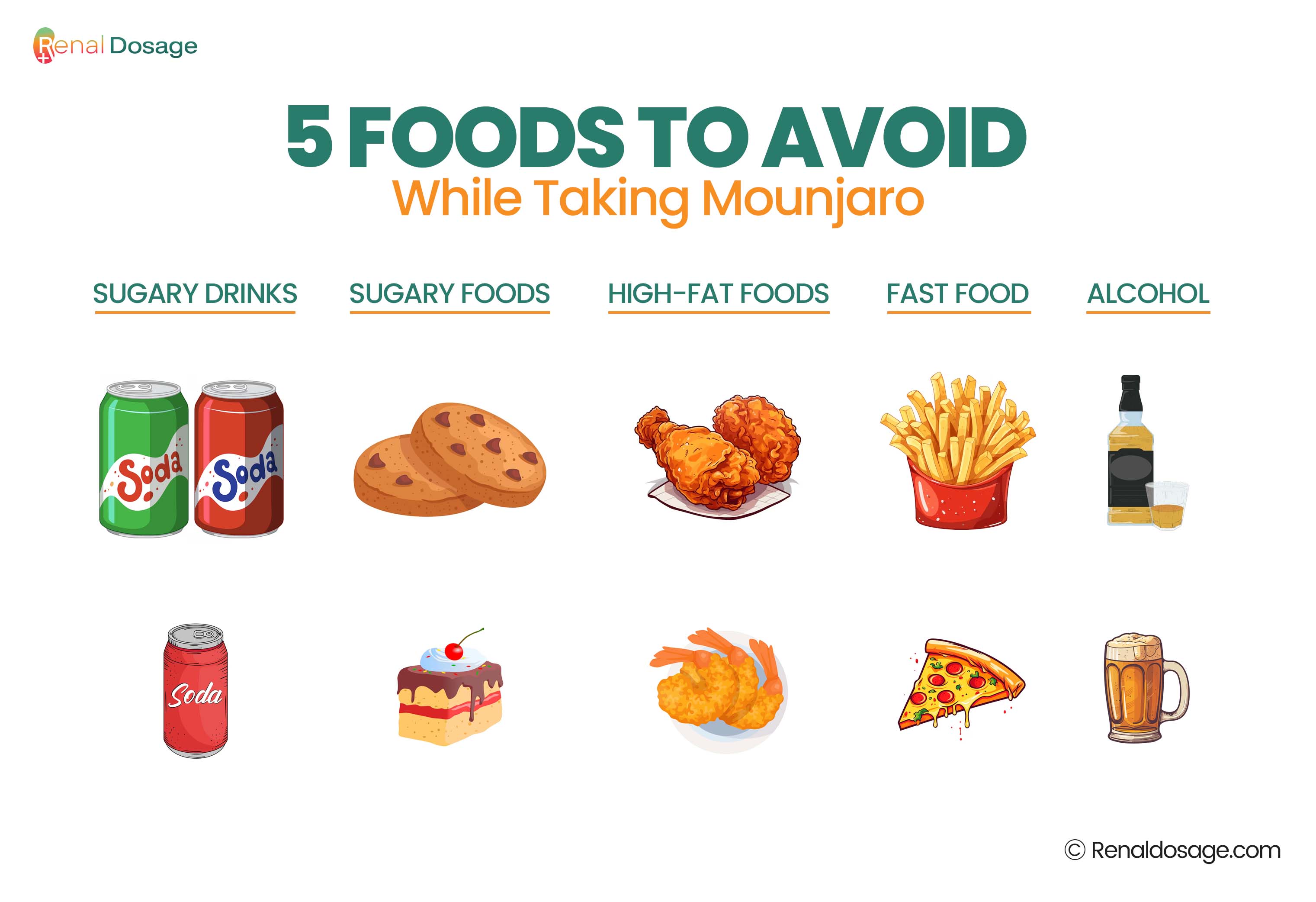
To get the most from Mounjaro, it helps to steer clear of certain foods. These include:
- items high in saturated or trans fats, such as: fatty cuts of beef, pork, and lamb; dark poultry meat (especially with skin); processed or cured meats; butter; full-fat dairy; deep-fried foods; palm oil or coconut oil
- refined carbohydrates and foods with added sugars, including: baked goods, candy, soda, and some fruit juices
- foods high in sodium
- alcohol
Keep in mind that the most common side effects of Mounjaro affect the digestive tract. These can include nausea, vomiting, indigestion (upset stomach), diarrhea, and constipation. If you experience these effects, you may want to avoid the following:
- foods that are greasy, very fatty, overly sweet, or highly spicy
- caffeine
- alcohol
- high-fiber foods (if you’re having diarrhea)
Do I need to avoid diet soda during Mounjaro treatment?
You don’t have to completely avoid diet soda while on Mounjaro. However, diet soda consumption has been linked with diabetes, so you may want to limit how much you drink.
Medical perspective What happens if I do not follow the recommended diet plan while receiving a GLP-1 medication? “If you don’t follow the recommended diet while on a GLP-1 drug, you may not get enough nutrients. This can cause problems like fatigue, hair loss, or muscle weakness. Diet choices that do not meet nutritional needs can also make side effects like nausea or constipation worse. And for people with diabetes, it may increase the risk of low blood sugar.” — Andrew Perugini, PharmD Learn more about GLP-1 medications. Quotes reflect the views of our medical experts. All content is for informational purposes only and is not medical advice.
Frequently asked questions about Mounjaro
Below are answers to some commonly asked questions about Mounjaro.
How many daily calories should I eat with Mounjaro?
Discuss with your doctor how many calories you should consume each day while using Mounjaro. They can advise on an appropriate daily calorie target for your circumstances.
How much protein do I need to eat with Mounjaro?
The Food and Drug Administration (FDA) recommends that adults aim for roughly 50 grams of protein per day.
Check with your healthcare provider about specific protein guidance before starting Mounjaro.
Summary
A healthy, balanced eating pattern is recommended while taking Mounjaro. Aim for diets rich in fruits and vegetables, whole grains, lean proteins, and low-fat dairy.
To enhance Mounjaro’s effects, avoid foods high in saturated or trans fats, added sugars, and excess sodium. People with diabetes may also want to limit foods with a high glycemic index.
Talk with your doctor or a registered dietitian about an individualized eating plan when beginning Mounjaro. They can help design a plan that fits your personal nutritional needs.
Disclaimer: HealthEH has worked to ensure information is accurate, comprehensive, and current. However, this article is not a substitute for the expertise of a licensed healthcare professional. Always consult your doctor or another qualified healthcare professional before starting any medication. Drug information may change and does not cover all possible uses, directions, precautions, warnings, interactions, allergic reactions, or adverse effects. The absence of warnings or other information for a drug does not mean it is safe, effective, or appropriate for all patients or uses.























Leave a Reply
You must be logged in to post a comment.