
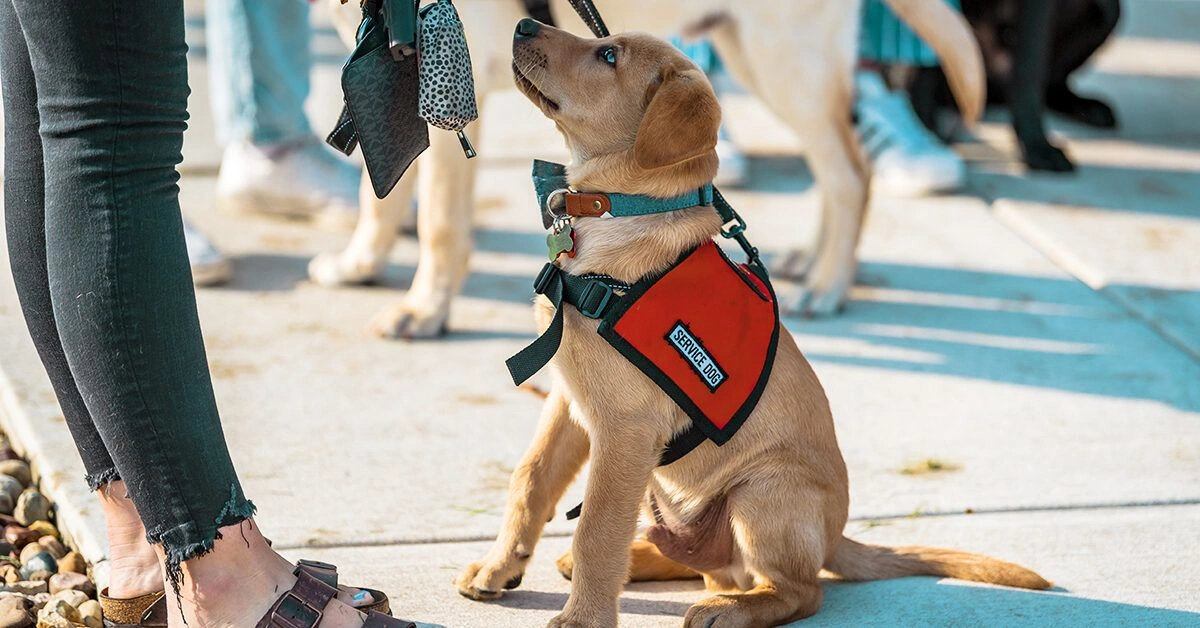
A narcolepsy service dog represents a long-term responsibility. Yet having one can improve your safety by alerting you before a narcoleptic episode. These dogs can also assist with everyday tasks and offer companionship.
If you live with narcolepsy, you don’t need to manage it alone. Support can sometimes arrive on four paws.
Service dogs for narcolepsy aren’t appropriate for everyone. But when they are a match, they can:
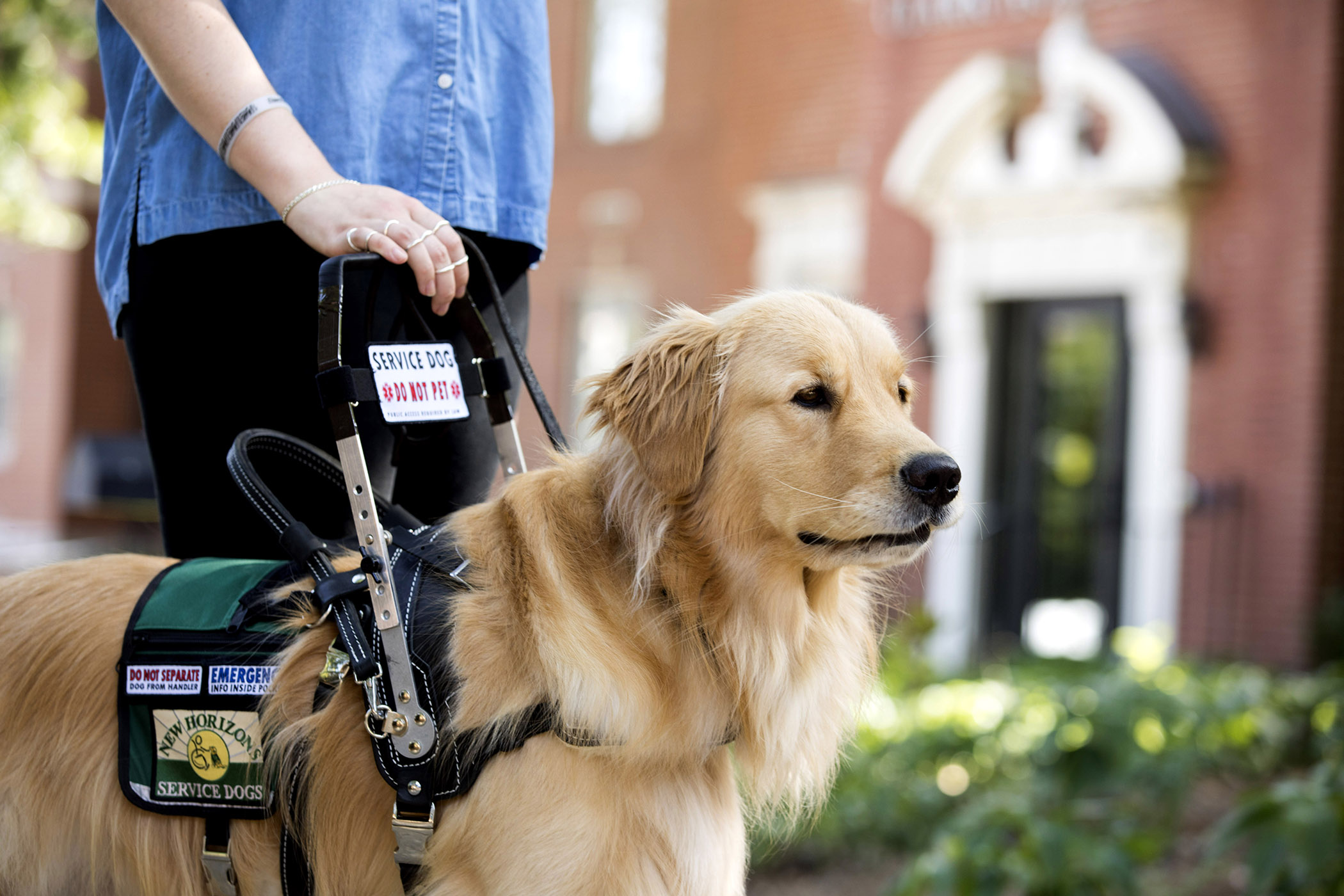
- help protect your safety
- make day-to-day management easier
- offer emotional support
Narcolepsy support dogs vs. emotional support animals
Emotional support animals are companion pets that provide psychological comfort to people with mental health needs. They are not trained to perform specific tasks for people with disabilities.
Emotional support animals aren’t classified as service dogs under the Americans with Disabilities Act (ADA).
How can a service dog assist someone with narcolepsy?
A 2021 study indicates that medical service dogs can detect medical conditions such as:
- narcolepsy
- epilepsy and seizure disorders
- hypoglycemia (low blood sugar)
- hyperglycemia (high blood sugar)
- migraine
Scientists believe dogs’ remarkable sense of smell may explain their capacity to identify these conditions.
The precise mechanisms by which narcolepsy service dogs perform their tasks aren’t fully researched, but specialists at U.S. Service Animals report that these trained dogs can:
- Alert you that a sleep episode is approaching, sometimes up to 5 minutes in advance.
- Call for assistance if you’re injured during an episode.
- Rouse you during or after an episode.
- Retrieve medications and other necessities.
- Stay with you during an episode to keep you safe from harm.
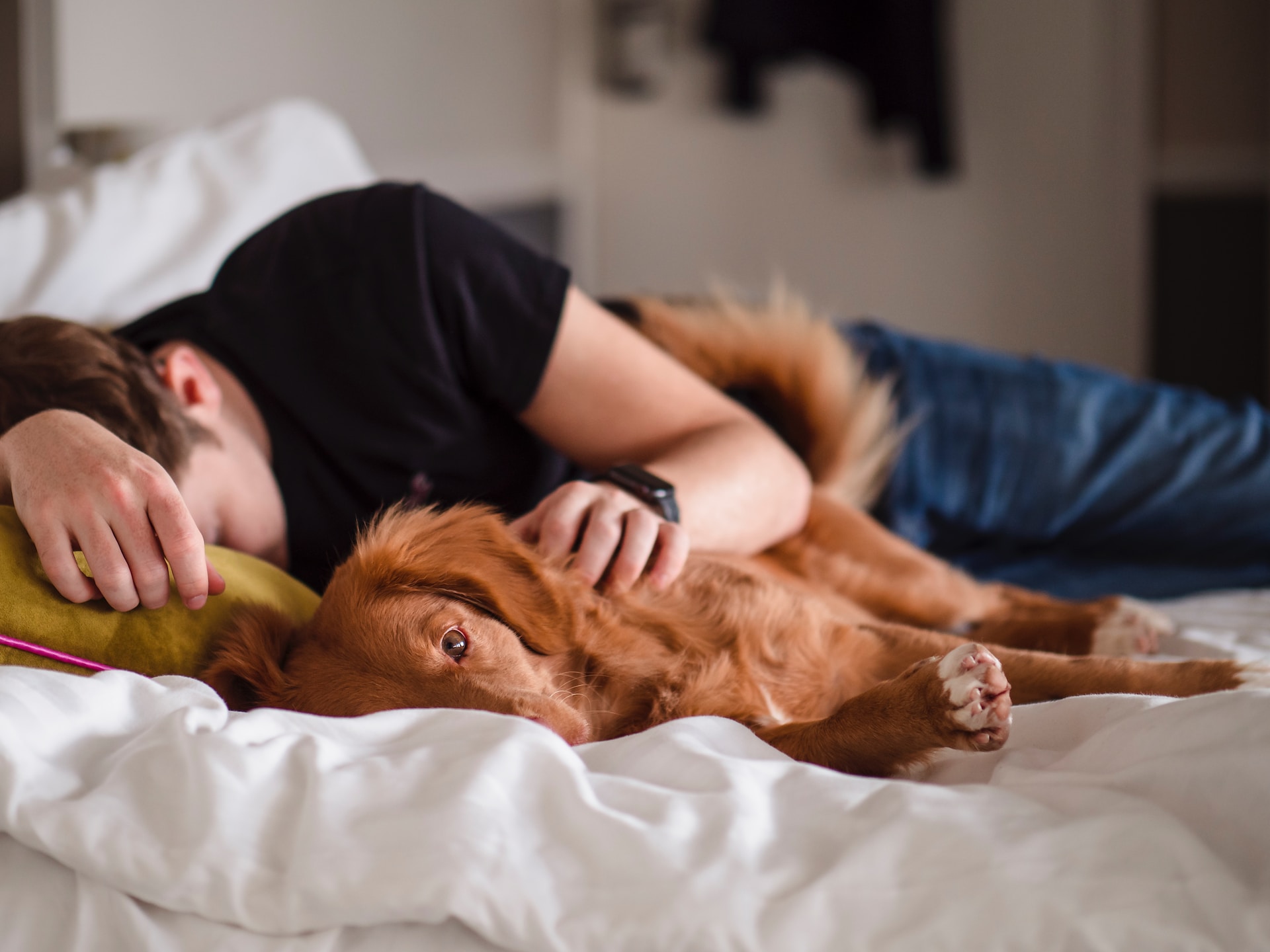
- Provide “pressure” support by leaning against you, offering a tangible sense of security.
- Offer companionship.
- Ground you during hypnagogic hallucinations.
- Ease symptoms of anxiety or depression.
How do you qualify for a narcolepsy service dog?
Requirements vary by trainer and service animal program. Common expectations often include:
- a formal diagnosis of narcolepsy or narcolepsy with cataplexy from your healthcare provider
- being at least 12 years old
- ability to train with the dog for about an hour daily
- willingness to respond when your dog signals an alert or warning
- being physically and mentally capable of managing a service dog
- having a safe, stable home environment without other dogs
- being prepared to build and maintain a close emotional connection with the dog
What does a narcolepsy service dog cost?
The National Service Animal Registry estimates that a fully trained medical service dog costs between $15,000 and $30,000.
When you include ongoing training, veterinary bills, food, and annual costs, a narcolepsy service dog is a substantial financial commitment.
Grants or funding may be available to help cover training expenses. Many trainers subsidize training through donations. The Assistance Dog United Campaign can be a resource for locating financial assistance.
Where can you obtain a trained narcolepsy service dog?
A trainer typically starts by meeting you to assess your needs, then customizes the dog’s training to match those requirements.
Most medical service dogs begin training at around 6 months old. Any breed can be trained as a medical service dog, including:
- Labrador retrievers
- golden retrievers
- standard poodles or poodle crosses
- German shepherds
The full training process can take up to 2 to 3 years. After your dog comes home, you’ll typically continue training together for 3 to 6 months.
Organizations that can assist in finding a dog include:
- Canine Partners for Life
- New Hope Assistance Dogs
- PAWS with a Cause
- Service Dog Academy
- U.S. Service Animals
- Can Do Canines
Can you train your own pet to be a service animal?
The ADA doesn’t mandate professional training for all service dogs. However, not every pet has the temperament or aptitude to become a service animal.
Your pet’s disposition may or may not suit the roles expected of a narcolepsy service dog. If your dog is an appropriate candidate, training expenses could be lower.
How should you live with a narcolepsy service dog?
Caring for a service dog is more involved than having a typical pet. Trainers suggest these best practices:
- Stay near your dog: Early physical proximity builds the bond between you and your service dog.
- Maintain training: It can take years for a service dog to learn your patterns and health cues. Daily training reinforces skills and helps the dog anticipate your needs.
- Know the breed: Your dog’s breed affects exercise requirements, shedding, temperament, and other traits.
- Keep your dog within reach: Don’t place your service dog somewhere it can’t access you when you need it.
- Provide regular exercise: Daily walks benefit both you and your service dog.
- Watch for hazards: Protect your service dog from traffic, icy sidewalks, hot pavement, freshly sealed roads, chemicals, and other risks.
- Build a vet relationship: Routine veterinary care keeps your service dog healthy.
- Allow for mistakes: Your dog will have off days, just as you do.
- Give affection and praise: A stable emotional bond is vital for your service dog.
Can you travel with a narcolepsy service dog?
Under the ADA and the Air Carrier Access Act (ACAA), people with disabilities are permitted to travel with trained service animals.
Certain airlines, transit companies, and hotels maintain policies that govern how service animals should be accommodated during travel.
Before traveling, review the rules for your chosen mode of transportation (train, bus, airplane, etc.) and the service animal regulations at your destination. Different states and countries have varying laws about service animals.
Carry copies of your dog’s vaccination records. Knowing the regulations ahead of time will reduce stress for both you and your dog.
For long flights, prepare for pre-flight, in-flight, and post-flight needs, and allow extra time at airports. You might also need to complete Department of Transportation paperwork for your service animal.
If you’re planning international travel
Verify whether service animals are permitted in the country you’re visiting. Assistance Dogs International offers a guide with links to many nations’ service animal policies.
Can you ever go without a service dog after getting one?
You can leave home without your service dog after you’ve received one, though your healthcare provider might sometimes advise against it. It may be sensible to leave the dog at home when:
- You’re visiting a place likely to upset the dog.
- You’ll participate in deliberately stressful events—like intense sports or a horror movie—where your reaction might prompt the dog to think you require assistance.
- You’re attending a religious service; houses of worship are exempt from ADA requirements. The Department of Justice outlines which locations are not obliged to admit service animals.
- You won’t be able to care for the dog—for example, if you’re hospitalized. Some facilities may charge to board your dog.
What are the consequences of misrepresenting a pet as a service dog?
Putting a service vest on an untrained pet is unethical. When people falsely claim a pet is a trained service dog, it undermines trust in legitimate service animals and can endanger professionally trained dogs and their handlers.
In many states, falsely representing a pet as a service dog is against the law. Misrepresentation can lead to fines or jail time.
Takeaway
A narcolepsy service dog can alert you to an impending episode, wake you afterward, fetch help if you’re injured, and retrieve medications and supplies. They also provide substantial emotional support and companionship.
Training can be expensive and may take up to three years. You’ll need to engage in training, meet your dog’s ongoing needs, and plan carefully for outings and trips.
Nevertheless, if you can make the commitment, a service dog may greatly improve safety and quality of life while living with narcolepsy. For related comparisons, see narcolepsy vs sleep apnea.




















Leave a Reply
You must be logged in to post a comment.