
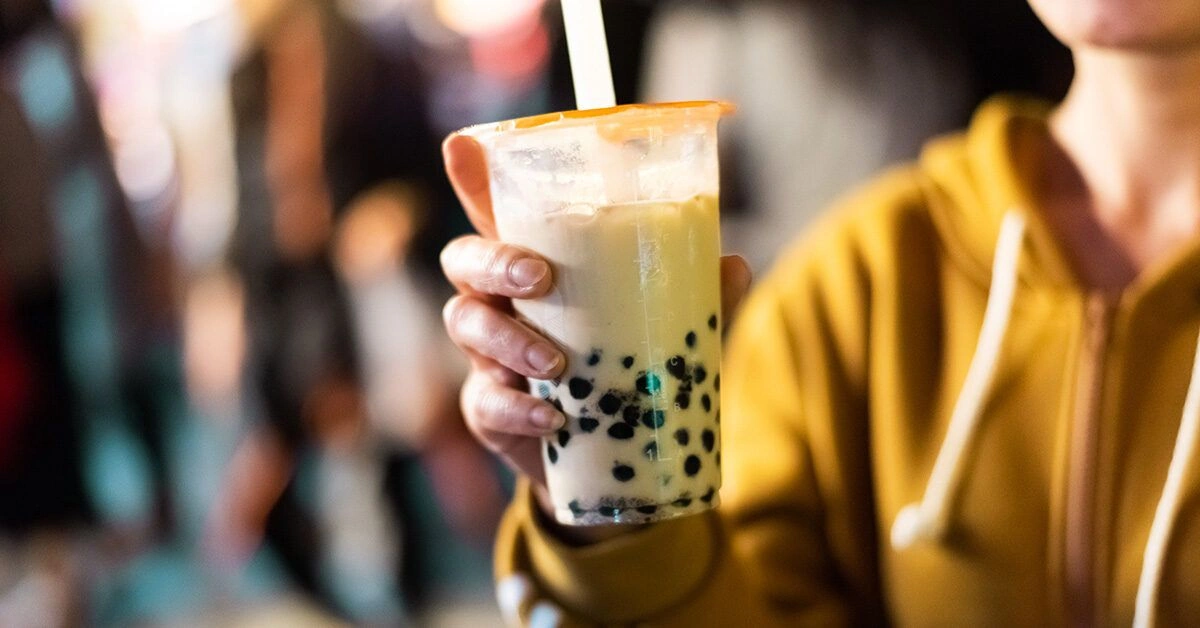
A typical boba beverage blends sweetened tea, natural or artificial flavorings, and a layer of tapioca “pearls” that bob around at the bottom of the cup. The tapioca resemble little bubbles as they rise up through the straw, hence the name “boba.”
:max_bytes(150000):strip_icc()/boba-tea_annotated-f9e9e56bc7694222901ca89b77547c02.jpg)
This hugely popular drink first appeared in Taiwan in the 1980s. It spread across Asia during the 1990s, and more recently tea shops offering it have sprung up throughout Europe and the United States.
Other labels for boba include bubble tea, pearl milk tea, tapioca tea, ball drink, and pearl shake. It’s normally served cold with an extra-wide straw so you can sip the chewy pearls along with the liquid. Boba is typically sold at teahouses with extensive menus of flavors and preparation methods.
What’s inside boba tea?
The phrase boba tea covers a wide assortment of sweet, noncarbonated, nonalcoholic beverages. Most versions contain:
- brewed tea or tea made from concentrate
- milk or a nondairy creamer to make it creamy
- sweeteners like flavored syrups
- tapioca balls
Black, jasmine, and green teas are common bases. Numerous fruit flavors are popular too, including mango, kiwi, strawberry, honeydew, and passion fruit.
There isn’t really a single “traditional” boba recipe—at its simplest it’s a sweetened green or black tea with tapioca pearls—but you’ll even find versions without the actual pearls.
Shops also offer jellies and other “floaters” to add playful textures. Some cafés sell boba-style iced coffees, fruit shakes, and smoothies as well.
Plain tea versus milk tea
You’ve likely heard tea described as a healthy beverage. Brewed tea itself has no calories. It contains caffeine, though generally less than coffee.
Both green and black teas are thought to help protect against heart disease. Antioxidant plant compounds in tea called polyphenols may underlie these effects.
Although milk can be nutritious for many people, research on adding milk to tea shows mixed results. It’s unclear whether milk enhances or reduces tea’s potential health advantages.
Milk tea isn’t simply “tea with milk.” At boba shops it’s a sweetened tea beverage. Bottled versions are also sold in stores that carry Asian soft drinks. Milk tea usually includes sugar and other components to boost flavor and mouthfeel.
Here’s a comparison of plain black tea with a 350 mL (11.8 ounce) ready-to-drink black milk tea:
| Plain black tea | Black milk tea | |
| Calories | 0 | 140 |
| Carbs | 0 grams | 30 grams |
| Protein | 0 grams | 2 grams |
| Fat | 0 grams | 1 gram |
| Calcium | 0% of the DV | 6% of the DV |
| Sodium | 0% of the DV | 5% of the DV |
| Potassium | 0% of the DV | 4% of the DV |
Apart from the caffeine and the plant-derived micronutrients mentioned earlier, a serving of plain, unsweetened black tea is nutritionally similar to plain water.
Conversely, the bottled milk tea contains milk powder to create creaminess. Added sugar raises the carbohydrate and calorie content. Some salt may also be present to enhance flavors.
Overall, the nutrition profile of plain black tea differs substantially from that of a prepared milk tea.
Also, it’s unclear whether the tea-based drinks made at boba shops deliver the same antioxidant advantages as plain brewed tea.
Boba tea nutrition
Because boba drinks offer so many variations, their nutritional value can differ widely. We discussed milk tea above, but boba beverages often include additional components. Let’s examine some of these.
Boba pearls come in several types, but standard pearls are made from tapioca starch, which is extracted from the cassava root. Other ingredients are frequently added to tapioca to lend color, flavor, or sweetness.
A 10 gram portion of plain tapioca pearls provides about 35 calories and 9 grams of carbohydrates. The small tapioca amount in your drink won’t contribute much else nutritionally. Keep in mind that tea makers often sweeten the pearls with sugar, increasing calories and carbs.
Boba beverages are generally flavored with sugar-based syrups. You can choose from many fruity and sweet options. These syrups add sugar and calories, though they provide little in the way of other nutrients.
For example, a 490 mL (16.5 ounce) serving of brown sugar with tapioca pearls bubble tea contains:
- Calories: 270
- Carbs: 45 grams
- Protein: 6 grams
- Fiber: 0 grams
- Fat: 7 grams
Milk powder in this boba drink accounts for the protein and contributes some fat and calories. Additional fat may come from non-dairy creamer, which also adds carbohydrates and boosts the calorie total. A large share of the carbs and calories stems from the brown sugar that sweetens the drink.

This beverage supplies 15% of the DV for calcium and 7% for potassium. However, it also contains a notable 9% of the DV for sodium — about 211 mg of salt.
Generally, boba tea is best treated as an occasional sweet indulgence. There’s no evidence it provides special health benefits; enjoy it for the taste and the chewy tapioca bits.
You can ask for a less sweet version of your drink, for instance by omitting syrups.
When to avoid boba
If you have an allergy or intolerance to any component of a boba drink — such as milk — avoid drinks that contain that ingredient.
Allergy to tapioca is uncommon, but it can happen.
One 2021 study suggests that people with a latex allergy may be more likely to react to cassava, the root used to make tapioca starch. So if you’re allergic to latex, exercise extra caution with tapioca.
The boba takeaway
Whether you call it boba, milk tea, bubble tea, or pearl milk tea, this sweet treat is fun and flavorful.
Keep in mind, it offers limited nutritional benefits.
Enjoy it in moderation as an occasional treat if you don’t have allergies or intolerances to its ingredients.
If you want something with proven health advantages, stick with a cup of green or black tea and opt for fresh fruit instead of syrup-flavored drinks.











Leave a Reply
You must be logged in to post a comment.