

Some causes are fairly common and can be managed at home, such as a simple injury. However, more serious issues may be responsible for fingernail pain and will require medical attention.
There are multiple reasons you might feel discomfort when pressing on a fingernail.
Below are seven potential causes of pain beneath your fingernail when pressure is applied, along with guidance on what to do next.
1. Ingrown fingernail
An ingrown fingernail can develop if you trim or bite the nail too close to the nail bed, injure it, or have a fungal infection.
While ingrown nails are most frequently seen on toes, they can affect fingernails and cause significant pain when pressure is placed on the nail. This condition affects an estimated 2.5 to 5 percent of people.
Common signs of an ingrown fingernail include:
- pain
- tenderness
- bleeding
- swelling
- redness
At-home care
Home remedies for ingrown nails include:
- soaking the finger in warm water twice daily for 10–20 minutes
- applying a topical antibiotic ointment to lower infection risk
- covering the area with a bandage
When to see a doctor
Seek medical evaluation if you have:
- an ingrown nail that persists or is irritated
- fever
- increasing swelling of the finger
- redness
- warmth around the site
Treatment options may include:
- prescription antibiotics or steroids
- taping techniques to reposition the nail
- placing a tiny piece of cotton under the nail edge
- a minor procedure to remove part or the whole nail
2. Torn or cracked nail
A torn or cracked nail that exposes the nail bed can be painful when pressure is applied.
This pain continues until fresh skin covers the raw area; the skin usually starts to regrow within a week and the nail typically begins to grow over the tender spot within one to two months.
At-home care
If the skin under the nail is exposed and sore:
- trim any loose nail hanging from the finger with clean clippers or scissors
- clean and soak the finger in cool water
- apply antibiotic ointment to help prevent infection
- protect the area with a bandage while it heals
When to see a doctor
Contact a healthcare provider if pain worsens or the wound hasn’t improved after a week, as this could indicate an infection that requires prescription treatment.
3. Torn hangnail
Hangnails are small pieces of loose skin that form around the fingernail.
They are especially common in dry conditions or cold weather when skin dries out.
If a hangnail is pulled or ripped, it can be painful and may become infected.
At-home care
Keep a torn hangnail clean by washing hands with soap and water.
Apply an antibiotic cream and cover the area with a bandage.
When to see a doctor
If the hangnail remains painful or doesn’t get better after several days, it could be infected and need medical treatment. A doctor may prescribe a topical or oral antibiotic to treat the infection.
4. Nail fungus
Fungal infections of the nail can alter its appearance and may produce pain when pressed.
Fungi thrive in moist environments; infected nails can become discolored, thicken or thin, and flake. If the infection progresses, it can become painful.
At-home care
There are some over-the-counter and home remedies people use for nail fungus, such as:
- tea tree oil
- oregano oil
- vinegar
- vapor rub
When to see a doctor
A physician might prescribe a stronger topical antifungal, an oral antifungal, or in some cases remove the nail to fully treat the infection.
5. Hematoma
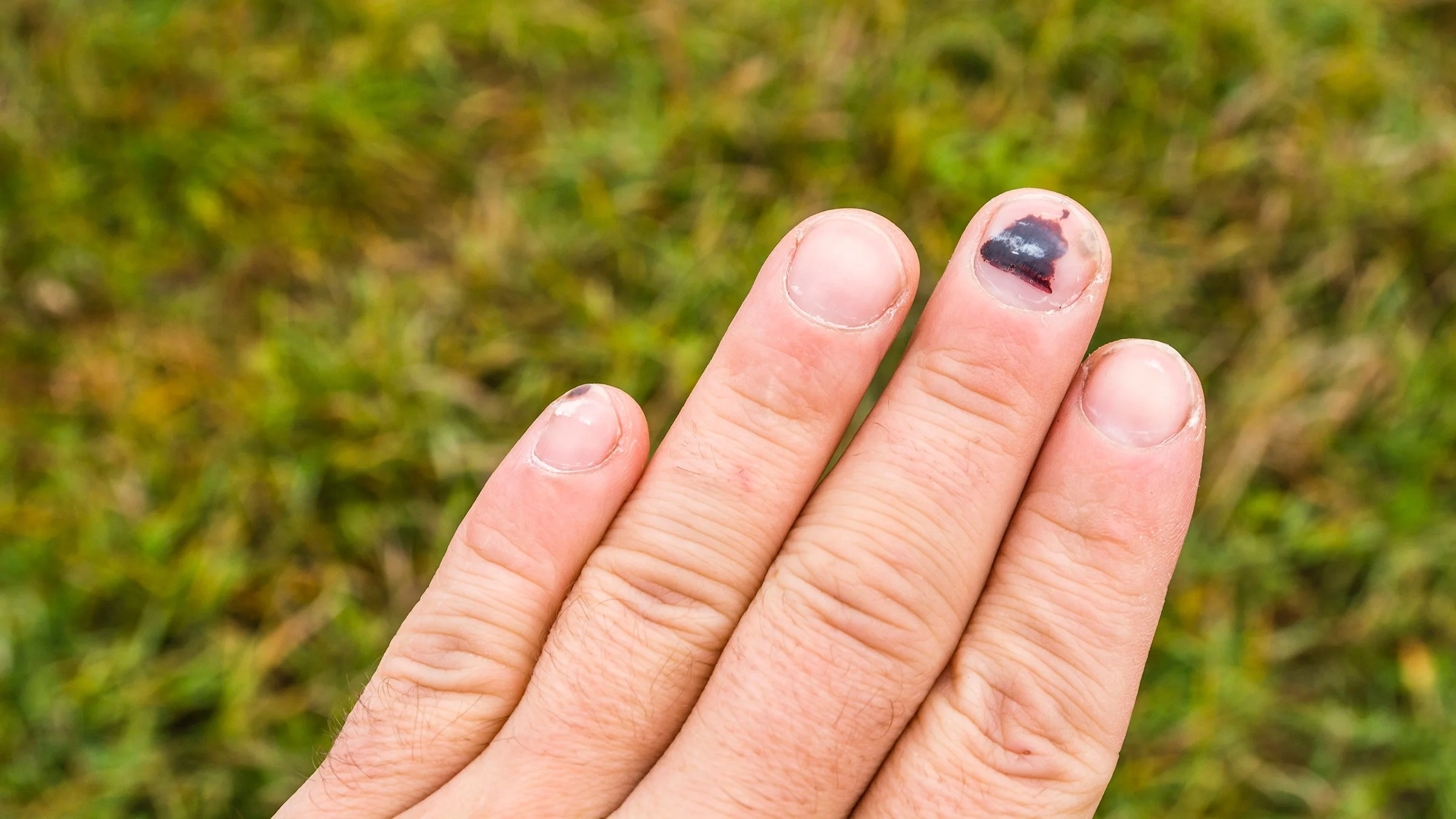
A hematoma forms when you crush your finger or drop a heavy object on it, causing blood or fluid to collect beneath the nail and lead to pain.
It can resemble a bruise under the nail, with the nail turning purple, brown, or black.
The discoloration typically grows out with the nail over several months.
At-home care
For a fingernail hematoma, you can:
- rest the finger
- use a cold compress
- keep the finger elevated
- gently press the nail to limit further bleeding
- take over-the-counter pain relievers
When to see a doctor
If the hematoma worsens or is extremely painful, seek medical care. A doctor may need to drain the hematoma to relieve painful pressure.
6. Paronychia
Paronychia is inflammation around a fingernail or toenail that can be painful and cause redness.
Anyone can develop this condition; it may arise from a cut near the nail (acute) or from repetitive exposure to cold, damp conditions (chronic).
Causes include fungi, bacteria, or dermatitis.
At-home care
Soaking the affected finger in warm water for about 20 minutes can ease discomfort caused by injury. For chronic cases, keeping the hands warm and dry and maintaining nail hygiene can help.
When to see a doctor
Medical treatment may be required, potentially involving antibiotics, steroids, antifungals, or procedures such as drainage or partial nail removal.
7. Subungual tumors
Subungual tumors are growths that form beneath the nail and can cause severe pain under the fingernail.
These growths may be benign or malignant and need a healthcare professional for diagnosis and management.
When to see a doctor
A clinician can identify the tumor using in-office exams or imaging tests. Surgical removal usually involves taking off part or all of the nail to access and excise the lesion.
When should I see a doctor?
Seek urgent medical care if you have:
- severe or worsening pain
- a nail that is open or partially detached
- uncontrolled bleeding
- red streaks near the nail
- marked swelling
- fingernail pain or injuries that do not improve after several weeks
The takeaway
There are many potential reasons your fingernail hurts when pressed, ranging from minor injuries and infections to more serious causes like a tumor under the nail.
Some pain can be eased at home with a cold pack or warm soak, and applying an antibiotic can help prevent infection.
Consult a doctor if you’re in severe pain or suspect a more serious underlying issue.




















Leave a Reply
You must be logged in to post a comment.