Pastured vs Omega-3 vs Conventional Eggs — What's the Difference?


Eggs rank among the most nutrient-dense foods available.
However, their nutrient profile can vary widely depending on what the hens that produced them consumed.
This piece examines how conventional eggs, omega-3-enriched eggs and pastured eggs differ.
Types of Eggs Explained
There are multiple categories of eggs, each with differing nutrient levels.
These differences stem from how the hens were cared for and what they were fed.
- Conventional eggs: The typical supermarket option. These hens are generally fed a grain-based diet fortified with vitamins and minerals.
- Organic eggs: Laid by hens that weren’t given hormones and were fed organic feed.
- Pastured eggs: Chickens that roam outdoors, eating plants and insects (their natural diet) in addition to some commercial feed.
- Omega-3-enriched eggs: Essentially similar to conventional hens but their feed is boosted with an omega-3 source such as flaxseed. They may have limited outdoor access.
Certain labels overlap with these categories. Terms like free-range and cage-free don’t always indicate superior nutrition compared with conventional eggs.
Free-range implies hens have the option to go outside.
Cage-free means hens aren’t confined to cages, but they may still be kept in crowded, unsanitary barns.
Summary: Many labels are used for eggs, including organic, omega-3-enriched, pastured, free-range and cage-free.
Conventional Compared to Omega-3 Eggs
One study analyzed the fatty acid profiles of conventional, organic and omega-3-enriched eggs (1).
- Omega-3 eggs contained 39% less arachidonic acid, an inflammatory omega-6 fatty acid that is commonly overconsumed.
- Omega-3 eggs had five times the omega-3 content of conventional eggs.
- There was minimal difference between organic and conventional eggs.
The study clearly showed that hens fed omega-3-fortified diets produced eggs substantially richer in omega-3s than typical eggs.
This matters because most people don’t get enough beneficial omega-3 fatty acids.
However, that particular research only assessed fatty acids and did not examine other nutrients.
Summary: Hens given omega-3 supplements lay eggs far higher in omega-3 fats than conventional eggs. Pick omega-3-enriched eggs if your diet is low in omega-3s.
Conventional Compared to Pastured Eggs
In 2007, Mother Earth News tested the nutritional content of pastured eggs sourced from 14 farms.
The eggs were analyzed in a laboratory and compared with the USDA standard for conventional eggs.
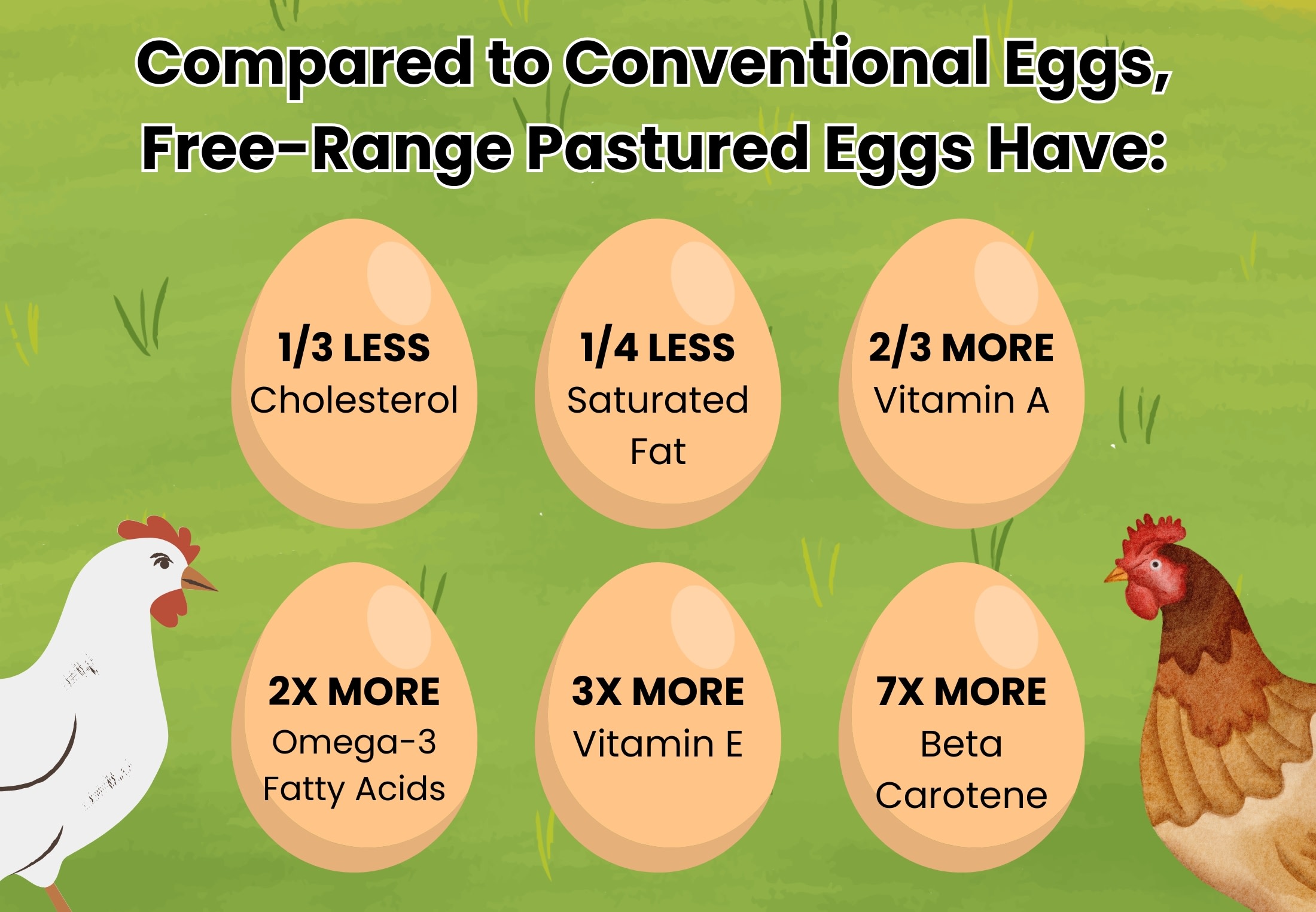
As illustrated, eggs from pastured hens tended to be more nutrient-dense than the conventional supermarket variety.
They showed higher levels of vitamins A and E and omega-3s, while having lower cholesterol and saturated fat.
A peer-reviewed study on pastured eggs produced comparable findings (2).
Another investigation found that free-range eggs, from hens allowed outdoor sun exposure, contained three to four times more vitamin D than eggs from hens kept indoors (3 ).
Summary: Pastured eggs contain higher amounts of vitamins A and E and more omega-3s. Hens that spend time outdoors also produce eggs significantly richer in vitamin D.
Final Takeaway
Overall, pastured eggs are likely the healthiest option. They are more nutrient-rich, and the hens that produced them had outdoor access and consumed a more natural diet.
If pastured eggs aren’t available, omega-3-enriched eggs are the next best alternative. If neither option is accessible, look for eggs labeled free-range, cage-free or organic.
Even so, traditional conventional eggs remain among the most nutritious and healthful foods you can include in your diet.
Frequently Asked Questions
Pastured eggs come from hens that forage outdoors, yielding higher vitamins A, E and often omega-3s and vitamin D. Omega-3 eggs are produced by hens fed omega-3-rich diets (like flaxseed) and contain significantly more omega-3 fatty acids than conventional eggs. Conventional eggs are from hens fed a standard grain-based diet and typically have lower levels of those specific nutrients.
Pastured eggs tend to be more nutrient-dense overall (more vitamins and often higher omega-3s), but omega-3-enriched eggs can match or exceed conventional eggs in omega-3 content. If your primary goal is boosting omega-3 intake, omega-3 eggs are a good choice; for broader nutrient gains, pastured eggs are preferable.
Omega-3 eggs contain higher levels of anti-inflammatory omega-3 fatty acids and less pro-inflammatory arachidonic acid, so they can help increase omega-3 intake and potentially support a more balanced fatty acid profile compared with conventional eggs.
Yes. Pastured and omega-3-enriched eggs typically cost more than conventional eggs due to higher production costs (outdoor space, specialized feed). Pricing varies by region and producer, so shop around or buy from local farmers to find better value.
Decide what matters most: omega-3 content, overall nutrient density, animal welfare, or cost. Choose pastured eggs for broad nutrient benefits and vitamin D, omega-3-enriched eggs if you need more omega-3s, and conventional eggs if budget is the main concern—conventional eggs still provide high-quality protein and nutrients.
Read Next

10 Potential Health Benefits of Bee Pollen

Is Cheesecake Healthy? Nutrition and Recipe Tips

The 12 Best Casein Protein Powders

Carbohydrates in Brown, White, and Wild Rice: Whole vs. Refined Carbs

How Many Carbs Are in Various Types of Sausage?

Low Sodium Frozen Meals: The Best Brands and 21 Dietitian-Approved Options
Related Posts

9 Powerful Health Benefits of Cumin
Aug 22, 2026 • 31 min read
9 of the Best Keto-Friendly Protein Bars You Can Buy
Sep 17, 2026 • 27 min read
Is Ovaltine Healthy? All You Need to Know
Aug 5, 2026 • 19 min read
Raisins vs. Sultanas vs. Currants: What’s the Difference?
Aug 18, 2026 • 26 min read
Barley Tea: Nutrition, Benefits, and Side Effects
Aug 18, 2026 • 28 min read