
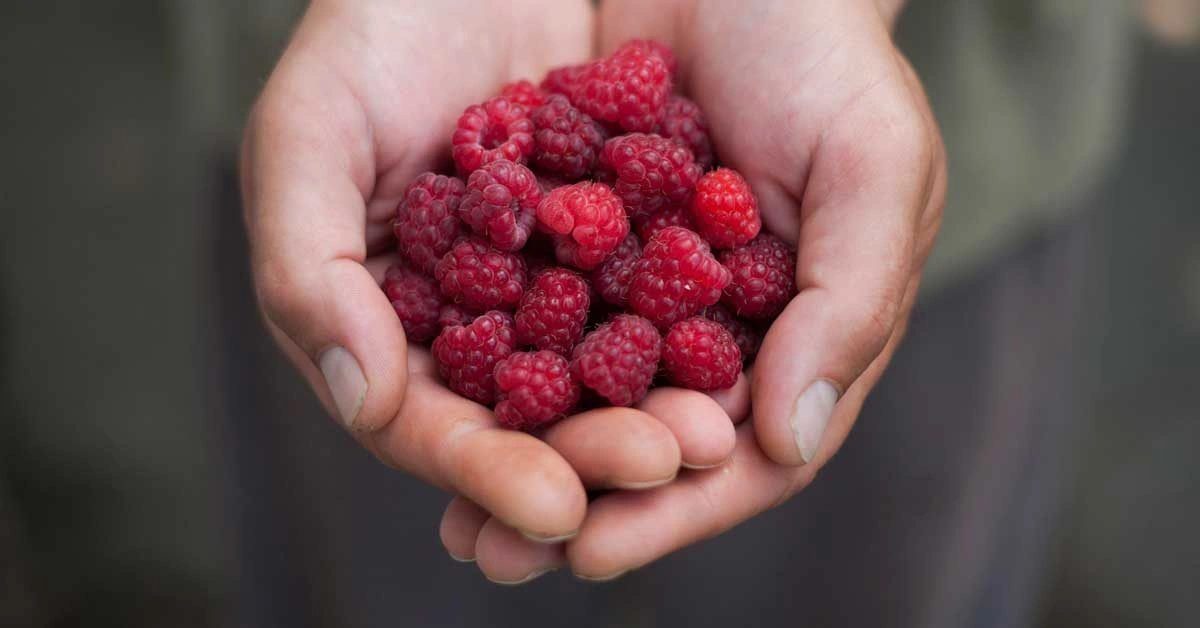
A rich source of dietary fiber, vitamin C and potent antioxidants, raspberries provide a range of nutritional and health advantages. You can easily add them to your meals by tossing them into salads or blending them into smoothies.
Raspberries are the edible fruit produced by a plant in the rose family.
There are several raspberry varieties — including black, purple and golden — but the red raspberry, or Rubus idaeus, is the most widespread.
Red raspberries originate from Europe and northern Asia and are grown in temperate regions around the globe. In the United States, most production occurs in California, Washington and Oregon.
These sweet-tart berries have a limited shelf life and are harvested mainly during summer and fall. Because of this, raspberries are best consumed soon after purchase.
This piece examines the nutritional composition and health benefits of raspberries.
:max_bytes(150000):strip_icc()/Benefits-of-Raspberries-GettyImages-1068809558-6a7e776eb8e64edb98119a94acfa20b8.jpg)
Low in Calories but Nutrient-Dense
Despite being low in calories, raspberries deliver numerous nutrients.
One cup (123 grams) of red raspberries contains (1):
- Calories:64
- Carbs: 14.7 grams
- Fiber:8 grams
- Protein:1.5 grams
- Fat: 0.8 grams
- Vitamin C:54% of the Reference Daily Intake (RDI)
- Manganese: 41% of the RDI
- Vitamin K:12% of the RDI
- Vitamin E: 5% of the RDI
- B vitamins:4–6% of the RDI
- Iron:5% of the RDI
- Magnesium: 7% of the RDI
- Phosphorus: 4% of the RDI
- Potassium:5% of the RDI
- Copper: 6% of the RDI
Raspberries are an excellent fiber source, supplying 8 grams per 1-cup (123-gram) portion — about 32% of the RDI for women and 21% for men (1).
They also provide more than half the RDI for vitamin C, a water-soluble nutrient important for immune health and enhancing iron absorption (2).
Raspberries contain modest amounts of vitamin A, thiamine, riboflavin, vitamin B6, calcium and zinc (1).
Summary: Raspberries are rich in fiber and vitamin C and supply a variety of other essential vitamins and minerals.
Powerful Antioxidants That May Lower Disease Risk
Antioxidants are plant-derived compounds that help cells resist and recover from oxidative stress.
Oxidative stress is associated with an increased risk of cancer, diabetes, cardiovascular disease and other health issues (3).
Raspberries are abundant in several strong antioxidant substances, such as vitamin C, quercetin and ellagic acid (4, 5).
Relative to other berries, raspberries have antioxidant levels similar to strawberries, about half that of blackberries and roughly a quarter of blueberries’ antioxidant content (5).
A review of animal research indicates that raspberries and their extracts possess anti-inflammatory and antioxidant properties that could lower the risk of chronic illnesses like heart disease, diabetes, obesity and cancer (6).
In one eight-week experiment with obese, diabetic mice, those fed freeze-dried red raspberry showed reduced indicators of inflammation and oxidative stress compared to controls (7).
Another mouse study found that ellagic acid, an antioxidant in raspberries, may both prevent oxidative damage and help repair damaged DNA (8).
Summary: Raspberries are rich in antioxidants that shield cells from damage. These compounds may help reduce the likelihood of some chronic diseases.
High Fiber and Tannins May Support Blood Sugar Control
Because raspberries are low in carbohydrates and high in fiber, they’re a sensible option for those monitoring carb intake.
One cup (123 grams) of raspberries contains 14.7 grams of carbohydrates and 8 grams of fiber, yielding only 6.7 grams of net digestible carbs per serving (1).
Raspberries are also unlikely to cause large blood sugar spikes.
The glycemic index (GI) gauges how rapidly a food raises blood glucose. Although raspberries’ GI hasn’t been specifically measured, most berries are classified as low-GI.
Research suggests raspberries may reduce blood glucose and improve insulin sensitivity.
In animal studies, mice given freeze-dried red raspberries along with a high-fat diet exhibited lower blood glucose and reduced insulin resistance versus control animals (9, 10).
Raspberry-fed mice also showed fewer signs of fatty liver disease (9).
Raspberries are rich in tannins, compounds that inhibit alpha-amylase, an enzyme needed to break down starch (11).
By inhibiting alpha-amylase, raspberries may decrease carbohydrate absorption after meals, lessening blood sugar impact.
Summary: Due to their fiber and tannin content, raspberries may have a beneficial effect on blood sugar regulation.
Potential Cancer-Fighting Effects
The abundant antioxidants in raspberries may offer protection against cancer (4, 5).
Berry extracts — including red raspberries — inhibit growth and induce death in cancer cells in laboratory studies of colon, prostate, breast and oral cancer cells (12).
In one in vitro experiment, red raspberry extract killed up to 90% of stomach, colon and breast cancer cells (13).
Another lab study found that sanguiin H-6 — an antioxidant in red raspberries — caused cell death in more than 40% of ovarian cancer cells (14).
Animal research also shows protective outcomes against cancer with raspberries.
In a 10-week study of mice with colitis, those fed a diet containing 5% red raspberries had less inflammation and a reduced cancer risk compared to controls (15).
Another study demonstrated that red raspberry extract hindered liver cancer growth in mice, with higher doses linked to a lower risk of tumor formation (16).
Human trials are required before raspberries can be definitively associated with cancer prevention or therapy.
Summary: Raspberries contain compounds that may fight various cancers, including colon, breast and liver cancers, but human research is needed.
Additional Potential Health Advantages
Because they are rich in nutrients and antioxidants, raspberries may offer several other health benefits.
May Reduce Arthritis Symptoms
Raspberries exhibit anti-inflammatory qualities that could lessen arthritis symptoms (6).
In one experiment, rats receiving red raspberry extract had a lower incidence of arthritis than control rats, and those that developed arthritis experienced milder symptoms (17).
In another rat study, animals treated with raspberry extract showed less swelling and reduced joint damage compared to controls (18).
Raspberries may help protect against arthritis by inhibiting COX-2, an enzyme that contributes to inflammation and pain (19, 20).
May Support Weight Management
One cup (123 grams) of raspberries contains only 64 calories and 8 grams of fiber and is composed of over 85% water, making them a satiating, low-calorie choice (1).
Their natural sweetness can also help curb cravings for sugary treats.
Certain bioactive compounds in raspberries might further support weight control.
In a study, mice fed either a low-fat diet, a high-fat diet, or a high-fat diet supplemented with one of eight berries (including raspberries) gained less weight in the raspberry group than mice on the high-fat diet alone (21).
Raspberry ketone supplements are often marketed for weight loss, but evidence is limited.
One animal study found that mice on a high-fat diet given large doses of raspberry ketones gained less weight than control mice (22).
The only human study examining raspberry ketones used a supplement that also contained other ingredients, including caffeine, so it’s impossible to isolate the effects of the ketones themselves (23).
Although little evidence supports raspberry ketone supplements for weight loss, consuming whole fresh raspberries may assist with weight management.
May Slow Aging
Raspberries’ high antioxidant content can help minimize signs of aging by neutralizing free radicals in the body.
Antioxidants have been associated with increased lifespan in various animal studies and show anti-aging benefits in humans (24).
Raspberries are also rich in vitamin C, which is vital for skin health. Vitamin C may boost collagen synthesis and repair UV-induced skin damage (25).
In an eight-week study, older rats given a diet containing 1% or 2% raspberries showed enhanced motor abilities, such as balance and strength (24).
Summary: Raspberries may lower arthritis risk, support weight control and reduce signs of aging.
Ways to Include Raspberries in Your Eating Plan
Because fresh raspberries perish quickly, try to buy locally grown berries when possible and consume them within one to two days.
Fresh raspberries will be at their best during summer and fall when they are harvested.
Avoid berries that appear crushed or moldy when selecting raspberries.
Store raspberries in the refrigerator in packaging that prevents damage.
You can enjoy raspberries year-round by purchasing frozen ones, which are frozen immediately after picking. Check labels to make sure no extra sugar has been added.
Raspberries are also commonly used in jams and jellies; choose all-fruit spreads without added sweeteners.
Here are some ideas for adding raspberries to your meals:
- Snack on fresh raspberries.
- Top yogurt with fresh raspberries and granola.
- Add raspberries to cereal or oatmeal.
- Top whole-grain pancakes or waffles with raspberries.
- Use frozen raspberries in smoothies.
- Make a mixed berry salad with raspberries, blueberries, strawberries and blackberries.
- Add raspberries to a salad with chicken and goat cheese.
- Blend raspberries with water to create a sauce for poultry or fish.
- Bake a raspberry crumble with rolled oats, nuts, cinnamon and a drizzle of maple syrup.
- Fill raspberries with dark chocolate chips for a simple dessert.
:max_bytes(150000):strip_icc()/raspberries-annotation-76bb24e2c56a40c5a9dd8b0c91a37ef5.jpg)
Summary: Raspberries are adaptable and can be added to breakfast, lunch, dinner or dessert. Buy them fresh in season or use frozen berries any time of year.
The Bottom Line
Raspberries are low in calories and rich in fiber, vitamins, minerals and antioxidants.
They may help protect against diabetes, cancer, obesity, arthritis and other conditions and might offer anti-aging benefits.
Raspberries are easy to include in your diet and make a flavorful addition to meals and desserts.
For the best flavor, purchase these delicate berries when they’re in season and consume them soon after buying. Frozen raspberries are also a nutritious option year-round.






















Leave a Reply
You must be logged in to post a comment.