Pictures of Soft Corns on Feet: What a Soft Corn Looks Like Between the Toes

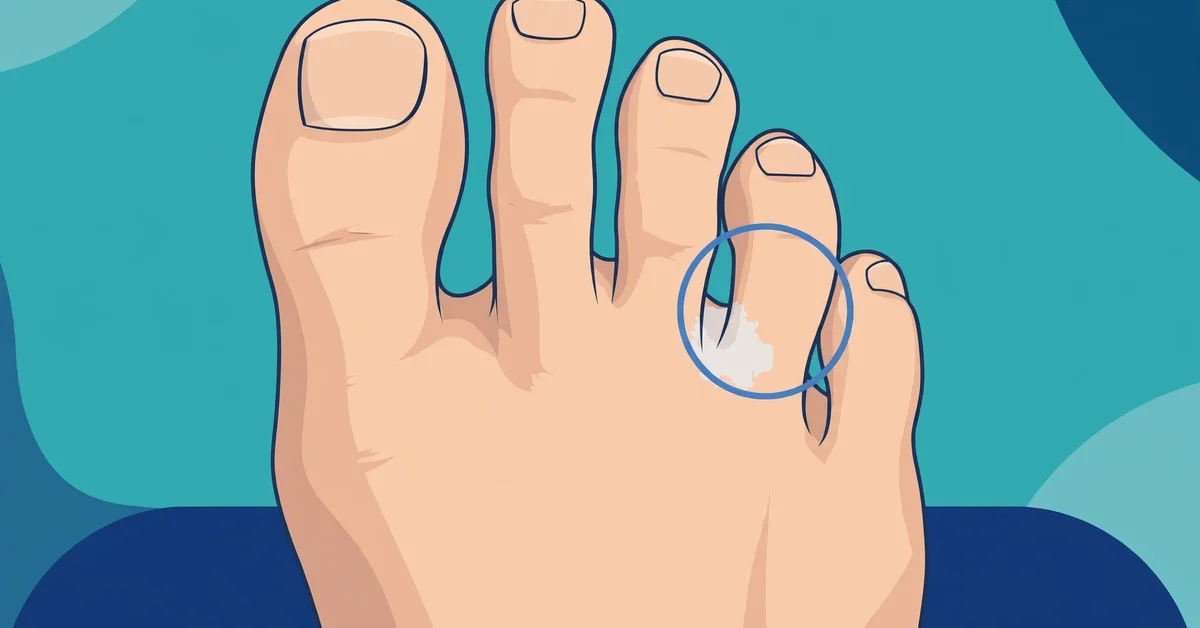
- What a soft corn looks like: a 5-point picture checklist
- An honest note about soft corn photos
- Soft corn vs hard corn, seed corn, callus, wart and athlete’s foot
- Why soft corns form between the toes
- Care that helps, and habits that harm
- The diabetes warning, in full
- When to see a podiatrist
- Preventing soft corns from coming back
- The bottom line
A soft corn is a small patch of thickened skin that forms between the toes, where it stays damp and turns white, soft and rubbery instead of hard. Its medical name is heloma molle. In pictures, a soft corn almost always sits in the web space between the fourth and fifth toes, looks pale or grey-white rather than yellow, and is sharply painful when the toes are squeezed together. Because it hides between the toes, it is one of the most commonly misread foot lesions: people regularly mistake it for athlete’s foot and treat it with antifungal cream for weeks, when the real problem is two toe bones pressing against each other. This guide shows what to look for, how a soft corn differs from a hard corn, a seed corn, a callus, a wart and athlete’s-foot maceration, and how it is treated safely. General background on corns and calluses is available from the Cleveland Clinic and the NHS .
Warning first, because it changes everything else on this page: if you have diabetes, reduced feeling in your feet (neuropathy) or poor circulation, do not try to treat a lesion between your toes yourself, and never use a salicylic-acid corn remover there. A soft corn sits in a closed, moist space where skin can break down and ulcerate quietly, without much pain if sensation is reduced. Professional diabetic foot assessment is the safe route, a point underlined in guidance on holistic diabetic foot evaluation . Book a podiatry or diabetes foot-care appointment instead of following the home-care steps below.
What a soft corn looks like: a 5-point picture checklist
Most published corn photos show hard corns on top of the toes, because those are easy to photograph. A soft corn looks different in five specific ways, and checking all five against what you see between your own toes is more reliable than comparing with a single photo.
- Colour: white, grey-white or pale pink, like skin that has been in bath water too long. Hard corns, by contrast, are yellowish or flesh-coloured.
- Texture: soft, spongy and rubbery rather than hard and waxy. Clinicians often describe the surface as macerated, meaning softened by trapped moisture.
- Core: most soft corns have a small central core of denser skin. When a podiatrist pares the surface away, that core is what presses on the nerve endings underneath and causes the sharp pain.
- Place: in a web space between two toes, most often between the fourth and fifth toes, exactly where the side of one toe presses against its neighbour.
- Mirror image: soft corns often form a so-called kissing lesion, with a matching sore patch on the facing surface of the next toe, because the two surfaces rub and press together.
Pain is the other clue that a picture cannot show: a soft corn typically hurts most when the toes are pinched together from the sides, and many people describe it as feeling like a pebble or a splinter wedged between the toes.

An honest note about soft corn photos
Readers searching for pictures of soft corns on feet should know something most pages do not say: verified clinical photographs of true soft corns are uncommon in open image libraries, including Wikimedia Commons, because the lesion sits in the narrow, shadowed space between the toes and is hard to photograph clearly. The images on this page are therefore labelled comparison images: real clinical photos of the conditions a soft corn is confused with, captioned as exactly what they show. If a page shows you a dramatic photo labelled as a soft corn, check whether the lesion is actually on top of a toe or on the sole; if it is, you are looking at a hard corn or a plantar corn, not a heloma molle.
To check your own foot, wash and dry your hands, sit with the foot raised into good light, and gently spread the toes apart with your fingers. A phone torch held to the side lights the web space better than an overhead lamp. If you are sending a photo to a clinician, take one picture looking straight into the web space and one from above with the toes spread, and include a clean coin or ruler edge for scale. Do not squeeze an already painful lesion hard just to get the picture.
Soft corn vs hard corn, seed corn, callus, wart and athlete’s foot
All of these are thickened or damaged skin in roughly the same neighbourhood, but they differ in cause, and the treatment that helps one can harm another. The classic clinical review of these lesions is Singh and colleagues’ BMJ paper on callosities, corns and calluses . Our companion guide to what a corn looks like, with pictures covers corns in general; the table below is specific to telling a soft corn apart.
| Feature | Soft corn (heloma molle) | Hard corn | Seed corn | Callus | Wart (verruca) | Athlete’s foot (tinea) |
|---|---|---|---|---|---|---|
| Typical place | Between the toes, usually 4th–5th web space | Top or side of a toe, over a joint | Sole of the foot, often in small clusters | Ball of foot, heel, side of foot; broad area | Sole, heel, or around toes; anywhere HPV enters broken skin | Between the toes and across the sole |
| Colour and feel | White or grey, soft, rubbery, macerated | Yellowish, hard, dry, waxy core | Tiny, hard, well-defined round plugs | Diffuse thickened skin, rough, no single core | Rough, grainy surface, may show tiny black dots | Soggy white peeling plus redness and itching |
| Pain pattern | Sharp when toes are squeezed together | Hurts on direct downward pressure | Often painless; sore under pressure in weight-bearing spots | Rarely painful unless the skin cracks | Often hurts more when pinched from the sides | Itching and burning more than focal pain |
| Skin lines | Run over the lesion | Run over the lesion | Run over the lesion | Run over the lesion | Go around the lesion; the print pattern is interrupted | Peeling and scaling rather than a single lesion |
| Cause | Toe bone pressing on the next toe, kept soft by moisture | Shoe friction over a bony prominence | Pressure and friction on the sole; linked with dry skin | Repeated friction over a wide area | Human papillomavirus (HPV) infection | Fungal infection of the skin |
Two of these comparisons deserve emphasis. First, the wart check: natural skin lines pass over corns and calluses but detour around a wart, and a wart may contain tiny black dots, which are small clotted blood vessels. Second, the athlete’s-foot check: tinea usually spreads as peeling, itchy, soggy skin across the whole web space and often affects both feet, while a soft corn is one focal, deeply tender spot with a core, and the skin around it is otherwise normal. Treating a soft corn with antifungal cream does nothing for it; treating athlete’s foot as a corn delays the cure. Our guide to foot fungus creams explains when antifungals are the right tool. For the sole-of-foot lookalike, see our separate guide to a seed corn on the foot, which covers identification and treatment of that distinct type.


Why soft corns form between the toes
A corn is the skin’s defence against concentrated pressure: it builds extra layers of hard skin (hyperkeratosis) over the spot being pressed. Between the toes, the pressure usually comes from inside the foot itself. The bony knuckle (condyle) of one toe presses against the neighbouring toe, often because the toes are crowded by narrow or pointed shoes, or because a toe deformity such as a hammer toe changes how the toes sit. A research consensus on interdigital corns describes exactly this bone-on-bone mechanism in the lesser toes (Delphi study on interdigital helomas, PMC ).
Moisture is what makes the corn soft. The web space traps sweat, especially in closed shoes and synthetic socks, and the built-up skin absorbs that moisture and turns white and spongy instead of forming the dry, hard plug of a corn on top of a toe. That macerated surface is also more fragile: it splits and breaks down more easily than dry skin, which is why soft corns can ulcerate and become infected, and why they are often described as one of the most painful corn types despite their small size.
Care that helps, and habits that harm
The goal of care is twofold: reduce the thickened skin, and remove the toe-on-toe pressure that built it. Trimming alone buys only a few weeks if the pressure stays. The American Academy of Dermatology gives similar general advice for corns and calluses.
- Keep the web space dry. Dry carefully between the toes after washing, every time. Do not apply moisturising cream between the toes; it adds to the maceration. Cream belongs on the rest of the foot, not in the web space.
- Separate the toes. A silicone toe spacer, a foam toe separator, or a small piece of lamb’s wool placed between the toes reduces the rubbing and pressure. Lamb’s wool is soft and absorbent but needs replacing daily; silicone spacers last longer and can be washed. Make sure your shoes still fit with the spacer in place.
- Widen the toe box. Shoes with a wide, deep toe box stop the toes being squeezed together. Pointed, narrow or high-heeled shoes push the forefoot forward and crowd the toes, and will bring the corn back.
- Soften, do not cut. Soaking the foot in warm water softens the surface; a gentle rub with a pumice stone or emery board after soaking can reduce thickness on low-risk feet. A warm Epsom salt foot soak is one comfortable way to do this. Never use scissors, blades or corn-cutting tools between your own toes: the space is hard to see, the skin is fragile, and a nick there is an open door for infection.
- Avoid salicylic-acid corn removers between the toes. These pads and liquids dissolve skin without distinguishing corn from healthy skin. In a moist web space the acid spreads, and chemical burns and ulceration are a recognised harm, which is why podiatrists advise against them there and why they are specifically unsafe for people with diabetes, neuropathy or thin skin.
- Professional debridement. A podiatrist can pare away the thickened skin and remove the core with a sterile blade, usually with immediate pain relief, then fit or recommend a spacer and review your footwear. This is the fastest safe route when the corn is very painful.
The diabetes warning, in full
This deserves its own section because the pictures on this page will attract exactly the readers most at risk. With diabetes, three things combine badly between the toes: sensation may be reduced, so a breaking-down lesion does not hurt as it should; circulation may be reduced, so healing is slow; and the moist web space is an easy entry point for infection. A soft corn that would be a nuisance for someone else can become an ulcer, and foot ulcers are a leading pathway to serious complications. So: inspect between your toes regularly (a mirror or a family member can help), never use acid removers or blades, do not attempt to pare a corn yourself, and treat any break in the skin, drainage, spreading redness or new swelling between the toes as a prompt, same-week reason to contact your diabetes care team or a podiatrist, and a same-day reason if you also have fever or redness spreading up the foot.
When to see a podiatrist
Book an appointment rather than continuing home care if any of the following apply:
- You have diabetes, neuropathy, poor circulation, or a weakened immune system.
- There is drainage, a bad smell, spreading redness, swelling, or the toe looks infected.
- The pain is bad enough to change how you walk.
- The lesion keeps coming back within weeks of professional treatment.
- You cannot tell whether the lesion is a corn, a wart or a fungal infection, or home care has not helped after a few weeks.
At the appointment, expect the clinician to examine the web space, pare the lesion to confirm the diagnosis (corns, warts and fungal infection look different once the surface is removed), remove the core, and address the cause: spacers or padding, footwear advice, and treatment of any toe deformity. For the minority of soft corns that keep returning because two bones genuinely press together, a minor surgical procedure to remove the small bony prominence (a condylectomy) is the established last resort, described in the interdigital-heloma surgical literature cited above.
Preventing soft corns from coming back
- Choose shoes with a wide, deep toe box and enough length that the toes are not curled or crowded.
- Wear moisture-wicking socks, change them if they become damp, and rotate shoes so each pair dries fully between wears.
- Dry between the toes after every wash, and keep cream out of the web spaces.
- Use a spacer or lamb’s wool on days you will be on your feet for long periods, if you are prone to interdigital corns.
- Check between your toes weekly, so a sore spot is caught while it is still small.
The bottom line
A soft corn is a small, white, rubbery patch of pressure-thickened skin between the toes, most often between the fourth and fifth toes, kept soft by trapped moisture. Pictures of soft corns on feet are genuinely scarce in open image libraries, so use the checklist instead: white and macerated, in a web space, with a tender core, sometimes mirrored on the facing toe. Keep the space dry, separate the toes, widen the toe box, and let a podiatrist remove the core. Skip acid removers and home cutting, and if you have diabetes, treat any lesion between the toes as a professional job from the start.
Medical disclaimer: This article is educational information from the HealthEH Team and is not medical advice. It does not replace examination by a podiatrist or other qualified clinician, which is the only way to diagnose a foot lesion with certainty. Seek prompt care for signs of infection, and urgent care if you have diabetes with a new foot wound, spreading redness or fever.
Frequently Asked Questions
A soft corn looks like a small white or grey-white patch of thickened skin in the web space between the toes, most often between the fourth and fifth toes. It feels soft and rubbery rather than hard, often has a small denser core in the centre, and may have a matching sore patch on the facing surface of the next toe.
Because of where it sits. The space between the toes traps sweat and moisture, and the pressure-thickened skin absorbs that moisture and becomes macerated: pale, soft and spongy. A corn on top of a toe stays dry, so it forms the familiar hard, yellowish plug instead.
A soft corn is one focal, deeply tender spot with a core, usually in a single web space, and it hurts most when the toes are squeezed together. Athlete’s foot causes itchy, peeling, soggy skin that spreads across the web space and often affects both feet, without a single painful core. If you cannot tell them apart, have a clinician look, because the treatments are completely different.
It is not recommended. Salicylic acid dissolves healthy skin as well as corn tissue, and in the moist space between the toes it spreads easily and can cause chemical burns and ulceration. Podiatrists advise against acid removers in web spaces, and they are specifically unsafe if you have diabetes, reduced sensation or poor circulation.
A podiatrist pares away the thickened skin and removes the central core with a sterile blade, which usually relieves the pain immediately, then addresses the cause with a toe spacer or padding and footwear advice. If the corn keeps returning because two toe bones press together, a minor procedure to remove the small bony prominence, called a condylectomy, is the last-resort option.
Because trimming removes the skin, not the pressure. As long as the knuckle of one toe keeps pressing against the next toe in crowded shoes, the skin rebuilds its protective thickening, often within weeks. Lasting relief requires separating the toes, widening the toe box, and, for stubborn cases, professional treatment of the underlying bone pressure.
Read Next
10 Tasty Wild Berries to Try (and 8 Poisonous Ones to Avoid)
Back Pain From Sitting All Day: What Helps, What Doesn't

Riding Out a Panic Attack: What Is Happening in Your Body and What to Do
Does My Chocolate Craving Mean Anything?

Is the Pain in My Tailbone Cancer?
Abdominal Pain Location Chart: What the Location of Your Pain Can Tell You
Related Posts

7 Stretches for Shin Splints
Sep 15, 2026 • 21 min read
8 Exercises to Ease Heel Spur Pain
Sep 27, 2026 • 31 min read
7 Ways to Remove Dead Skin from Your Feet
Sep 10, 2026 • 12 min read
8 Ankle Stretches to Try at Home
Sep 15, 2026 • 18 min read
Hidradenitis Suppurativa Pictures: What Each Hurley Stage Looks Like
Nov 13, 2026 • 24 min read