

As DNA-focused genealogy services continue to grow, so does our interest in uncovering more about our roots.
MIT Technology Review noted that almost 26 million Americans used at-home ancestry kits last year. That curiosity about genetic origins has many people wondering whether ancestry shows up elsewhere on the body.
For instance, is there any accuracy to claims that you can infer your ancestry by examining your feet?
Some ancestry sites display old-fashioned charts naming foot types “Greek,” “Egyptian,” “Roman,” “Celtic,” and “Germanic.”
Those diagrams imply that the angle or positioning of your toes signals the geographic origins of your forebears. Other pages even assert that foot form reveals personality traits.
Does scientific evidence back up those assertions? The short answer is no.
There’s no proof that lineage dictates foot shape.
Human feet are very individual. Your left and right feet are not exact mirrors. The slope of your toes or the relative length of your second toe does not disclose your ancestry or personality.
Keep reading to understand more about why feet differ and what foot shape can actually indicate — namely, how you walk or run and whether you might be at higher risk for specific foot and leg issues.

Foot arches
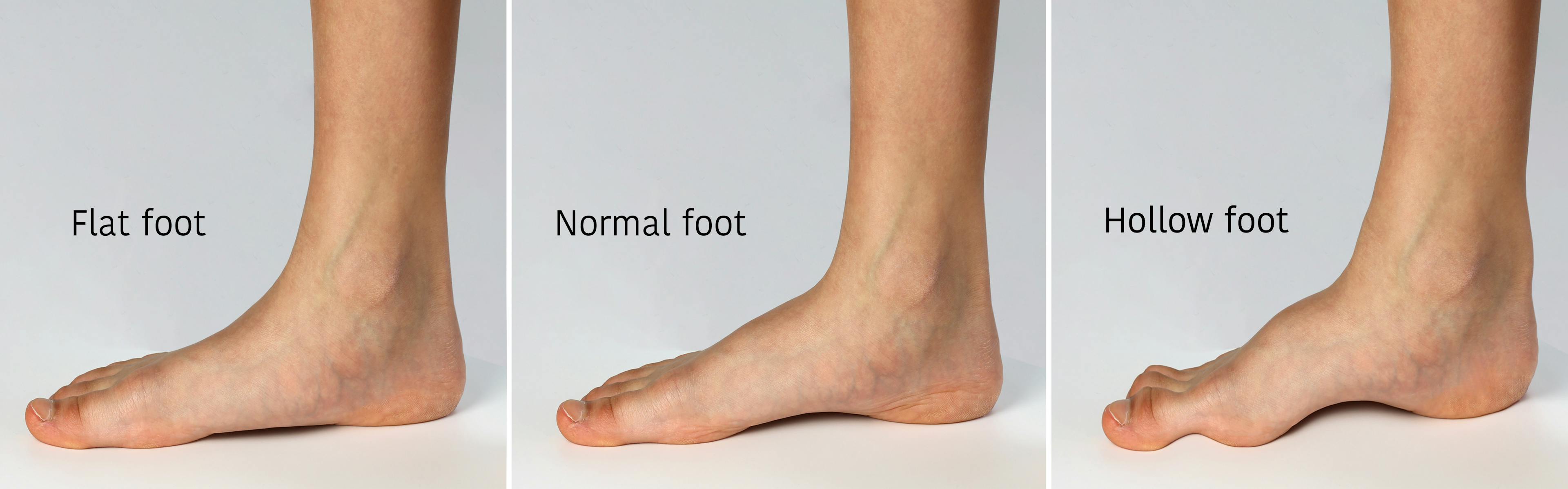
One of the most obvious variations between people’s feet is the arch. What people commonly call the arch — the medial longitudinal arch — is only one of three arches in the foot:
- The medial longitudinal arch runs from the back of the heel to the ball of the foot, down the center.
- The lateral longitudinal arch follows the outer edge of the foot.
- The anterior transverse arch crosses side to side just behind the ball of the foot.
These three arches function together to help the foot absorb impact and adjust to uneven surfaces during walking or running.
Why arch height matters
Your arch offers crucial support as you move through your day.
If your arch is extremely high or very flat, it can place additional strain on muscles and joints, especially if you take part in high-impact or endurance sports, or stand for long periods.
That’s because arch height influences how your foot moves. When an arch is too tall or too collapsed, particular parts of the foot are more likely to be overworked, and chronic overuse raises the risk of injury.
How to measure your arch
Arches are usually described as low or flat (pes planus), medium, or high (pes cavus).
To determine your arch type, the Mayo Clinic recommends a simple method: wet the sole of your foot and step onto a piece of cardboard or construction paper.
If the wet imprint shows the whole underside of your foot, you likely have low or flat arches. If about half of the midsection is visible, you probably have medium or typical arches.
And if only the prints of your toes, heel, and the ball of the foot appear, you likely have very high arches.
Pronation and supination
Pronation and supination describe the side-to-side movements your foot makes while moving. Pronation is an inward roll. When you look at your foot as you step forward, you’ll notice your ankle tilt toward the inner arch shortly after the heel contacts the ground.
A degree of pronation is normal. During a step, the foot absorbs shock by rolling slightly inward and downward.
Your arch briefly flattens, then your weight shifts toward the outside of the foot and up to the ball as you continue. Finally, you push off predominantly using the big toe and second toe.
A small amount of supination — rolling toward the outer edge — is also part of normal walking or running. As you propel forward, the foot naturally shifts outward to redistribute push-off forces to the toes.
Too much of a good thing
Low arches often lead to overpronation, whereas high arches tend to cause oversupination. Extremely high arches might not pronate enough, meaning smaller toes may handle too much of the push-off force.
A 1994 study observed that runners with very high arches absorb impact less effectively than those with lower arches. Such biomechanical patterns can eventually damage the ankle, iliotibial band, or Achilles tendon, and may increase risk of plantar fasciitis.
Does foot shape predispose people to foot and leg issues?
Foot form — particularly arch type — can make some conditions more likely. These issues often emerge over time or when repeated stress affects the bones and soft tissues in the feet.
Bunions
A bunion is a bony prominence on the inner side of the foot near the base of the big toe. Bunions are common; approximately 23 percent of people have them, with higher rates among older women.
While non-genetic factors — such as tight, high-heeled footwear — can cause bunions, researchers think that flat feet or low arches raise the likelihood of developing them.
Hammer toes
Hammer toe refers to marked bends in the second through fifth toes. The condition typically appears with age and can make it difficult to find comfortable shoes.
Evidence suggests both very high arches and flat feet elevate the risk of hammer toes. Both arch extremes cause imbalanced muscle activity in the feet, which alters the forces acting on toes over time.
Plantar fasciitis
Plantar fasciitis is inflammation of the connective tissue stretching from toes to heel, usually producing sharp pain around the heel.
This condition has been linked to high arches and oversupination, and also to low arches or flat feet.
Shin splints
People with overpronated foot posture face a greater risk of medial tibial stress syndrome (MTSS), commonly known as shin splints, according to research.
Shin splints produce pain from the knee down to the ankle along the front of the lower leg and often affect athletes involved in stop-and-start sports like tennis or soccer.
Ankle injuries
If your foot habitually oversupinates or overpronates due to its structure, you may be more vulnerable to ankle injuries, including sprains, strains, or fractures, a 2001 study found.
Studies also indicate that people with high arches may have ankles that are not as well supported or robust as those with lower arches.
Hip, knee, or foot pain
Research has shown that arch height — whether pes cavus or pes planus — can produce pain in the lower limbs beyond the feet. That’s because foot mechanics influence the movement patterns of the legs and hips.
The takeaway
Your feet carry and propel you through daily life, whether you’re on your feet at work, marching in a demonstration, or striking a soccer ball.
What feet cannot do is disclose your ancestry or character. There’s no evidence that foot form reflects where your ancestors came from, and no research linking foot shape to personality traits.
However, foot structure can affect how you move.
Pay attention to your arch type and any tendency to pronate or supinate when walking or running. These movement patterns can contribute to injury or painful conditions like bunions, hammer toes, shin splints, or plantar fasciitis.
If you notice oddities in your gait or persistent pain in your feet, knees, or hips, consult a physical therapist or podiatrist to determine whether foot shape is contributing to the problem.



















Leave a Reply
You must be logged in to post a comment.