

Veneers and crowns both can transform the look of your teeth, and each choice brings its own advantages and drawbacks.
Both veneers and crowns are restorative dental options designed to enhance the appearance and function of teeth. The key distinction is that a veneer only covers the front surface of a tooth, whereas a crown encapsulates the entire tooth structure.
Dental restoration treatments can be expensive, so it’s valuable to understand which approach may suit your needs. Even though the techniques differ, both tend to have favorable outcomes.
Below is an overview of how veneers and crowns differ, the benefits and limitations of each, and typical uses for both.

What differentiates a veneer from a crown?
A veneer is an ultra-thin shell—usually about 1 millimeter thick—crafted from porcelain or other materials and bonded to the front of your natural tooth.
A crown is thicker, roughly 2 millimeters, and covers the full circumference of the tooth. Crowns may be fabricated entirely from porcelain, from porcelain fused to a metal substructure (PFM), or from all-metal alloys.
Which option is appropriate depends on the state of your tooth and the issue you’re addressing. Common reasons for restoration include:
- stained or discolored teeth
- chipped, fractured, or broken teeth
- decayed or structurally weakened teeth
- mildly crooked teeth
Both veneers and crowns are usually color-matched to adjacent teeth, except for all-metal crowns which naturally differ in appearance.
What is a veneer?
A veneer coats only the tooth’s front surface. It’s typically less invasive than a crown because more of the original tooth remains intact after preparation.
Typically, about 0.5 millimeters of enamel from the tooth’s front is removed to create a roughened surface for the veneer to adhere to. Some modern veneer systems require less removal of tooth structure. Local anesthesia may be used for comfort, since shaping the tooth can cause discomfort.
For a veneer to bond correctly, there must be sufficient enamel on the tooth’s surface.
What happens during the veneer process?
- The dentist will capture an impression of the prepared tooth—either by digital scanning or by taking a physical mold. If the practice lacks an on-site lab, the model or scan will be forwarded to a dental laboratory.
- Depending on how much tooth was reduced, a temporary veneer might be placed while the final restoration is fabricated.
- When the permanent veneer is ready, it replaces the temporary. The veneer is adhered using a specialized dental cement and cured with a UV light.
- After placement there is typically minimal movement of the tooth. If you grind or clench at night, your dentist may advise wearing a nightguard to protect the veneer.
What is a crown?
A crown covers the entire visible portion of the tooth. Preparing a tooth for a crown generally requires more reduction of natural tooth structure than preparing for a veneer.
If decay is present, the dentist will remove the decayed tissue before creating the crown. In cases of substantial damage, the tooth may need to be built up (core buildup) to provide adequate support for the crown.
Local anesthesia is commonly used for crown preparations to keep the procedure comfortable.
What happens during the crown process?
- An impression of the prepared tooth is taken either digitally or with a mold. If the office does not have a lab, the impression or scan is sent to a dental laboratory to fabricate the crown.
- A temporary crown is often placed on the reduced tooth so you can use it while the permanent crown is being made.
- When the final crown arrives, the temporary is removed and the permanent crown is fitted, adjusted for proper occlusion, and cemented in place.
- Teeth with crowns may experience slight positional changes over time that can affect bite; if this occurs, the crown may need adjustment.

How do you determine which is best?
If a tooth has a large restoration, has undergone root canal therapy, or is severely worn or fractured, a crown is often the more suitable choice.
If the tooth is largely sound and the primary goal is cosmetic refinement, a veneer may be the better option. Veneers are also effective for modest reshaping.
How much will they cost?
Both veneers and crowns can represent a significant investment. Prices vary depending on tooth size, location in the mouth, and regional pricing differences.
Most dental insurance plans exclude coverage for purely cosmetic procedures, and many plans have yearly maximums. Check your policy to determine what portion, if any, will be covered.
Veneers
Per the American Cosmetic Dentistry, a veneer can cost anywhere from $925 to $2,500 per tooth.
Porcelain veneers generally cost more than composite veneers, but they tend to have a longer lifespan, according to the Consumer Guide to Dentistry. Composite veneer prices can range from $250 to $1,500 per tooth.
Crowns
Crown pricing depends on the material chosen, the extent of preparatory work, and the tooth’s size.
The Consumer Guide to Dentistry reports crown costs between $1,000 and $3,500 per tooth. This estimate typically does not include any additional procedures, such as core buildups or root canal therapy, that might be necessary first.
Porcelain or ceramic crowns usually cost a bit more than all-metal crowns.
Ways to reduce expense
Ask your dentist whether they offer financing options, payment plans, or the ability to split payments interest-free over several months or a year.
Prices for dental care vary by location. Contact multiple local dental offices to compare fees.
If you’re near a dental school, you might find lower-cost treatments performed by supervised students at a reduced rate for crowns, veneers, and other procedures.
Pros and cons of veneers and crowns
Veneer advantages
- They may provide superior aesthetics over time because veneers often avoid the gumline discoloration that can develop with crowns.
- Certain veneers require minimal tooth reduction, preserving more of your natural structure.
- Teeth restored with veneers typically exhibit little movement.
Veneer disadvantages
- More of the tooth surface remains exposed, which can increase the risk of future decay in untreated areas.
- Composite veneers are more affordable but may only last 5–7 years; other materials have greater longevity but ultimately may still need replacement.
- The process is not reversible.
- Insurance coverage for veneers is often limited or unavailable.
Crown advantages
- Because the entire tooth is covered, crowns offer superior protection against decay.
- Porcelain crowns can closely match the appearance and feel of natural teeth.
- Crowns are durable and don’t need to be removed for cleaning like removable prosthetics.
- Dental plans may cover a portion of crown costs.
Crown disadvantages
- More natural tooth structure must be removed to accommodate a crown.
- Initially, crowned teeth may be more sensitive to temperature changes and you might experience some gum soreness; increased sensitivity warrants a follow-up appointment.
- Porcelain can chip or wear over time.
- PFM crowns may reveal a thin dark line at the gum margin where metal meets porcelain.
Questions to ask your dentist
Early on, find out the total expected cost for the crown or veneer and what your insurance might contribute. Also ask about your dentist’s experience performing each procedure.
Additional questions tailored to your situation could include:
- Are alternative treatments like implants or bridges worth considering?
- How long should I expect my veneer or crown to last?
- Does the quoted fee include follow-up appointments if the fit needs modification?
- Will I need a mouthguard for protection?
- Are there special care instructions for maintaining the restoration?
Expert perspective
Kenneth Rothschild, DDS, FAGD, PLLC, possesses four decades of experience as a general dentist and holds membership in professional organizations such as the Academy of General Dentistry and the Seattle Study Club. He has earned a Fellowship in the Academy and completed focused residencies in prosthodontics and orthodontics.
“When choosing between veneers and crowns,” Rothschild explained, “porcelain laminate veneers typically require less removal of tooth structure than full-coverage crown preparations. When appropriate, veneers often provide superior aesthetic results.”
“The costs for veneers and crowns can be similar,” Rothschild added. “Veneers are usually recommended for anterior (front) teeth and sometimes for premolars. If little tooth structure remains, full-coverage crowns are generally the preferred solution.”
He advises patients to ask whether their dentist uses conservative cutting techniques when preparing teeth for porcelain laminate veneers.
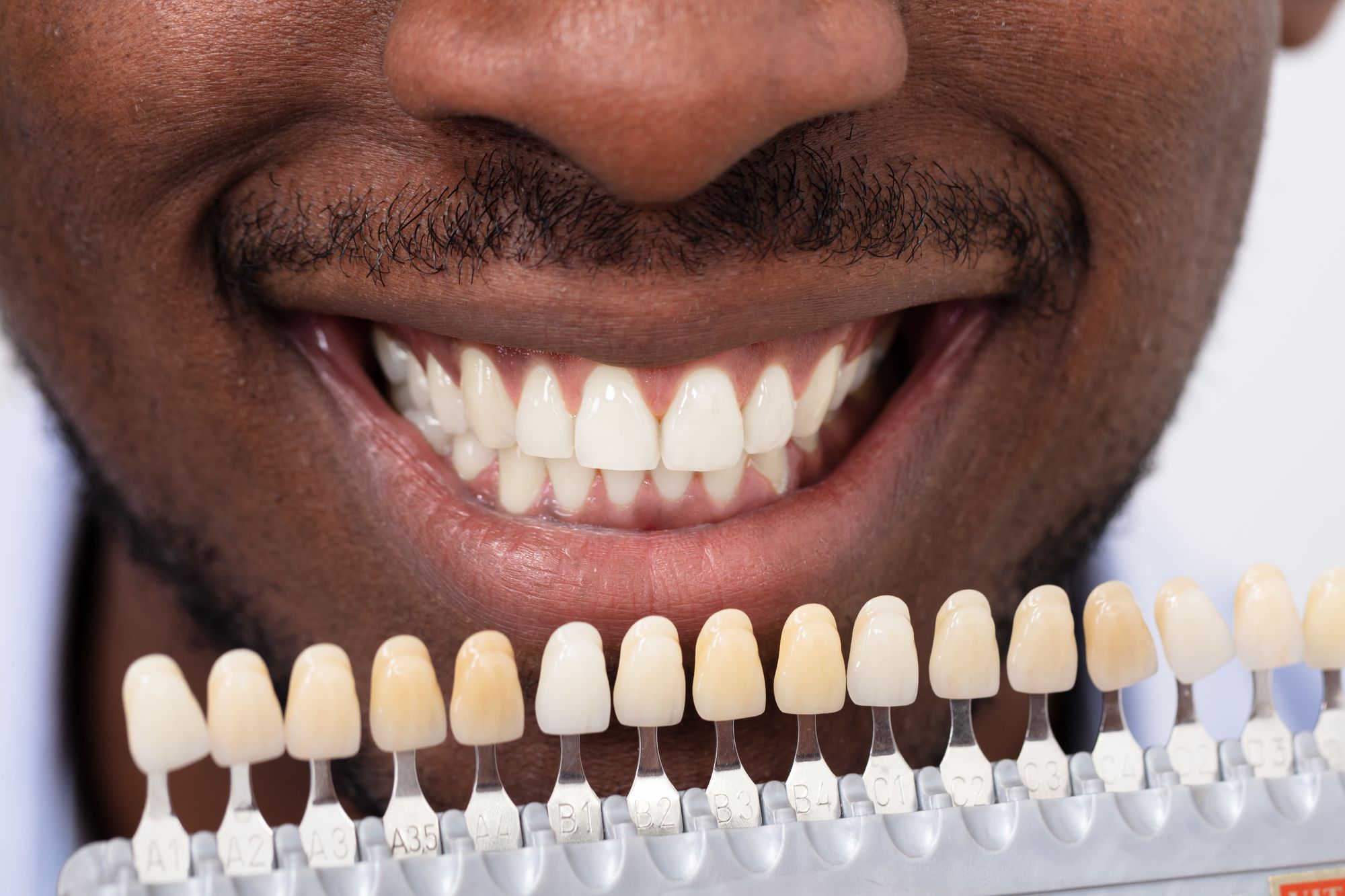
Because matching color is essential, Rothschild also suggests asking whether skilled lab technicians are available to assist with shade selection and tinting.
The takeaway
Both veneers and crowns are effective for enhancing your smile and restoring tooth function. Both procedures can be expensive, particularly when multiple teeth require treatment.
Veneers are typically chosen for cosmetic improvements such as masking chipped or misaligned front teeth.
Crowns are favored when a tooth is extensively decayed, fractured, or has undergone root canal therapy. Crowns are also useful when teeth adjacent to the restoration need reinforcement.
Maintaining regular dental exams and practicing excellent oral hygiene are essential to preserving veneers, crowns, and your natural teeth.




















Leave a Reply
You must be logged in to post a comment.