Glute Workout for Strength and Shape: 8 Exercises That Build Your Backside

- A quick tour of the muscles you are training
- The 8 exercises
- 1. Barbell hip thrust
- 2. Goblet squat
- 3. Romanian deadlift
- 4. Bulgarian split squat
- 5. Step-up
- 6. Glute bridge
- 7. Lateral band walk
- 8. Single-leg Romanian deadlift
- How to put it together: the weekly plan
- Common mistakes that stall progress
- The bottom line
Two flights of stairs used to leave you winded and your knees aching. Six weeks after you started training your glutes properly, the same stairs feel easy, your jeans fit differently, and your lower back — the one that used to complain every time you picked up a grocery bag — has gone quiet. That is what a good glute workout does. It changes how you look, yes, but the shape is almost a side effect. The real prize is strength where your body needs it most.
Your glutes are the largest muscle group in your body, and they do far more than fill out a pair of jeans. They power you up stairs, keep your knees tracking straight when you squat, protect your lower back when you lift, and drive every step when you run. Yet most people train them by accident, if at all — a few squats tacked onto leg day, done with the quads doing all the work. This guide fixes that. It covers the eight exercises that build glute strength and shape, how to do each one with good form, and how to put them into a weekly plan that actually produces results.
A quick tour of the muscles you are training
The glutes are three muscles layered on top of each other. The gluteus maximus is the biggest muscle in the body. It extends the hip — the motion of driving your leg back or standing up from a squat — and it gives the backside most of its shape. The gluteus medius sits on the outer hip and keeps your pelvis level every time you stand on one leg, which is every step you take. The gluteus minimus is the smallest and deepest of the three, and it helps with hip stability and rotation. A workout that only trains the maximus leaves the sides weak, and weak sides show up as wobbly knees and aching hips. The plan below hits all three.
There is also a practical point worth knowing: squats alone do not build glutes as well as most people think. Research summarized by Gymshark and others shows that squats spread the work across the quads, glutes, hamstrings, and calves, and the quads often take the biggest share. To grow the glutes, you need exercises where the hips do the driving — hip thrusts, deadlift patterns, and single-leg work — alongside squats, not instead of them.

The 8 exercises
1. Barbell hip thrust
If you could only pick one glute exercise, this would be it. The hip thrust loads the glutes hardest at full hip extension, the top of the movement, which is exactly where the gluteus maximus is strongest. Sit on the floor with your upper back against a bench, roll a barbell over your hips with a pad for comfort, plant your feet flat, and drive your hips up until your body forms a straight line from shoulders to knees. Squeeze hard at the top for a second, then lower slowly. Keep your chin tucked and your ribs down — arching your lower back at the top is the most common mistake, and it shifts the work off the glutes. Do 3 to 4 sets of 8 to 12 reps, and go heavy: this is the lift where you can load the most weight safely.
2. Goblet squat
Hold a single dumbbell or kettlebell at your chest, feet slightly wider than shoulder-width, toes turned out a little. Sit your hips back and down until your thighs are at least parallel to the floor, knees tracking out over your toes, then drive up through your heels and squeeze your glutes at the top. The front-loaded weight keeps your torso upright, which makes it easier to sit deep and feel the glutes work. Do 3 sets of 10 to 12 reps. Our earlier guide to squats for glutes covers stance and depth tweaks in detail if you want to dig deeper.
3. Romanian deadlift
The Romanian deadlift, or RDL, is a hip hinge: the movement comes from pushing your hips back, not from bending your knees. Stand tall holding a barbell or dumbbells in front of your thighs, soften your knees slightly, and hinge at the hips until you feel a strong stretch in your hamstrings, usually when the weights reach just below your knees. Then drive your hips forward and squeeze your glutes to stand. Keep the weights close to your legs the whole time and your back flat. Do 3 sets of 8 to 10 reps. The RDL builds the lower glutes and hamstrings together, which is what gives the backside its shape from below.
4. Bulgarian split squat
Stand a couple of feet in front of a bench, place the top of one foot on the bench behind you, and lower straight down until your front thigh is parallel to the floor. Push through your front heel to stand. This is the best single-leg glute builder most people never do, because it is hard: it demands balance, it stretches the hip deeply, and it forces each side to work alone, which fixes left-right imbalances. Start with body weight, then hold dumbbells at your sides. Do 3 sets of 8 to 10 reps per leg. If balance is a problem, hold a rail or a rack with one hand until you find your footing.
5. Step-up
Step-ups look simple and humble people fast. Stand facing a knee-high box or bench, place one foot flat on it, and drive through that heel to stand up on the box, bringing the other foot up to meet it. Step down with control and repeat. The trick is to not push off the floor with the trailing leg — all the work should come from the leg on the box. Lean your torso slightly forward to load the glutes more. Do 3 sets of 10 reps per leg, holding dumbbells once body weight gets easy.
6. Glute bridge
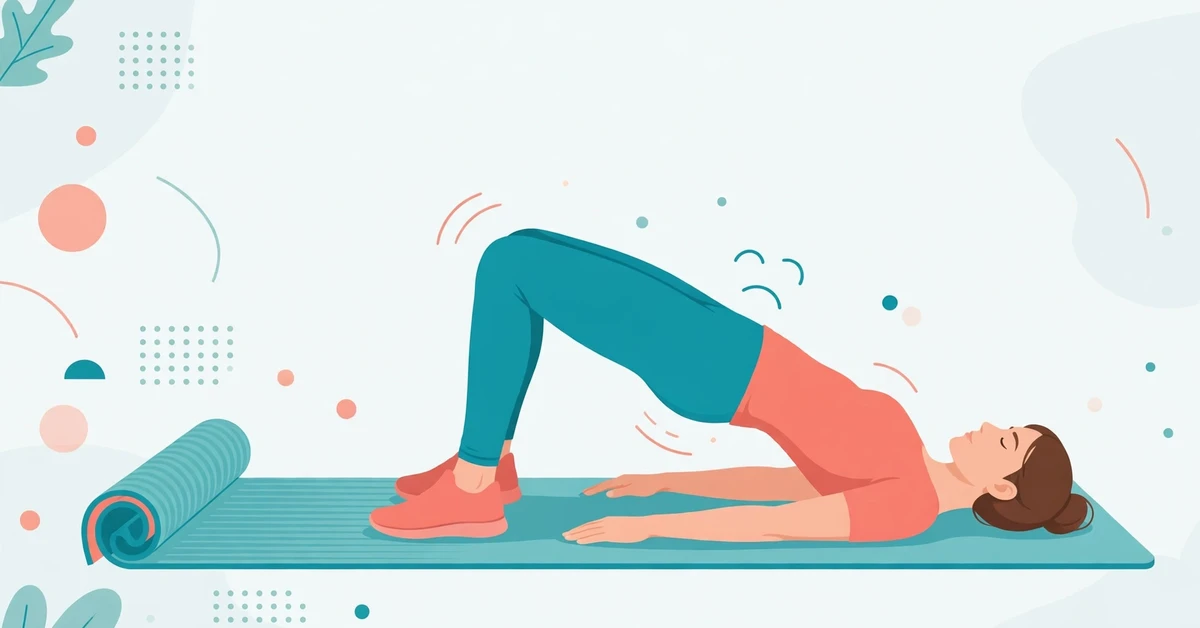
Lie on your back with knees bent and feet flat, arms by your sides. Press through your heels, lift your hips until your body forms a straight line from shoulders to knees, squeeze for a second, and lower slowly. The glute bridge is the hip thrust’s gentler cousin: less load, more control, and a great way to learn what a hard glute squeeze actually feels like before you add a barbell. For a harder version, try the Kas glute bridge, where your upper back rests on a bench and you use a short, controlled range to keep tension on the glutes the whole time. Do 3 sets of 15 to 20 reps, or use it as a warm-up before the heavier lifts.

7. Lateral band walk
This one targets the gluteus medius, the side muscle that keeps your pelvis level. Put a loop band just above your knees, bend your knees slightly, and take small sideways steps, keeping tension on the band the whole time. Keep your toes pointing forward and your hips level — do not let your body rock side to side. Ten steps one way, ten back, is one set; do 3 sets. It burns far more than it looks like it should, and it is the single best fix for knees that cave inward when you squat.
8. Single-leg Romanian deadlift
Stand on one leg holding a dumbbell in the opposite hand, hinge at the hips and let the free leg float back behind you, lowering the weight toward the floor. Keep your hips square and your back flat, then drive through your standing heel to come back up. This move trains balance, hip stability, and the glutes all at once, and it exposes weak sides fast — most people find one leg far shakier than the other. Do 3 sets of 8 reps per leg with a light weight first; form matters more than load here.
How to put it together: the weekly plan
Muscles grow when they are challenged a little more over time, a principle called progressive overload. That can mean more weight, more reps, slower reps, or an extra set — but something has to increase week by week, or the body has no reason to change. Gymshark’s programming guidance puts it plainly: most glute work should sit in the 8 to 12 rep range at 60 to 80% of your one-rep maximum, with heavier, lower-rep work on the big lifts and higher-rep finishers with bands at the end.
Train glutes 2 to 3 times a week, with at least one rest day between sessions. Two sessions is enough for most people; three suits those who want faster progress and can recover well. A simple two-day split looks like this:
| Day A (heavy) | Sets x Reps | Day B (volume) | Sets x Reps |
|---|---|---|---|
| Barbell hip thrust | 4 x 6–8 | Goblet squat | 3 x 10–12 |
| Romanian deadlift | 3 x 8–10 | Bulgarian split squat | 3 x 10 per leg |
| Step-up | 3 x 10 per leg | Single-leg Romanian deadlift | 3 x 8 per leg |
| Lateral band walk | 3 x 10 each way | Glute bridge | 3 x 20 |
Warm up before every session: five minutes of easy walking or cycling, then two rounds of glute bridges and band walks with light effort. Warm glutes fire better and protect your knees and back. Cool down with a few minutes of easy stretching for the hips and glutes — our guide to stretching your glutes has a good routine.
Common mistakes that stall progress
The first mistake is using the lower back instead of the glutes. If your back aches after hip thrusts or deadlifts but your glutes feel nothing, you are arching or rounding your spine and the hips are not doing the work. Slow down, lighten the weight, and squeeze the glutes hard at the top of every rep until you can feel them.
The second is going too light forever. Body-weight work is a fine start, but muscle only grows against real resistance. If you can do 15 easy reps, the weight is too light. Add load, and add a little more next week. The third is skipping single-leg work: two-legged lifts let your strong side cover for your weak one, and the imbalance shows up eventually as knee pain or a lopsided squat. The fourth is impatience. Visible change in glute shape takes 8 to 12 weeks of steady training, not two. Take a photo on day one, train, eat enough protein, sleep, and compare again in three months.
On food: muscle needs protein to grow, and most people who train hard do best around 1.6 grams of protein per kilogram of body weight a day, spread across meals. You do not need supplements to hit that, but a protein-rich meal after training helps. And rest matters as much as the workout — muscles rebuild between sessions, not during them.
Build My Glute Workout
Pick your level and how often you can train, and get a plan.
The bottom line
Strong glutes are built with hip-dominant lifts — hip thrusts, deadlift patterns, and single-leg work — plus squats, not squats alone. Eight exercises cover the whole job: the hip thrust and glute bridge for power at the top, the Romanian deadlift and step-up for shape underneath, the Bulgarian split squat and single-leg deadlift for balance and symmetry, and the lateral band walk for the side muscles that keep your knees honest. Train two or three times a week, add a little more load each week, eat enough protein, and give it eight to twelve weeks. The shape follows the strength, and the strength changes how the rest of your body feels — on the stairs, under a grocery bag, and everywhere else your glutes were quietly supposed to be working all along.
Talk to your doctor before starting a new exercise program, especially if you have back, hip, or knee problems. Stop any exercise that causes sharp pain.
Frequently Asked Questions
The most effective glute exercises are the barbell hip thrust, Romanian deadlift, Bulgarian split squat, goblet squat, step-up, glute bridge, single-leg Romanian deadlift, and lateral band walk. Together they train the gluteus maximus, medius, and minimus from every angle.
Two to three times a week, with at least one rest day between sessions. Two sessions is enough for most people. Visible change in shape usually takes 8 to 12 weeks of steady training with progressive overload.
Not as well as most people think. Squats spread the work across the quads, glutes, hamstrings, and calves, and the quads often take the biggest share. Hip thrusts and deadlift patterns load the glutes far more directly, so use squats alongside them, not instead of them.
For muscle growth, most glute work should sit in the 8 to 12 rep range, for 3 to 4 sets per exercise. Go heavier (5 to 8 reps) on big lifts like the hip thrust, and lighter with higher reps (15 to 20) on finishers like glute bridges and band walks.
Yes. Glute bridges, single-leg Romanian deadlifts, Bulgarian split squats using a chair, step-ups on a sturdy box, and lateral band walks all work with body weight or a resistance band. Add dumbbells or a heavy backpack when body weight gets easy.
Knees caving inward usually means weak gluteus medius muscles, which stabilize the hips. Lateral band walks, clamshells, and single-leg work strengthen them. Cue your knees to track out over your toes on every rep, and lighten the weight until they do.

Related Posts

Try These Squats for Glutes for a Well-Rounded Workout
Sep 18, 2026 • 8 min read
Karate vs. Taekwondo: What's the Difference?
Sep 25, 2026 • 4 min read
Try the Superman Exercise to Stand Tall and Proud
Sep 18, 2026 • 8 min read
Which Is Better — Using Free Weights or Machines?
Sep 15, 2026 • 5 min read
8 Alternatives to Leg Extension Exercises
Sep 14, 2026 • 8 min read