
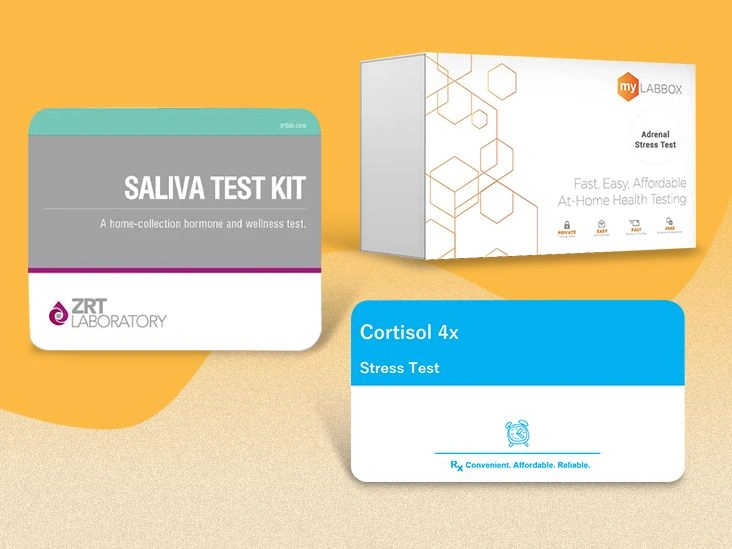
A quick look at the best at-home cortisol tests
- Best for fast results: | Skip to review
- Best to test stress all through day: | Skip to review
- Most affordable cortisol test: | Skip to review
Stress is partly driven by cortisol, the hormone that mediates the fight-or-flight reaction.
One approach to managing stress is to measure your cortisol output using an at-home cortisol testing kit.
How to test cortisol levels at home
You can check cortisol levels in the comfort of your home. That said, not every home cortisol kit is dependable. Choose a product from a trusted provider and review the findings with a healthcare professional.
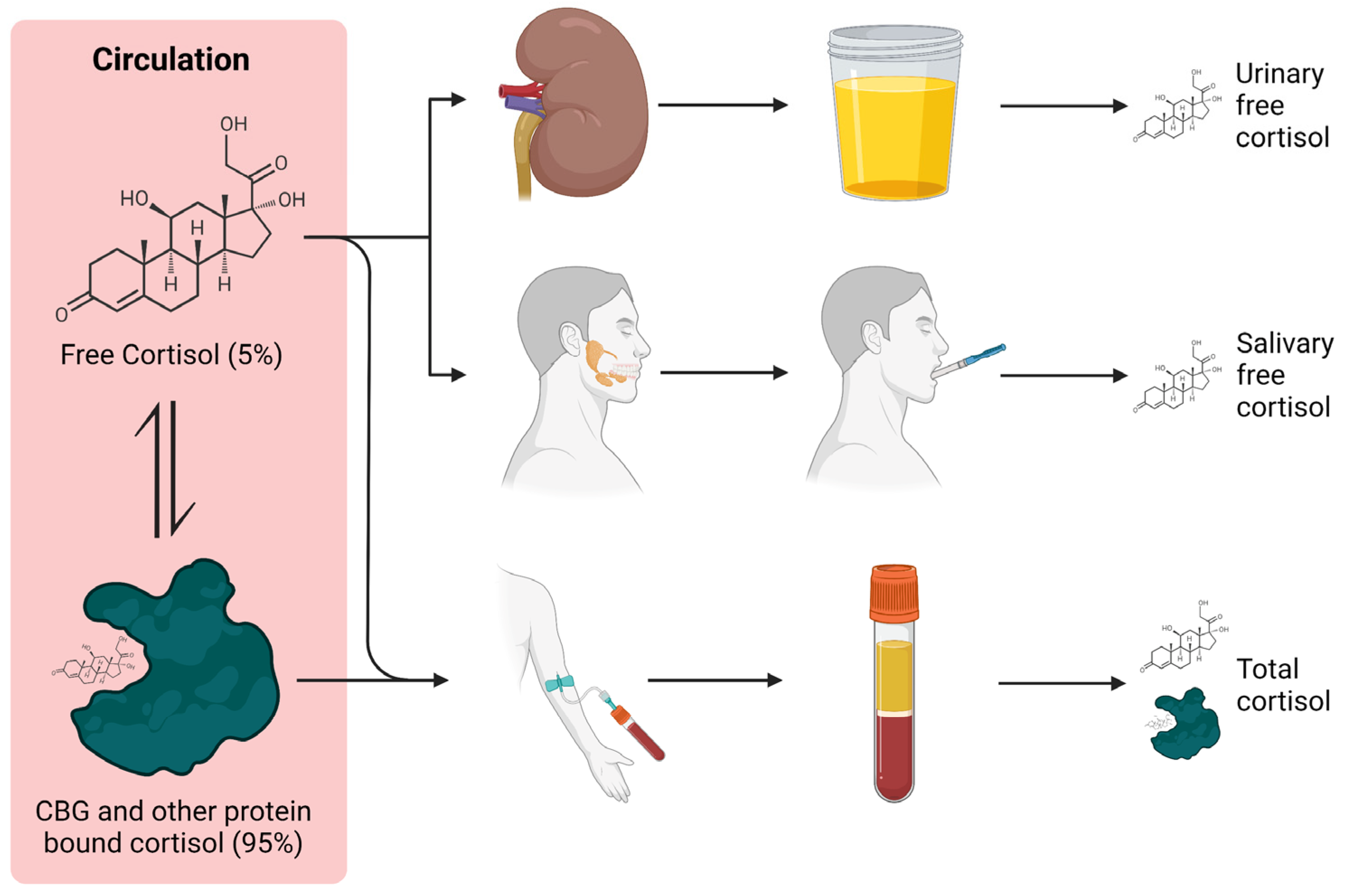
Home kits usually ask for either a blood sample (via a finger prick) or saliva. Saliva collection may be preferable for people who are averse to needles.
Healthline’s picks for the best at-home cortisol tests
Comparing cortisol testing services
Cortisol tests
Price
Results
Tests
Method
$149
2 to 5 days
cortisol and DHEA
saliva
$86
5 to 7 days
cortisol
saliva
$119.99
5 to 7 business days
cortisol
saliva
Why living with long-term stress is dangerous
According to research, prolonged high stress can lead to elevated cortisol levels, which may harm your health.
Symptoms: When cortisol levels are too high or too low
If your cortisol is excessively high or abnormally low, you might notice symptoms and a general decline in wellbeing. An adrenal gland disorder could be the underlying cause and may be serious if untreated.
Possible signs of imbalanced cortisol include profound tiredness, hypertension, and abnormal blood sugar levels (either high or low).
If you have any of these signs, consider checking your cortisol levels.
At-home cortisol kits can be a useful way to assess cortisol and gain clues about what might be producing your symptoms before seeing a clinician. They can also help you learn how your body reacts to stress.
Either excessive or insufficient cortisol can signal an adrenal disorder.
These conditions include Cushing syndrome, where the body produces too much cortisol, and Addison’s disease, where cortisol production is too low.
If you have Cushing syndrome or Addison’s disease, a physician may advise periodic cortisol monitoring.
How we chose the best at-home cortisol tests
The market for home testing is expanding, and there are many choices. To identify the top at-home cortisol kits, we looked at the following:
- Laboratory standards: We favored companies that use CLIA-certified labs, ensuring they adhere to governmental quality standards.
- Ease of use: We selected tests that are straightforward and come with clear instructions.
- Privacy: We checked that brands respect data privacy and use discreet packaging.
- Medical support: Where available, we included services that provide help when results are abnormal, such as phone or telehealth consultations.
- Reviews: Finally, we reviewed customer feedback to gauge satisfaction and only included those with strong reviews.
How do at-home cortisol tests work?
Cortisol fluctuates over the day. It’s usually highest upon waking and declines throughout the day.
Because of these patterns, many at-home cortisol kits require a morning sample. Some demand samples at multiple times during the day.
A clinician may ask you to take the test at a specific time depending on whether excess or insufficient cortisol is suspected.
Collection methods differ: some tests use blood, while others use saliva or urine. Follow the manufacturer’s directions carefully when collecting samples.
After mailing your specimen, results from an at-home cortisol kit typically arrive within a few days to a couple of weeks.
How to choose your own test
When picking an at-home cortisol kit, consider these factors:
- the company’s credibility and reputation
- whether the lab is CLIA certified
- your preferred sample type (saliva, urine, or blood)
- how quickly you want results
- your budget
- HSA or FSA payment options
- customer reviews and ratings
How to read your cortisol test results
A common morning cortisol range in a blood sample taken at 8 a.m. is 5 to 25 micrograms per deciliter (mcg/dL) or 140 to 690 nanomoles per liter (nmol/L).
Results can vary based on factors like testing time and clinical context.
A healthcare provider is best suited to interpret your specific results and what they mean for your health. Do not stop any prescribed medications without discussing it with your provider.
When to talk with a doctor
While home testing is convenient, you should see a physician first if you have severe signs of abnormal cortisol. These include sudden unexplained weight changes, areas of skin darkening, or major mood shifts.
If your at-home results are within normal limits but you still feel unwell, schedule an appointment with a doctor to investigate possible causes of your symptoms.
For more background on why some supplements or extracts related to adrenal support may be risky, see why you should avoid adrenal extract. Also consider reading about available cortisol tests if you want a deeper comparison of testing methods.
Frequently asked questions about at-home cortisol tests
Can I test my cortisol levels at home?
Yes — you can test cortisol at home, but results shouldn’t replace a medical consultation.
At-home cortisol kits are available online. They typically require collecting blood, urine, or saliva and sending the sample to the company’s laboratory.
Are at-home cortisol tests as accurate as in-person tests?
In-clinic cortisol testing usually uses blood samples. Most home tests use saliva, although a few accept urine or blood.
Laboratory testing in a medical setting is generally more precise than a self-collected kit. Still, at-home cortisol testing is a practical tool to gather preliminary insight before seeing a clinician.
Are cortisol tests covered by insurance?
Most at-home testing services do not bill insurance, and insurers typically don’t cover them. Some services may accept HSA or FSA payments.
Contact your insurance provider directly to learn whether they cover an at-home cortisol test.
Are there any risks to taking an at-home cortisol test?
At-home cortisol testing poses minimal risks. If a blood sample is required, there may be minor bruising or bleeding.
Though generally accurate, there’s a possibility of false-positive or false-negative results due to collection errors or transit issues.
Keep in mind that home testing is not a replacement for evaluation by a primary care clinician.
How often should you test your cortisol?
Unless you’ve been diagnosed with Cushing syndrome or Addison’s disease, routine cortisol testing isn’t necessary.
A doctor will advise the appropriate test type, timing, and frequency.
They might recommend testing twice in one day or several times across multiple days because cortisol fluctuates.
The bottom line
Occasional checks of your cortisol can be useful, especially if you’re feeling stressed.
At-home cortisol kits offer a convenient way to monitor stress and inform changes. However, if you have multiple concerning symptoms, consult a clinician.















Leave a Reply
You must be logged in to post a comment.