
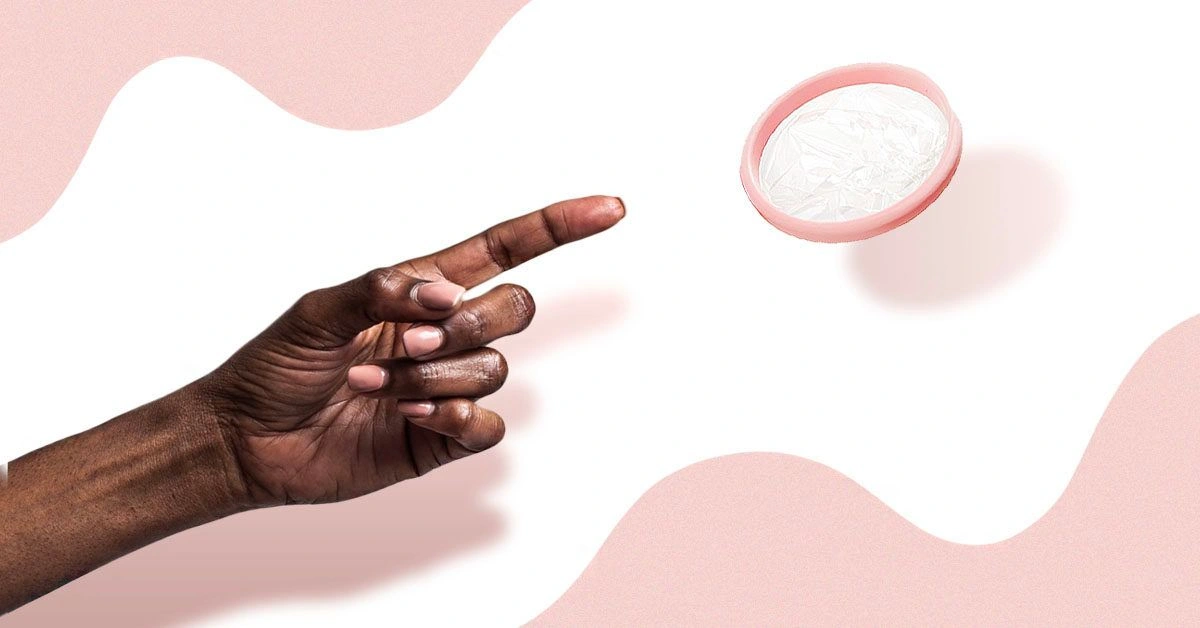
Menstrual discs have been popping up all over social media lately, but what exactly are they?
A menstrual disc is an insertable period product designed to collect blood for up to 12 hours, allow for mess-free intercourse during your period, and potentially ease some discomfort. What a time to be alive.
Here’s what to know before you decide to try one.
How do they differ from menstrual cups?
Menstrual discs and cups are alike in that both are inserted into the vagina to collect menstrual flow.
To complicate matters a bit, an early disposable menstrual cup has since been relabeled as a menstrual disc, which makes more sense once you compare features.
Cups resemble small bell-shaped containers, while discs look, well, like discs.
A cup sits lower in the vagina beneath the cervix and may extend into the canal depending on brand and design. A disc sits farther back in the vaginal fornix — the area where the vaginal canal meets the cervix.

How are they inserted?
Learning to insert a disc comfortably can take some practice, but once positioned correctly you typically won’t feel it at all.
Follow these steps to insert a disc:
- First, wash your hands — you’re handling a sensitive area.
- Choose a comfortable position, such as sitting over the toilet, standing with one leg raised, or squatting.
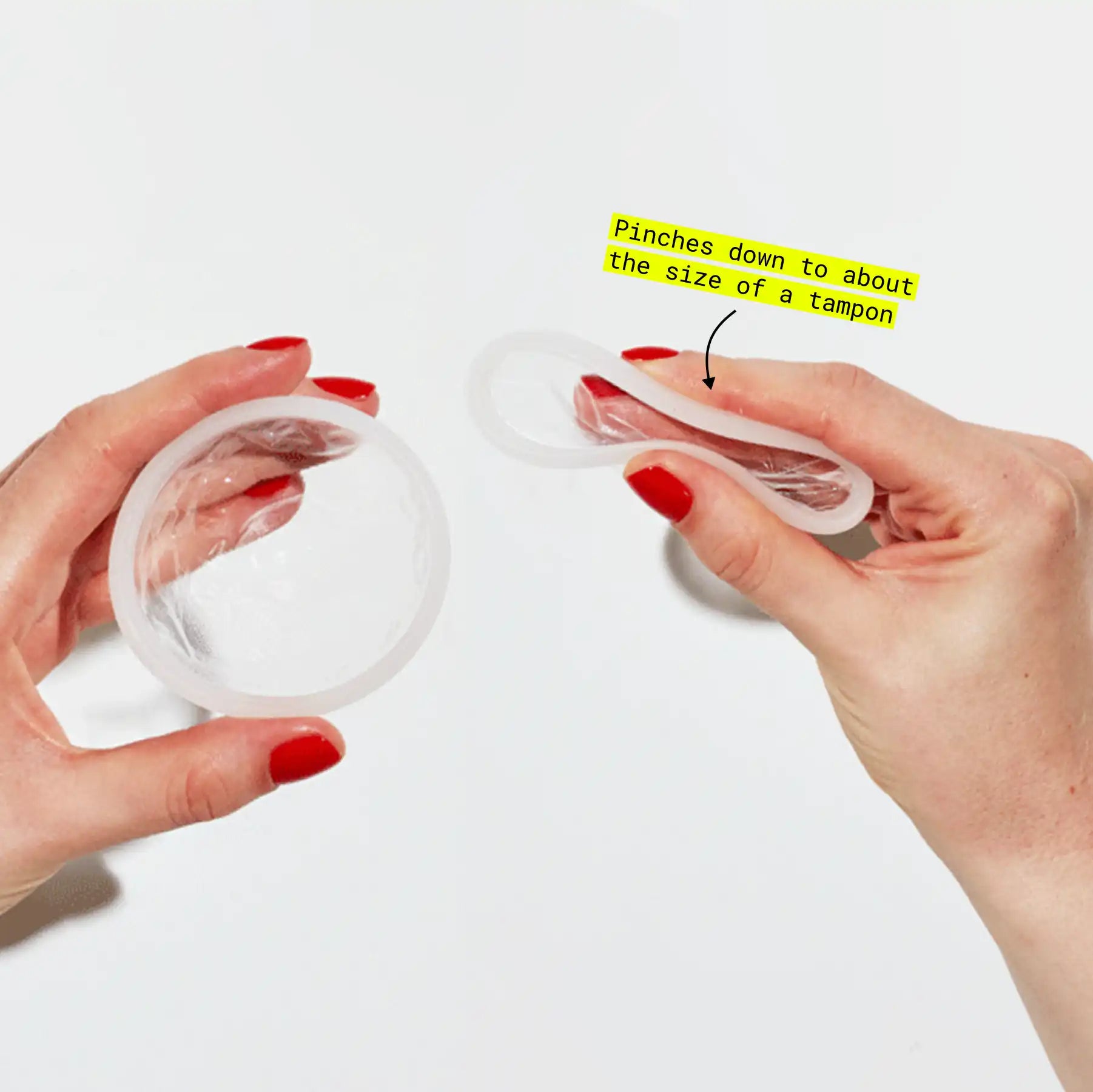
- Squeeze the disc’s sides together so it’s compact, about the size of a tampon.
- Insert the pinched disc with the narrow point directed down and back into your vagina. It should sit vertically so it covers the cervix fully.
- Push it past the pubic bone as far as it can comfortably go so the rim tucks just above the bone.
- Nice work — you’re all set!
How are they removed?
Removal can be a bit messier than with cups. The trick is to keep the disc level as you pull it out to avoid spillage.
To remove a menstrual disc:
- Wash your hands.
- Sit on the toilet — you’ll want to be over the bowl in case it spills.
- Reach into your vagina with your index finger, hook under the rim, and pull it straight out.
- If the rim is hard to reach, bear down with your pelvic floor muscles as if having a bowel movement. This helps “untuck” the rim from behind the pubic bone.
- Empty the contents into the toilet, wrap in toilet paper if desired, and dispose of it in the trash.
How long can I wear one?
Most menstrual discs can be worn for up to 12 hours, though you may need to change them more frequently depending on how heavy your flow is.
Can they handle heavy flows?
First, what counts as a heavy flow? The Centers for Disease Control and Prevention (CDC) defines heavy bleeding as needing to replace a pad or tampon in under two hours or passing clots the size of a quarter or larger.
Discs can manage heavy flows, but you’ll likely need to swap them out more often throughout the day.
Depending on the brand, discs hold roughly the equivalent of 5 regular or 3 super tampons — about 5 to 6 teaspoons of fluid. For context, total menstrual blood loss over an entire period is typically 4 to 12 teaspoons.
How do they perform during sex?
Because discs don’t occupy much of the vaginal canal, they’re a popular choice for penetrative sex during menstruation. They sit at the cervix’s base similar to a diaphragm, so when placed correctly neither partner should feel it.
That said, very vigorous or deep intercourse can cause a disc to shift. From user feedback on two well-known discs, some people have felt the disc or experienced leakage during sex.
The only way to know how one will behave for you is to try it — practice makes perfect.
Do they actually reduce cramps?
Users report less period-related discomfort with discs, but the evidence that they specifically reduce uterine cramps is limited.
Flex, maker of one popular disc, suggests this is because discs rest in the wider part of the vagina.
Tampons sit lower in the narrower part of the canal and may expand as they fill, which this theory says could contribute to cramping.
That reasoning seems plausible, but cramps stem from contractions of the uterus — not the vagina — and the vaginal canal naturally stretches (it’s built to accommodate childbirth).
Still, many reviewers say discs feel more comfortable than rigid tampons. The flexible design of discs may simply be less irritating, which could reduce perceived pain.
Are they reusable?
This is where menstrual cups typically have the advantage. Most menstrual discs are disposable and not intended for reuse, making them less eco-friendly.
However, there are some reusable cups on the market that resemble discs in design and placement (more on these below).
Are there any risks?
No major risks have been identified exclusively for discs, though menstrual cups have been linked to a small number of toxic shock syndrome (TSS) cases in the past reported.
TSS is a rare but serious bacterial illness that can cause sudden fever, low blood pressure, and rash.
To lower the risk of TSS, maintain good hygiene by washing your hands before inserting and removing discs, and follow the product’s instructions.
The chance of a disc getting “lost” inside you isn’t greater than with other insertable products. Because discs lack a string or loop, you may need to bear down or change positions to reach it for removal.
Where can I buy them?
Menstrual discs are widely available online, and some brands can be found in pharmacies and department stores.
Here’s a look at a few options and where to purchase them.
Softdisc
Previously sold as Instead Softcup, Softdisc is made from a medical-grade polymer and is hypoallergenic.
It’s FDA-cleared and free of:
- BPA
- phthalates
- natural rubber latex
- silicone
Softdisc is now owned by the Flex Company, which also markets the FLEX disc.
Shop for SoftDisc menstrual discs online.
FLEX
FLEX Disc is produced by the same company that owns Softdisc. According to the manufacturer, both products share many features, but FLEX’s rim is designed to warm and mold to the body for a snugger fit.
User reviews place it on par with Softdisc.
Shop for the FLEX Disc online.
Intima Ziggy Cup
Though marketed as a menstrual cup, the Ziggy Cup resembles a disc in form and placement. It’s reusable and made of silicone, which can make it more economical over time.
It’s currently the only reusable cup designed to be compatible with sex, given its disc-like shape and placement.
Reviewers like its double rim for durability and for making removal easier and less messy.
Shop for the Intima Ziggy Cup online.
The bottom line
From menstrual cups to period-proof underwear, period-care products keep improving, and menstrual discs are part of that evolution. If you want something that’s barely noticeable, allows for penetrative sex, and can manage heavy bleeding, menstrual discs are worth considering.






















Leave a Reply
You must be logged in to post a comment.