
Key takeaways
- Typically, Medicare will not pay for lipoma removal unless a physician determines it is medically necessary.
- Removal may be considered medically necessary if the lipoma causes significant problems, such as infection, blockage of an opening, interference with vision, or if it sits in an area exposed to repeated injury.
- Lipoma excision is most often done on an outpatient basis. When deemed medically necessary, it is covered under Medicare Part B, meaning you must satisfy the annual deductible and then are responsible for 20% of the procedure cost.
Generally, Medicare does not cover the excision of benign skin growths like lipomas. That said, if your physician decides removal is medically required, Medicare will provide coverage for the operation.
.jpg?width=1900&height=1500&name=lipoma4%20(1).jpg)
Criteria for lipoma removal under Medicare
There are several situations in which Medicare would deem lipoma removal medically appropriate. These include:
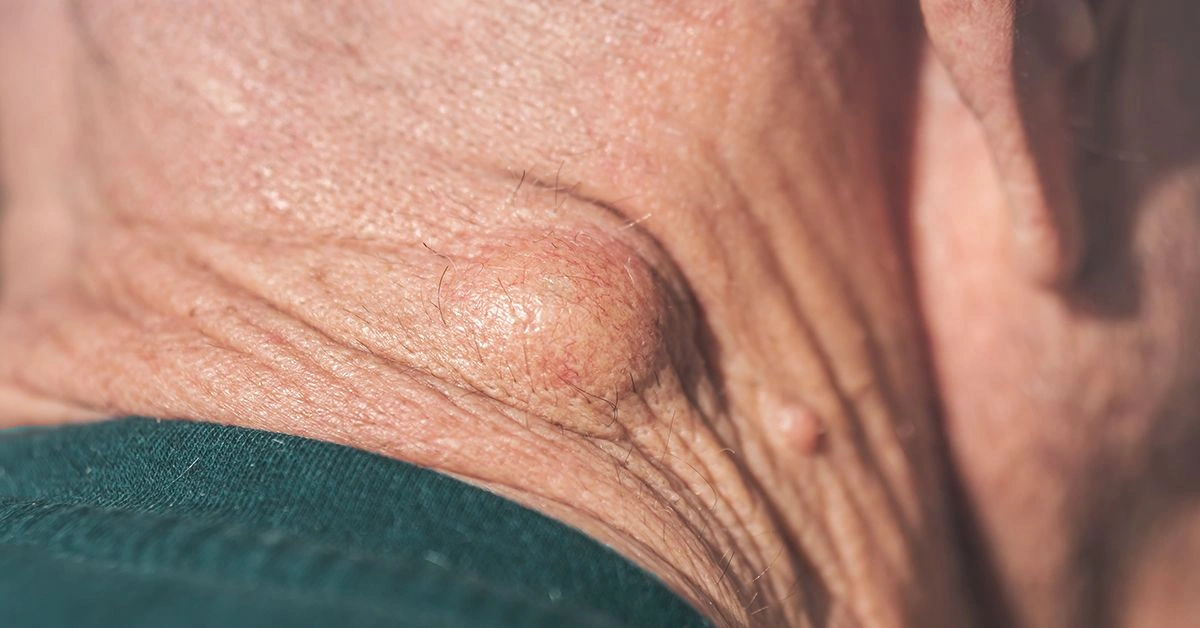
- The lipoma has altered in appearance, become infected, or is inflamed.
- The lipoma obstructs an orifice, for example the mouth.
- The lipoma impairs your vision.
- The lipoma is located in a spot likely to suffer repeated trauma.
Cost of lipoma removal under Medicare
When lipoma removal is performed, it is usually conducted in an outpatient setting and covered under Medicare Part B. For 2025, Part B carries an annual deductible of $257. After meeting that deductible, you are liable for 20% of the procedure’s cost.
The precise cost depends on factors such as the lipoma’s location, its size, and where the procedure takes place (for instance, an ambulatory surgical center versus a hospital outpatient department). Typically, having a lipoma removed in an ambulatory surgical center will cost you less out of pocket.
The table below illustrates how costs differ for the excision (cutting out) of similarly sized benign lesions across three body regions. Other surgical approaches may include shaving and destruction. The figures reflect average out-of-pocket payments by Medicare enrollees:
| Procedure | Size of lesion | Average payment at ambulatory surgical center | Average payment at hospital outpatient department |
|---|---|---|---|
| removal of benign lesion on the trunk, arms, or legs | 1.1 to 2.0 centimeters (cm) | $45 | $156 |
| removal of benign lesion on the scalp, neck, hands, feet, genitalia | 1.1 to 2.0 cm | $49 | $334 |
| removal of benign lesion on the face, ears, eyelids, nose, lips, mucous membrane | 1.1 to 2.0 cm | $54 | $163 |
Why wouldn’t Medicare cover lipoma removal?
If removal of a lipoma is not judged medically necessary, Medicare will not pay for it. Medicare generally only covers cosmetic procedures in situations related to accidental injury or when surgery is needed to correct a functional impairment. It also covers breast reconstruction after a mastectomy.
If you choose to have a lipoma removed for cosmetic reasons without Medicare authorization, you will be responsible for the entire expense.
Read more about lipomas.























Leave a Reply
You must be logged in to post a comment.