

Earwax buildup is a frequent issue. A 2020 review found that in the United States, 150,000 earwax removal procedures occur each week. Common approaches for dealing with impacted cerumen include:
- using earwax-softening drops
- flushing the ear with fluid
- having a clinician manually extract the blockage
Excessive earwax can produce various uncomfortable signs, such as
- abrupt hearing reduction
- tinnitus (ringing or buzzing in the ear)
- a sense of pressure in the ear
- ear pain
If you have significant earwax accumulation, it’s important to address it promptly. Left untreated, it can lead to more serious issues, including ear infections.
Microsuction earwax removal, sometimes called ear vacuuming, is the most commonly used manual method clinicians employ to extract cerumen.
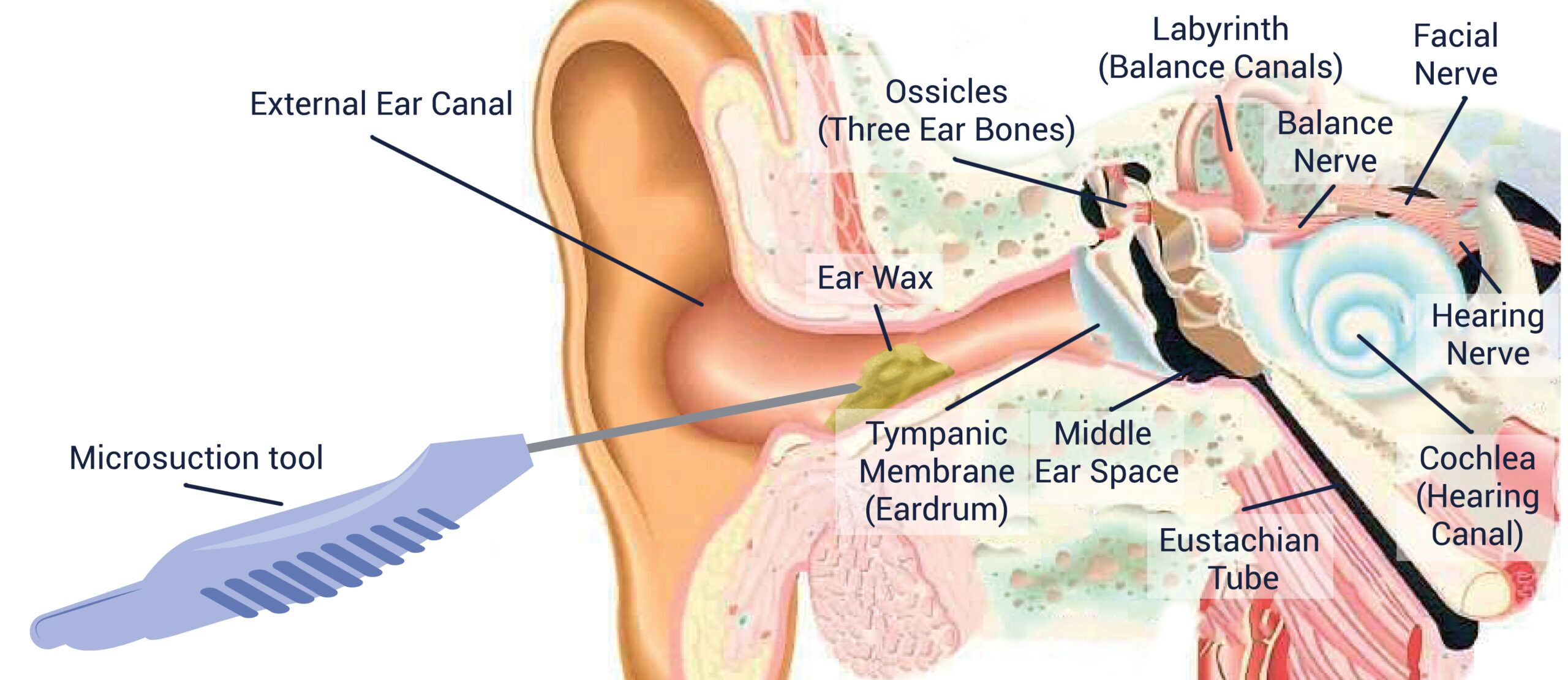
During the procedure, a clinician inserts a fine, narrow nozzle into your ear canal to suction out the wax.
Below is a detailed look at what microsuction ear cleaning involves and what you should know before, during, and after the procedure.
What is microsuction ear cleaning?
Microsuction ear cleaning is a clinician-led method to remove cerumen. Before starting, the practitioner will inspect your ear canal with an otoscope to locate the impaction.
Alternatively, they may use a tiny illuminated camera (an endoscope) that fits into the ear canal to visualise the blockage.
In the treatment itself, the clinician employs a small vacuum device that gently suctions to loosen and extract the wax.
Because microsuction requires specialised equipment, it’s not as widely available as other methods. Clinics need more costly devices, so you may need to see an ear, nose, and throat (ENT) specialist to have it done.
Although many professionals prefer microsuction, there isn’t clear clinical proof that it is superior to ear irrigation in effectiveness.
If microsuction isn’t accessible, irrigation can be an appropriate substitute in most situations.
How does microsuction work?
Before performing microsuction, the clinician will take a medical history, asking about past ear problems and current symptoms. They’ll also review any medications you take and any allergies you have.
Microsuction is suitable for many people, though there are circumstances where it may not be recommended.
After recording your history, the clinician will inspect the ear canal with an otoscope or small camera. In setups using a camera, you may be able to watch the inside of your ear on a screen.
The actual microsuction treatment typically takes only a few minutes. A long, narrow suction probe is introduced into the ear canal to dislodge the cerumen.
You might sense some suction and hear crackling or squeaking noises during the process.
Once the wax is loosened, it will either be vacuumed out or carefully removed with forceps.
Benefits of microsuction
Microsuction is an effective method for clearing earwax buildup.
A 2014 study reported that microsuction was 91 percent effective at removing wax in a sample of 159 participants.
Compared with irrigation, microsuction offers several advantages, including:
- A faster procedure time.
- Direct visualisation of the ear canal during the procedure.
- No introduction of moisture into the ear canal.
Unlike irrigation, microsuction can often be used for patients who have:
- a perforated eardrum
- a prior history of ear surgery
- foreign objects in the ear
- mild otitis externa (outer ear infection)
For those exploring other options, consider also noninvasive approaches such as microdermabrasion in dermatologic contexts—though not related to ear care—when thinking about gentle, minimally invasive procedures in general.
Ear microsuction side effects and risks
There are relatively few studies on microsuction safety. In an older 2010 study, researchers reported that 55 percent of participants experienced side effects. Most were mild and short-lived. The most frequently reported effects included:
- dizziness
- discomfort from loud sounds during the procedure
- temporary reduction in hearing
The study also noted that pretreatment with ear drops reduced reports of pain and dizziness.
Though uncommon, more serious complications can include:
- infection
- temporary or permanent hearing impairment
- damage to the eardrum
- worsening of tinnitus
Is ear microsuction painful?
When done correctly, microsuction should be painless and finished within a few minutes. Some patients describe a light tickling feeling.
If you experience any pain or significant discomfort during the procedure, alert the clinician immediately.
Alternative earwax removal treatments
- Earwax softeners. Over-the-counter drops can soften cerumen so it can exit the ear more easily. While commercial earwax solutions are recommended, common household substances like mineral oil, hydrogen peroxide, olive oil, or a baking soda solution may sometimes help.
- Ear irrigation. Irrigation uses water or saline to flush out wax. A clinician can perform irrigation in the office, or you can use a home bulb syringe and kit.
- Manual techniques. A clinician might use a small curved instrument called a curette to remove wax manually. It’s not advisable to try manual removal at home, as you could push wax deeper or damage the eardrum.
Takeaway
Microsuction ear cleaning is a method to remove cerumen from the ear canal. It is generally effective and usually painless when performed by a trained clinician.
As with any procedure, microsuction carries some risk of complications.
The most commonly reported issues are dizziness and temporary hearing changes; serious problems such as eardrum injury or infection are rare.















Leave a Reply
You must be logged in to post a comment.