
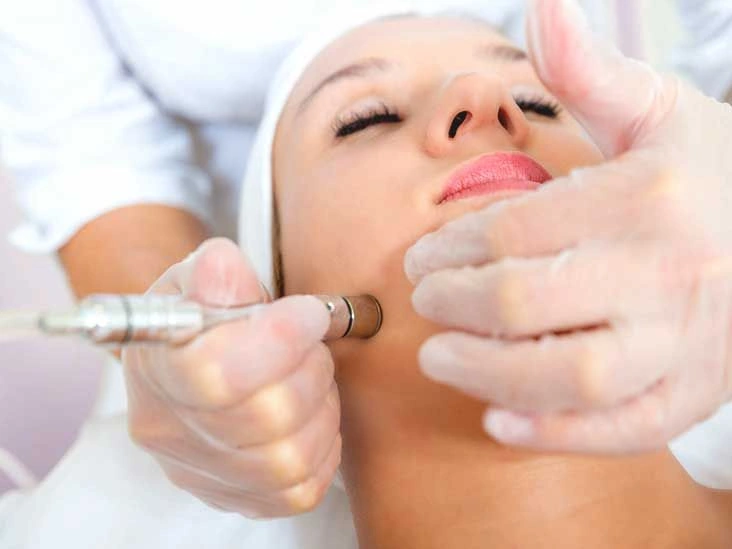
Microdermabrasion is a low-risk treatment that refreshes overall skin tone and texture. It can help enhance the look of skin affected by sun damage, fine lines, acne, and various other concerns.
The procedure works by gently abrading the thick outer layer of skin using a specialized applicator with an abrasive surface. This process aids in skin renewal.
An alternate microdermabrasion method propels fine particles of aluminum oxide or sodium bicarbonate while applying suction to achieve a similar effect as the abrasive applicator.
Continue reading to find out more about the treatment, its cost, and what recovery looks like.

What is microdermabrasion used for?
Microdermabrasion is generally safe for most skin types and tones. People often pursue the procedure to address skin issues such as:
- fine lines and wrinkles
- hyperpigmentation, age spots, and brown spots
- enlarged pores and blackheads
- acne and acne scarring
- stretch marks
- dull complexion
- uneven skin tone and texture
- melasma
- sun-related damage
How much does microdermabrasion cost?
Per the American Society of Plastic Surgeons, the national average price for a microdermabrasion session was $167 in 2020. Final pricing varies depending on the provider and your location.
Since microdermabrasion is typically elective, health insurance usually does not cover the expense.
Preparing for microdermabrasion
Microdermabrasion is a non-surgical, minimally invasive treatment. There’s little preparation required, but it’s helpful to review the following with your clinician:
- your specific skin concerns to determine if microdermabrasion is suitable
- any previous cosmetic procedures or surgeries you’ve had
- allergies and existing medical conditions
You may be instructed to avoid sun exposure, tanning products, and waxing for about a week before your appointment. You might also be asked to stop using exfoliating creams and masks a few days earlier.
Remove makeup and cleanse your face before the treatment begins.
How does microdermabrasion work?
Microdermabrasion is performed in-office and typically lasts about 30 minutes. A licensed skin-care professional usually carries out the procedure and, depending on local regulations, may be supervised by a healthcare provider.
It’s not required to use anesthesia or numbing agents for microdermabrasion.
During the session, you’ll recline in a chair while the clinician uses a handheld tool to either blast fine particles onto the skin or mechanically sand away the outer layer in the targeted areas. A moisturizer and sunscreen are applied at the end of the treatment.
The Food and Drug Administration (FDA) approved microdermabrasion in 1996, and since then many devices have been developed.
There are multiple techniques depending on the device used.
This includes:
Diamond-tip handpiece
The diamond-tip handpiece gently exfoliates dead skin cells while suctioning them away immediately.
The level of abrasion can vary with the pressure of the handpiece and duration of suction. This applicator is often chosen for delicate facial zones, such as those near the eyes.
Crystal microdermabrasion
Crystal microdermabrasion employs a handpiece that emits fine crystals to abrade the skin’s outer layers. As with the diamond-tip method, the loosened skin cells are suctioned away right away.
Common crystals used include aluminum oxide and sodium bicarbonate.
Hydradermabrasion
Hydradermabrasion is a more recent approach that combines crystal-free exfoliation with simultaneous infusion of skincare serums. This technique is believed to stimulate collagen and improve blood flow to the skin.
Side effects of microdermabrasion
Typical side effects include mild soreness, swelling, and redness, which usually subside within a few hours after treatment.
Using a moisturizer may be recommended to reduce dryness and flaking. Minor bruising can occur, often due to the suction used during the treatment.
What to expect after microdermabrasion
There is minimal to no downtime after microdermabrasion, and you should be able to resume normal activities right away.
After your session, follow these guidelines:
- keep your skin well-hydrated
- use mild skin-care products
- avoid topical acne medications for at least 2 days after treatment
- protect your skin with sunscreen, as sensitivity to sunlight may increase in the weeks following treatment
Visible improvements are often noticeable right after the session. The number of treatments recommended depends on the severity of your skin issues and your desired outcome.
A skincare specialist can outline an initial series of sessions and schedule maintenance treatments as needed.
Frequently Asked Questions
Which is better: microdermabrasion or microneedling?
Microdermabrasion and microneedling are both used for cosmetic and medical skin improvements. The best choice depends on your medical background, budget, and the results you want to achieve.
Who should avoid microdermabrasion?
Individuals with certain conditions, such as rosacea or those prone to broken capillaries, are generally advised against microdermabrasion.
How long does a microdermabrasion session take?
A typical microdermabrasion treatment lasts about 30 minutes.
Takeaway
Microdermabrasion is a minimally invasive method that gently removes the outer skin layer to refresh and rejuvenate appearance. It can improve skin affected by sun exposure, wrinkles, acne, and related concerns.
The treatment is usually brief—around 30 minutes—and requires little to no recovery time.
Talk with a skin-care professional about your concerns to determine whether microdermabrasion is an appropriate option for you.
Article Resources
- FDA approval status for microdermabrasion. (n.d). http://www.dermanetwork.org/article/cosmetic-enhancements/fda-approval-status-for-microdermabrasion
- Microdermabrasion. (n.d). https://www.aad.org/public/diseases/cosmetic-treatments/microdermabrasion
- Microdermabrasion. (n.d.). https://www.cosmeticsurgery.org/page/Microdermabrasion
- Microdermabrasion. (n.d). http://www.smartbeautyguide.com/procedures/skin-hair/microdermabrasion/
- Microdermabrasion. (n.d). https://www.asds.net/Microdermabrasion-Info/
- Microdermabrasion: Minimally invasive procedure. (n.d). https://www.plasticsurgery.org/cosmetic-procedures/microdermabrasion
















Leave a Reply
You must be logged in to post a comment.