
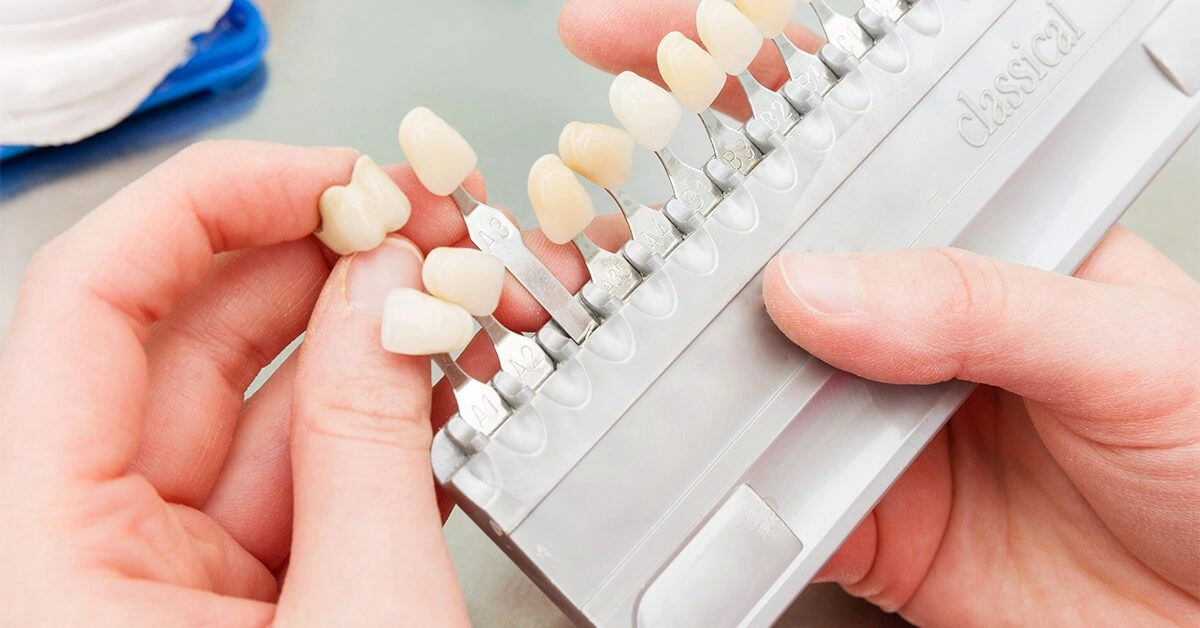
You’ve likely encountered the term dental veneers, or perhaps even thought about getting them. Dentists often recommend veneers as a solution for masking chipped, stained, cracked, or fractured teeth.
A clinician bonds these thin coverings—typically crafted from porcelain or a composite substance—to the front surfaces of your teeth to enhance their look.
Because veneers are regarded as a permanent treatment, a dentist usually needs to prepare your tooth beforehand. That preparation can include trimming or removing part of the tooth, including some enamel, to allow the veneer to fit. The veneer is then adhered to the tooth’s front.

No-prep veneers are placed using a quicker technique to make your smile look more uniform. They require far less chair time and effort to put in, while still delivering enduring results.
Benefits of no-prep veneers
Below are several reasons no-prep veneers might be a suitable option for you:
Enhanced appearance
No-prep veneers can improve the look of stained teeth, close small gaps, or conceal chips and cracks.
Minimal preparation
With conventional veneers, a dentist might reduce about 1/2 millimeter of enamel to take an impression used to fabricate the veneer. That step isn’t required for no-prep veneers. In fact, very little preparation is needed.
In some situations, a dentist can take a digital scan of your teeth, fabricate the veneers, and place them all within a single appointment.
Simpler placement
Because the dentist does not have to change the tooth structure, fitting no-prep veneers is a much simpler procedure than placing traditional veneers. Additionally, this approach helps preserve your natural tooth structure.
No anesthesia required
Since the enamel isn’t being removed, local anesthetic is generally unnecessary. That’s beneficial if you worry about reactions or sensitivity to anesthesia.
Durable results
No-prep veneers can last 5 to 7 years or more, particularly with proper care. Some manufacturers assert their no-prep products endure for considerably longer.
Research indicates this veneer type can be a solid option for people who want to avoid unnecessary wear on healthy teeth.
Are no-prep veneers reversible?
When a dental crown is required, a dentist commonly trims and removes a portion of the outer tooth layer to make room for the crown. That alters the tooth permanently.
Even with traditional veneers, some reshaping and enamel removal may be necessary before bonding the veneer to the tooth.
Those modifications are not considered reversible.
By contrast, no-prep veneers do not demand that level of alteration to the tooth structure. They can also be taken off.
They are bonded to the tooth enamel, so they can still affect the tooth surface. Although they’re often described as reversible or semi-permanent, that doesn’t mean your teeth won’t experience some changes from having them placed or removed.
Precautions and possible side effects
There are several considerations to weigh before choosing no-prep veneers.
No-prep veneers may not be appropriate if your teeth are severely damaged. You might require a more involved treatment to obtain a uniform appearance.
Similarly, if your teeth have deep discoloration or heavy staining, no-prep veneers might not be sufficient. These veneers are frequently more translucent than traditional ones, and you may need a thicker restoration to effectively mask the discoloration.
Good oral hygiene is essential. You’ll need to be particularly diligent cleaning around the gumline and removing any plaque or debris that may collect where the veneers meet your gums.
Types of no-prep veneers
When considering no-prep veneers, you have several options. Consult a dentist about which brands they provide and which is most suitable for your teeth.
Lumineers
These no-prep veneers, produced by DenMat, are among the most recognized on the market. Lumineers are extremely thin and can appear very natural on your teeth.
DURAthin veneers
DURAthin veneers are a brand of very thin, translucent porcelain layers bonded directly to the fronts of teeth without any prior grinding or shaving.
Vivaneers
Made by Glidewell Labs, Vivaneers are another brand of ultra-thin, durable no-prep veneers. Similar to Lumineers, they measure about 0.33 mm in thickness.
No-prep veneers procedure
Here’s what to expect during the placement process:
- A dentist will examine your teeth to confirm their structure is healthy.
- They will take impressions or digital scans of your teeth.
- The veneers will be fabricated from those impressions.
- The dentist will test-fit the veneers against your teeth to ensure an appropriate fit.
- They may lightly roughen or etch the tooth surface to give the veneer a better surface to adhere to.
- Finally, they will bond the veneers onto your teeth.
No-prep veneers before and after
Before receiving no-prep veneers, your teeth might look small, or you may have chips, cracks, or discoloration. After placement, you should have a more even, attractive smile.

Costs of no-prep veneers
As with many dental and cosmetic procedures, costs can vary widely.
If you carry dental insurance, check with your insurer to determine whether some or all of the expense is covered. Many plans exclude cosmetic dentistry.
However, financing or payment options are often available, so ask your dentist if cost is a barrier.
Traditional vs. no-prep veneers
The convenience of no-prep veneers is appealing. Still, there are other aspects to consider when deciding if they’re the right choice for you.
If cost matters, compare the price of traditional veneers to no-prep options.
Per the Consumer Guide to Dentistry, a single traditional porcelain veneer typically costs between $925 and $2,500. The price varies based on factors such as the dentist’s experience, geographic location, and the material used.
Meanwhile, The Dental Guide reports that the per-tooth price for a no-prep veneer ranges from $800 to $2,000, and the resulting look can be quite comparable to a traditional veneer.
Final thoughts
If you want to enhance your smile, discuss available options with a dentist. Consider factors such as the condition and health of your teeth, your budget, and the specifics of each procedure.
No-prep veneers could be a very reasonable option for many people, but it’s important to review all possibilities with your dentist before making a decision.

















Leave a Reply
You must be logged in to post a comment.