

Fibroids can lead to heavier menstrual bleeding. A change in vaginal discharge — particularly a strong, unpleasant odor — suggests an infection and usually requires medical evaluation.
Fibroids are noncancerous growths that develop in and around the muscular walls of the uterus. The exact cause of their formation is not fully known.
They range in size from tiny nodules to masses larger than a grapefruit.
Some fibroids remain symptom-free. Others produce heavy periods, pain, and a variety of other symptoms.
There are multiple approaches to treating fibroids. Many people opt for minimally invasive procedures to address these growths.
Fibroids can influence vaginal discharge both before and after treatment. Although uncommon, there are documented instances of fibroid tissue being expelled following therapy.
This doesn’t always lead to complications, but occasionally additional treatment is necessary.
Keep reading to learn how fibroids can change vaginal discharge and when you should seek medical care.
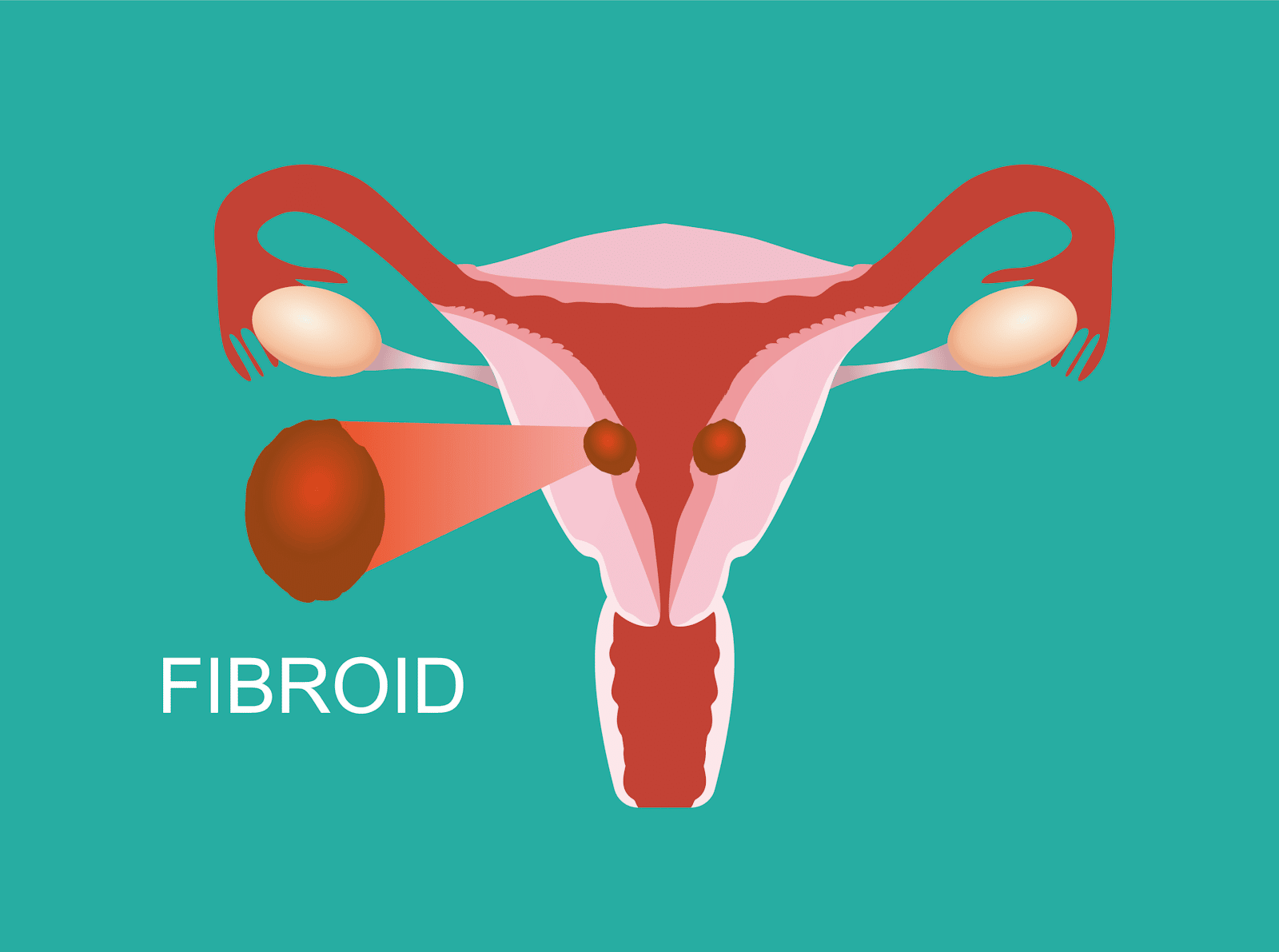
Do fibroids cause discharge?
Whether fibroids cause symptoms depends on their size and location. They frequently lead to heavy menstrual bleeding, known as menorrhagia.
Signs of heavy menstrual bleeding include:
- changing pads or tampons every hour during the day
- periods lasting 7 days or more
- passing clots the size of a quarter or larger
Fibroids can also cause bleeding between periods, referred to as breakthrough bleeding.
Fibroids may form in various parts of and around the uterus. Those that develop just under the uterine lining or within the uterine wall are more likely to cause abnormal bleeding, according to a 2017 review.
Fibroids can also increase the volume of vaginal discharge. This discharge is usually watery and may appear pinkish if there is some bleeding.
Other symptoms of fibroids include:
- a sense of fullness or heaviness in the lower abdomen
- pain or aching in the lower back
- frequent urination if a fibroid presses on the bladder
For more on how fibroids compare with other pelvic growths, see fibroid vs cyst.
Can you pass fibroid tissue?
Passing fibroid tissue is possible but not common.
In an older 2006 study of 400 people who had uterine fibroid embolization, 2.5 percent experienced passage of some tissue. This most often occurs within the first year after embolization.
There is also a reported case from 2004 of fibroid tissue being expelled more than three years after embolization.
Passing tissue may also occur after focused ultrasound treatment.
This method destroys fibroid tissue using high-intensity ultrasound waves. It’s expected that some of the destroyed tissue may be expelled after this procedure, although not everyone will have this experience.
Symptoms
Some vaginal bleeding after a procedure can be normal. The bleeding may be red, pink, or brown and can continue for several days to a few weeks.
Discharge of fibroid tissue following minimally invasive fibroid treatments is unusual but can occur. When it happens, it doesn’t automatically indicate a complication.
There is a small risk of infection after fibroid treatment. A change in vaginal discharge — especially one with a strong, foul odor — is a hallmark of infection. Contact your doctor if you notice this after a procedure.
If there is heavy bleeding or significant tissue passage, additional procedures might be required to remove necrotic tissue.
Watch for these warning signs:
- heavy bleeding
- new bleeding after initial post-procedure bleeding has slowed or stopped
- intense pain
- fever
- foul-smelling discharge
After uterine artery embolization, a fibroid can sometimes move down toward the cervix but remain attached to the uterine wall, so it doesn’t enter the vagina.
In such situations, a follow-up procedure may be necessary to remove the fibroid. However, a 2002 study found these occurrences to be very rare.
Treatment options for discharge
A foul odor in the discharge may signify an infection. Infections are commonly treated with antibiotics prescribed by a clinician.
Physicians may also perform a dilation and curettage (D&C) to control bleeding and remove any residual fibroid fragments.
Discuss with your healthcare provider the best approach for treating any discharge that seems abnormal for you.
Are fibroids common?
Fibroids are very common, although they don’t always produce symptoms and may not require treatment when asymptomatic.
A 2012 study of more than 21,000 women across eight countries estimated that 40 to 80 percent of people with a uterus will develop fibroids before menopause.
Fibroids depend on estrogen and progesterone to grow, so they often stop enlarging or shrink after menopause.
Uterine fibroids are observed more frequently in Black people than in other racial groups, according to that study.
Risk factors for fibroids
Your risk of fibroids is higher if a parent or sibling has had them.
Because fibroids rely on hormones, they typically cease growing after menopause. Detection is most common between ages 40 and 50, per the Office on Women’s Health.
Starting periods at an early age is associated with an increased likelihood of developing fibroids.
People who have never been pregnant are also at greater risk of having fibroids.
The takeaway
Uterine fibroids are common. They can lead to heavier menstrual bleeding and bleeding between periods.
There are several treatment options for fibroids.
Although not universal, increased bleeding and vaginal discharge can occur after procedures to treat fibroids. In some cases, fragments of fibroid tissue are expelled.
This may be harmless, but further treatment may be necessary if you experience:
- heavy bleeding
- substantial tissue discharge
- signs of infection


















Leave a Reply
You must be logged in to post a comment.