


Both uterine fibroids and ovarian cysts are frequently encountered in women, particularly in the years before menopause.
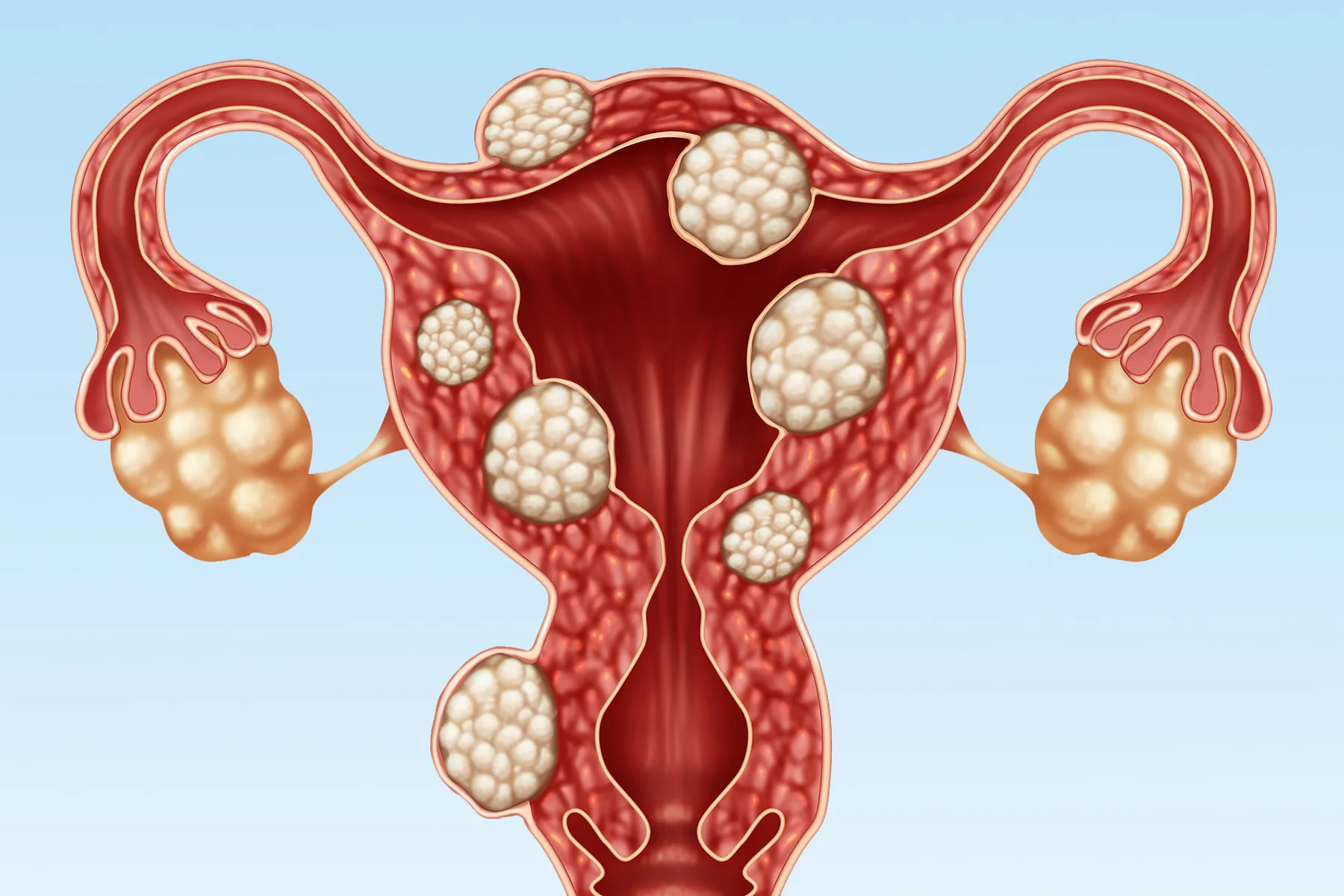
Uterine fibroids are benign growths that arise from the muscular wall of the uterus. By contrast, ovarian cysts are fluid-filled sacs that form in or on an ovary. Even though they originate in different locations, their symptoms can overlap and make it hard to know which condition is responsible.
Below we compare uterine fibroids and ovarian cysts, highlighting their similarities and distinctions and explaining why getting an accurate diagnosis matters.
Quick comparison chart
| Uterine fibroids | Ovarian cysts |
| Arise from the muscle layer of the uterus | Form in or on the ovaries |
| Firm, dense benign tumors | Fluid-filled sacs, most often noncancerous |
| Common, especially before menopause | Common, especially before menopause |
| May be influenced by hormones or associated with endometriosis | Often related to the menstrual cycle |
| Pelvic discomfort, abdominal fullness, menstrual and urinary changes | Pelvic discomfort, abdominal swelling, sometimes one-sided pain |
| May not require treatment but can affect fertility | Often resolve on their own but can rupture or cause ovarian torsion |
Fibroid symptoms vs. cyst symptoms
Neither fibroids nor cysts always cause noticeable signs. Many people don’t know they have them until a clinician finds them during a routine pelvic check. However, when present in numbers or when they enlarge, they can produce various symptoms.
Fibroid symptoms
Fibroids range from tiny, seed-sized nodules to masses as large as grapefruits. Possible symptoms include:
- pelvic pain
- bloating and a visibly distended abdomen
- heavy menstrual bleeding that may lead to anemia
- frequent need to urinate
- pressure on the rectum
- noticeable enlargement of the abdomen
Fibroids can enlarge more rapidly during pregnancy and commonly shrink after menopause or with certain hormone treatments.
Cyst symptoms
Cysts can be various sizes but are typically about 0.5 to 4 inches or larger and may cause:
- a sharp or dull ache in the abdomen, often localized to one side
- abdominal bloating or a protruding belly
- aching in the lower back or thighs
- pain with intercourse
- painful periods
- breast tenderness
- frequent urination or difficulty fully emptying the bladder
- irregular uterine bleeding
- bowel disturbances
- weight gain
A cyst can rupture or lead to the ovary twisting on its support structures (ovarian torsion), which may present with:
- sudden, severe abdominal pain
- fever or vomiting
- dizziness or fainting
- rapid breathing
- heavy bleeding
A ruptured cyst is an emergency. Seek immediate medical care if you experience these signs.
Both fibroids and cysts can cause pelvic pain and abdominal swelling. Two clues can help distinguish them: pain confined to one side of the abdomen is more suggestive of an ovarian cyst than a uterine fibroid, while very heavy menstrual bleeding is more commonly caused by fibroids than by ovarian cysts.
Because many of these symptoms overlap with other medical conditions, consulting your healthcare provider to determine the exact cause is important.
Fibroid causes vs. cyst causes
Either condition can develop at various ages. Fibroids are most frequently seen in women in their 40s to early 50s and sometimes occur as clustered growths. Most ovarian cysts are functional and occur in people who have not yet gone through menopause.
Fibroid causes
The exact cause of uterine fibroids is unknown, though hormonal factors and family history are believed to contribute. They become more prevalent after age 30 and up to menopause. Other risk factors include:
- a family history of fibroids
- being Black, possibly related to higher overall stress
- obesity
- a diet high in red meat
Cyst causes
Ovarian cysts can result from a variety of factors, such as:
- hormonal imbalances
- polycystic ovary syndrome (PCOS)
- endometriosis
- pregnancy
- severe pelvic infections
Diagnosing fibroids and cysts
Your clinician may suspect fibroids or cysts based on symptoms and a pelvic examination. Imaging studies can clarify whether abnormal growths are present and pinpoint their location. Common tests include:
- abdominal ultrasound
- transvaginal ultrasound
- pelvic MRI
Growths within the uterine wall are most consistent with fibroids (also called myomas or leiomyomas).
A mass on an ovary most often represents a cyst. Ultrasound helps determine whether a lesion is solid or fluid-filled; a fluid-filled lesion is usually an ovarian cyst and is typically benign.
If a mass appears solid or partly solid, if you are postmenopausal, or if you have a high risk of ovarian cancer, your provider may request a cancer antigen 125 (CA-125) blood test. Elevated CA-125 can be caused by several conditions, including ovarian cancer.
Treating fibroids vs. cysts
Not all fibroids or cysts need treatment. Treatment is considered when they cause significant symptoms or interfere with fertility. Options include:
- watchful waiting with periodic exams and ultrasounds to monitor change
- hormonal birth control to reduce heavy bleeding
- surgical removal of fibroids
- hysterectomy (removal of the uterus) if pregnancy is not desired
- endometrial ablation
- uterine fibroid embolization to cut off blood flow to fibroids
Treatment choices for cysts may include:
- watchful waiting with regular check-ups and scans
- hormonal contraceptives to reduce the likelihood of new cysts
- minimally invasive surgery to remove persistent cysts
- oophorectomy (removal of the affected ovary) in some cases
About endometrial polyps
Polyps are abnormal tissue overgrowths. Endometrial polyps project from the endometrial lining inside the uterus into the uterine cavity. They can become large enough to occupy much of the uterus and may impair the ability to conceive. While small polyps may be symptom-free, they can also cause heavy menstrual bleeding.
Also called uterine polyps, these growths are usually benign but can occasionally be malignant, so your clinician may suggest a biopsy.
Uterine fibroids and endometrial polyps can cause similar symptoms, but fibroids originate from the muscular uterine wall, whereas polyps develop from the endometrium and grow within the uterine cavity.
Small polyps sometimes resolve by themselves, but removal is an option if they cause problems.
Takeaway
Both fibroids and ovarian cysts are common, particularly before menopause. The primary distinction is that fibroids arise from the muscular wall of the uterus, while cysts form in or on the ovaries.
They often cause no symptoms and are usually benign, so treatment isn’t always necessary. When symptoms are significant, there are effective and safe treatments, and decisions can be tailored to your preferences and future fertility plans.
Talk with your healthcare provider if you experience bloating, pelvic pain, or heavy menstrual bleeding. It’s important to determine whether the cause is uterine fibroids, ovarian cysts, endometrial polyps, or another treatable condition.





















Leave a Reply
You must be logged in to post a comment.