24 Ways to Prevent Breast Sweat and BO


- 1. Avoid synthetic fabrics
- 2. Skip the padding
- 3. Choose cotton
- 4. Try mesh
- 5. Wear a sports bra
- 6. Buy a moisture-wicking bra
- 7. Go braless
- 8. Whether you wear a bra or not, pick loose tops
- 9. When unsure, wear black
- 10. In a pinch, use panty liners
- 11. Paper towels can substitute
- 12. Buy a bra liner
- 13. Use aluminum-free deodorant
- 14. Try a deodorant spray
- 15. Use a breast-specific deodorant
- 16. Anti-chafing gel can help
- 17. Consider argan oil
- 18. Dust on baby powder
- 19. Or use cornstarch
- 20. Try a specialized powder
- 21. Use a powder spray
- 22. Consider antiperspirant wipes
- 23. Freshen with baby wipes
- 24. Hand sanitizer can reduce odor
- The bottom line
You can often minimize breast perspiration by choosing breathable fabrics and using certain products to block or absorb moisture. If sweating is severe, a dermatologist may offer additional treatments.
Hot yoga. Hairdryers. Sweltering summer afternoons. Your body cools itself by sweating . And sweat isn’t limited to the underarms — it frequently appears in sensitive regions like the groin, buttocks, and breasts.
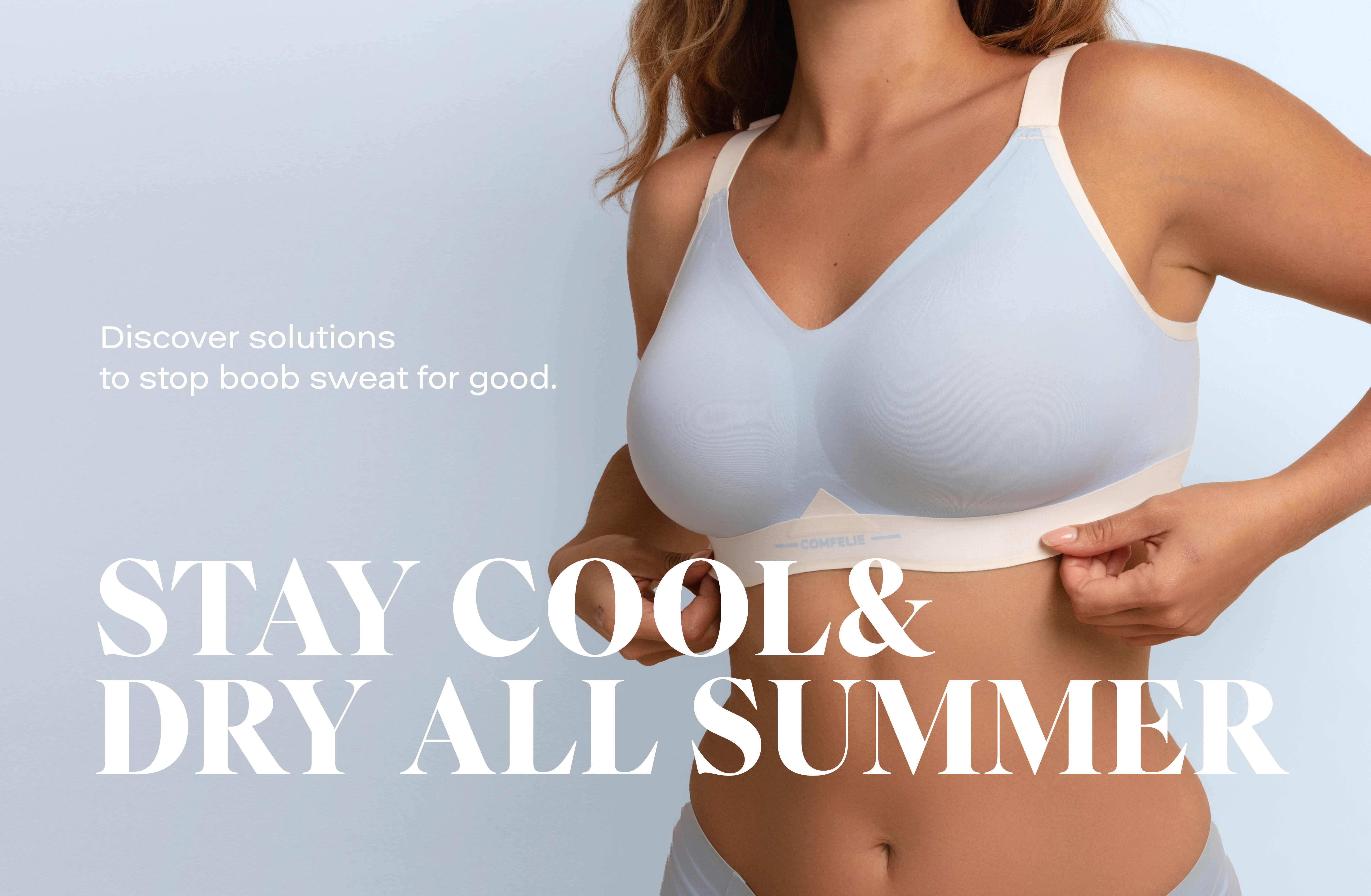
Sweating beneath the breasts can be uncomfortable, irritating to the skin, and sometimes embarrassing. Still, it’s completely normal. Most people with breasts will experience it at some point, and those with larger breasts often notice it more.
Keep reading to discover wardrobe choices and household hacks to help keep breast sweat under control.
1. Avoid synthetic fabrics
Many bras are constructed from synthetic fibers such as polyester and rayon. These fabrics don’t allow air to circulate, trapping heat and preventing sweat from evaporating.
2. Skip the padding
Padded bras add extra layers that make you warmer. Padding typically contains synthetic materials that can hold moisture against your skin and raise the chance of common skin irritations or infections.
3. Choose cotton
Cotton is naturally breathable, so heat and perspiration are less likely to be trapped against your chest. The trade-off: cotton tends to take longer to dry.
Shop for cotton bras online.
4. Try mesh
A thin, unpadded mesh bra can help. Although mesh may be synthetic, its open weave won’t lock in moisture. When air reaches your breasts, sweat evaporates rather than running down your torso.
Shop for mesh bras online.
5. Wear a sports bra
A supportive sports bra is useful beyond workouts. Look for one made from breathable or moisture-wicking fabric, as traditional thick styles may be too warm for heavy sweaters. FITTIN’s sweat-wicking racerback sports bra is a common favorite.
6. Buy a moisture-wicking bra
Bra manufacturers now offer sweat-wicking designs tailored for breast perspiration. Consider options like the X-Temp unlined wire-free convertible bra by Hanes.
7. Go braless
Free your nipples by skipping the bra entirely. If you’re concerned about nipple show-through, use adhesive pasties for coverage.
8. Whether you wear a bra or not, pick loose tops
Airflow helps reduce sweating. Tight garments trap heat and moisture, showing more visible sweat marks. Flowing, breathable fabrics like cotton and linen increase ventilation and conceal dampness.
9. When unsure, wear black
Sweat is much less noticeable on black clothing.
10. In a pinch, use panty liners
Panty liners make a handy DIY solution for breast sweat. Place a couple inside your bra to absorb moisture and protect your clothing from stains. Opt for breathable options like Organyc 100 percent cotton panty liners.
11. Paper towels can substitute
Rushing between appointments in July? Attending a spring wedding? If liners aren’t available, use paper towels. Dry off in a restroom or kitchen, fold some paper towels, and tuck them into your bra cups.
12. Buy a bra liner
To upgrade your DIY fix, purchase cotton bra liners. Designed to wick moisture away from skin, they help reduce irritation. This bamboo-and-cotton liner from More of Me to Love is a popular choice. Nursing pads, intended to absorb milk, can also work well.
13. Use aluminum-free deodorant
Antiperspirants block sweat, while deodorants mask odor. Because these products are applied near the breasts, some researchers have speculated about a breast cancer link due to aluminum compounds that may behave like estrogen.
As the National Cancer Institute notes, there’s no clear scientific proof connecting these products to breast cancer. Still, you may prefer aluminum-free options and avoid putting antiperspirants directly on breast tissue.
Shop for aluminum-free deodorant online.
14. Try a deodorant spray
Deodorants come in spray form, offering quick, easy application. They’ll help cover odor but won’t prevent sweating.
Shop for deodorant spray online.
15. Use a breast-specific deodorant
Breast deodorants exist. For instance, Fresh Breasts lotion is a cream that dries down to a powdery feel, helping to reduce both chafing and sweating.
16. Anti-chafing gel can help
Breast-on-torso friction causes chafing and heat that increases sweat. Applying an anti-chafing gel such as Lanacane can lower friction and help prevent rashes.
17. Consider argan oil
Moroccans have used argan oil to treat skin conditions for generations. Beauty experts today recommend it for breast sweat because it may reduce perspiration and soothe irritation.
Shop for argan oil online.
18. Dust on baby powder
Baby powder is effective at preventing chafing and rashes such as intertrigo . Intertrigo is a common inflammatory condition in skin folds, particularly under the breasts, and can lead to fungal or bacterial infections.
Shop for baby powder online.
19. Or use cornstarch
Cornstarch is an excellent alternative to baby powder. You can even create a homemade deodorant by combining equal parts cornstarch and baking soda, then gently patting it onto the skin.
20. Try a specialized powder
There are powders formulated specifically to control sweat. This talc-free dusting powder from Lush is a cult favorite that prevents chafing and leaves skin feeling silky.
21. Use a powder spray
Modern convenience: powdered formulas in spray cans. Gold Bond’s fresh scent spray powder is well-regarded for its cooling, absorbent properties.
22. Consider antiperspirant wipes
SweatBlock offers clinical-strength antiperspirant wipes that can last up to seven days. It sounds impressive, but consult your doctor before applying such products to your breasts, since they contain aluminum — a compound some researchers have raised concerns about in relation to breast cancer (though clear proof is lacking).
23. Freshen with baby wipes
Carry baby wipes in your bag to freshen up when needed. Sweat smells mainly when it interacts with skin bacteria, so cleaning the area can reduce odors.
24. Hand sanitizer can reduce odor
In a bind, use scented or unscented hand sanitizer. It can kill bacteria on the skin and temporarily remove body odor.
The bottom line
If home remedies aren’t effective or sweating starts to disrupt your daily life, see a dermatologist. You may have hyperhidrosis , a condition characterized by excessive sweating that may benefit from medical treatment.
Frequently Asked Questions
Sweating under the breasts is caused by heat, friction, tight or non-breathable clothing, and natural body thermoregulation. Larger breasts and skin folds trap moisture, increasing sweat and irritation.
Yes. Breathable fabrics like cotton, mesh, moisture-wicking sports bras, and unpadded designs improve airflow and help sweat evaporate rather than accumulate against the skin.
Quick options include blotting with paper towels or baby wipes, tucking panty liners into your bra, or using a light dusting of cornstarch or powder spray to absorb moisture and reduce friction.
Visit a healthcare provider if sweating is severe, causes recurrent skin infections, significant discomfort, or interferes with daily life. A dermatologist can assess for hyperhidrosis and recommend treatments.
Some people use antiperspirants on the chest, but many prefer aluminum-free deodorants or breast-specific products to avoid applying strong antiperspirant formulations directly to breast tissue. Consult your doctor if unsure.


Related Posts
Proteolytic Enzymes: How They Work, Benefits and Sources
Sep 13, 2026 • 19 min read
Everything You Need to Know About Mini Dental Implants
Aug 24, 2026 • 24 min read
White Mushrooms: Nutrition, Benefits, and Uses
Aug 29, 2026 • 36 min read
What Causes an Enlarged Uterus and How Is It Treated?
Sep 1, 2026 • 25 min read
Is There a Relationship Between Menopause and Body Odor?
Sep 10, 2026 • 35 min read