
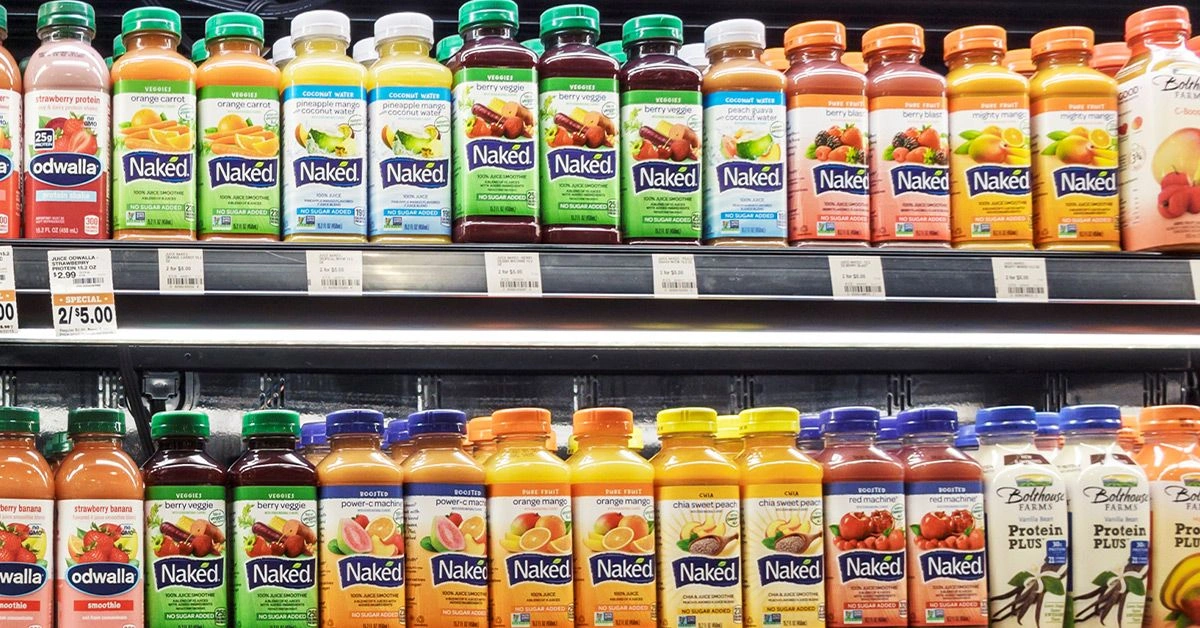
Naked Juice is a range of fruit and vegetable smoothies offering tempting flavor mixes such as Pomegranate Blueberry and Green Machine — the latter blending apple, kiwi, broccoli, and a mix of other wholesome ingredients.
Although its popularity has surged alongside the juicing trend, there’s considerable debate about whether these drinks are truly healthy.
This article examines whether Naked Juice is a nutritious option.

What’s inside a bottle of Naked Juice?
The brand’s name comes from the fact that its products contain no preservatives, added sugars, or artificial flavors.
Certain varieties are fortified with vitamins or health-promoting ingredients, such as spirulina.
Nutrition facts
A 15.2-ounce (450-ml) serving of Naked Juice’s Green Machine provides (1):
- Calories: 270
- Carbs: 63 grams
- Sugar: 53 grams
- Fiber: 1.3 grams
- Protein: 4 grams
- Fat: 0 grams
- Vitamin C: 50% of the Daily Value (DV)
- Vitamins A, B2, and B6: 25% of the DV
That said, other flavors like Blue or Red Machine can contain up to 320 calories and 76 grams of carbohydrates per 15.2-ounce (450-ml) bottle.
High in sugar, low in fiber
Even without added sugars, Naked Juice drinks are rich in sugar coming from natural sources such as fruits. Additionally, they’re low in fiber because most fiber is removed during juicing.
Note that the American Heart Association recommends a maximum daily sugar intake of 9 teaspoons (37.5 grams) for men and 6 teaspoons (25 grams) for women (2).
A 15.2-ounce (450-ml) bottle of Green Machine naturally contains the equivalent of about 13 teaspoons (53 grams) — well above those limits.
Supporters of juicing often cite USDA dietary guidance, which suggests two servings of fruit per day can come from whole fruit or 100% fruit juice (3).
However, because juices are lower in fiber, the USDA stresses that at least one serving should be whole fruit.
Consequently, you may need to restrict juice consumption to ensure you’re also eating whole fruits.
Summary: Naked Juice might not be as wholesome as it appears. Like most juices, it’s high in sugar and low in fiber.
Possible benefits
Naked Juice beverages can offer certain advantages.
Studies indicate that moderate intake of 100% fruit and vegetable juices, such as Naked Juice, can help people meet their daily antioxidant needs (4, 5, 6).
Moreover, fruits and vegetables may help protect against some chronic illnesses because of their antioxidant compounds (7).
Antioxidants defend the body from free radical damage — unstable molecules that can cause oxidative stress.
In a 14-week trial with 49 participants, drinking fruit and vegetable juices significantly raised blood antioxidant and folate levels compared with the control group (8).
A separate 4-week study of 60 people observed similar effects: daily consumption of a fruit and vegetable concentrate led to a 528% increase in beta carotene, an 80% rise in lycopene, and a 174% boost in folate in the blood (9).
Summary: Naked Juice may help you reach your fruit and vegetable targets and raise blood antioxidant levels.
Drawbacks of drinking Naked Juice
While Naked Juice can provide some health perks, it’s typically low in fiber and high in sugar.
Excessive sugar content
Even 100% fruit and vegetable juices can supply too much sugar because they condense several servings of fruit into a drink.
For instance, a 15.2-ounce (450-ml) bottle of Naked Juice’s Red Machine is made from nearly 2 apples, 11 strawberries, half a banana, 13 raspberries, 2/3 of an orange, 7 grapes, 1/4 of a pomegranate, and 3 cranberries.
High sugar consumption is linked to an elevated risk of obesity, cardiovascular disease, and type 2 diabetes (10, 11).
An 18-year study of 71,346 healthy women found that consuming whole fruits and vegetables reduced their diabetes risk, while drinking fruit and vegetable juices increased it (12).
Additionally, research in 187,382 adults showed that swapping fruit juice for the same amount of whole fruit lowered diabetes risk by 7% (13).
Low in fiber
Juices like Naked Juice have most of their fiber removed during processing.
Fiber is crucial for managing weight because it promotes satiety, helping to control appetite and food intake (14).
Fiber is also associated with reduced risks of heart disease, type 2 diabetes, and metabolic syndrome. It helps moderate blood sugar and insulin responses, potentially preventing sharp blood sugar spikes — a diabetes risk factor (15, 16).
Yet, because they lack fiber, fruit and vegetable juices can raise both blood sugar and insulin levels (15).
May contribute to weight gain
Consuming Naked Juice could lead to weight gain.
As 100% fruit and vegetable juices, their sugars are primarily fructose, a naturally occurring fruit sugar.
Evidence indicates that excessive fructose intake may reduce calorie expenditure and fat burning, encourage insulin resistance, and increase calorie consumption and abdominal fat (10, 17, 18, 19).
In a 10-week trial with 31 adults, those who consumed fructose-sweetened drinks had lower fat oxidation and resting energy expenditure than those consuming glucose-sweetened beverages (20).
Also, liquid calories—such as those in fruit juices—tend to be less filling than calories from solid foods, which can lead to higher overall calorie intake (17, 21, 22, 23).
In a study where 40 adults were given equal calories from apples, applesauce, or apple juice, the juice group reported feeling hungry sooner than the whole fruit or applesauce groups (24).
Summary: Naked Juice products are calorie- and sugar-dense, low in fiber, and could contribute to weight gain over time.
The bottom line
Although Naked Juice contains no added sugars, preservatives, or artificial flavors, these drinks remain high-calorie and high-sugar options.
They can supply antioxidants and some vitamins and minerals, but they’re low in fiber and may lead to weight gain if consumed regularly.
Eating whole fruits and vegetables is generally preferable because they deliver more fiber and less concentrated sugar. If you choose to drink Naked Juice, do so sparingly.




















Leave a Reply
You must be logged in to post a comment.