
Overview
Onychauxis is a nail condition that leads to abnormally thick fingernails or toenails. Gradually, affected nails can curl and take on a white or yellow tint.
This thickening may push the nail plate (the area you apply polish to) away from the nail bed. Although toenail fungus can create similar signs, onychauxis is not fungal in origin. That said, having this nail disorder can raise your chance of developing a fungal infection later on.
Also referred to as nail hypertrophy, onychauxis is particularly frequent among older adults. Your likelihood of experiencing it increases with age.

Onychauxis symptoms
Signs of onychauxis include:
- abnormal thickening of the nail
- separation of the nail plate from the nail bed
- yellow or white discoloration
- red or black hues if not treated
- brittle, crumbling edges
- pain
If left unaddressed, symptoms can worsen. Nails may begin to curl and become so thick that trimming or routine care becomes impractical. That can complicate efforts to manage the disorder.
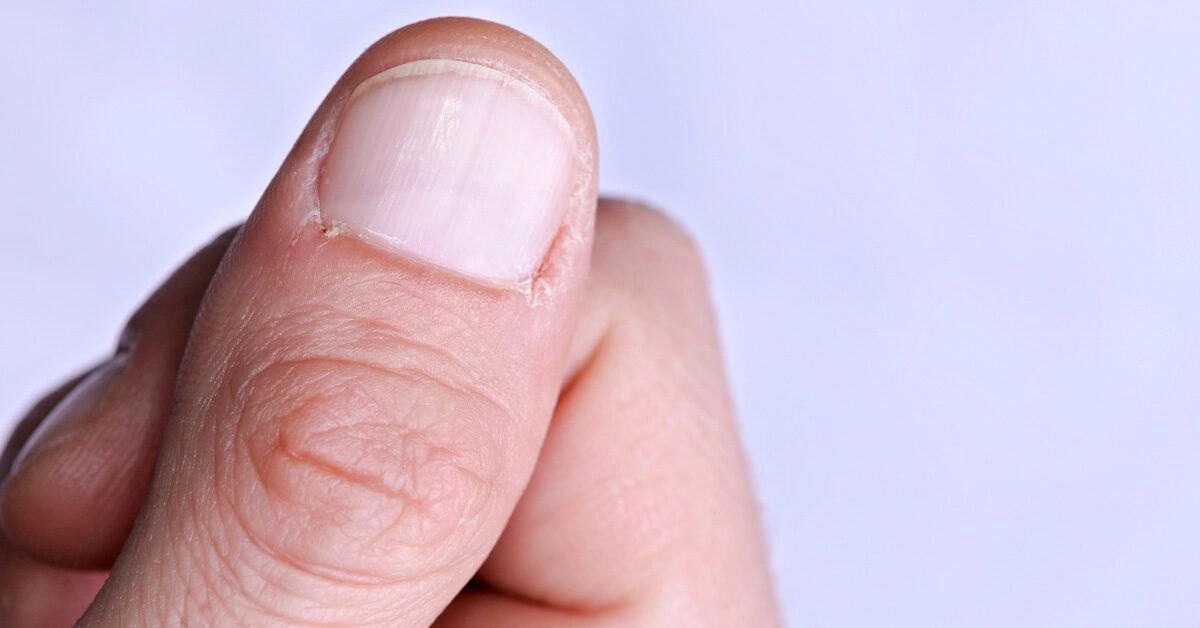
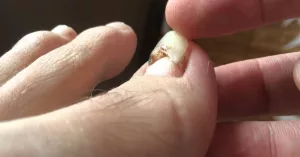
Onychauxis pictures
Onychauxis causes
Several factors or ailments can produce onychauxis. Your healthcare provider can determine the underlying reason for your abnormal nail growth.
Frequent causes of onychauxis include:
- Hereditary factors.If one or both parents have this nail issue, you’re more prone to developing it yourself.
- Acute injury.Stubbing a toe or dropping something heavy on it can injure the nail bed and plate, producing nail thickening. Sometimes this is temporary until the nail recovers.
- Repeated trauma.People who subject their feet to prolonged pressure, such as athletes, dancers, or runners, may be at greater risk. Chronic stress on the nail bed and plate can prompt abnormal growth. Wearing shoes that are too tight or too small may also contribute.
- Acromegaly. This hormonal disorder, caused by excess growth hormone, is uncommon but can result in denser nail growth.
- Psoriasis. This dermatological condition creates thick, scaly skin patches and can cause nails to thicken and become brittle. Over half of people with psoriasis experience nail involvement.
- Poor circulation.Inadequate blood flow can deprive nails of necessary nutrients, disrupting normal growth.
- Diabetes.People with diabetes often develop thicker nails, which may be due to the disease itself or to reduced circulation associated with diabetes.
- Darier disease. This inherited skin disorder produces wart-like lesions that may be yellow, malodorous, and firm. It can also cause nail irregularities, including white and red streaks and unusual thickening.
- Infection.Yeast or fungal infections of the nail bed or surrounding tissue can produce discoloration and thicker nails.
- Pityriasis rubra pilaris. This rare inflammatory skin disorder leads to reddish-orange scales or patches and can also cause nail thickening, discoloration, and shedding.
Is onychauxis contagious?
Onychauxis itself is not contagious and cannot be transmitted from person to person by direct contact. You might inherit a genetic predisposition that raises your risk, but merely touching the nails of someone with the condition will not make you develop it.
However, people with onychauxis could be more susceptible to toenail fungal infections because of the nail changes. Certain fungal infections can spread through contact.
Onychauxis treatment
Treatment approaches for onychauxis fall into two broad groups: medical interventions and self-care measures. There isn’t a universal cure; your clinician will recommend a plan based on the suspected cause and your individual symptoms.
It’s worth noting you don’t need to treat onychauxis unless it becomes painful or interferes with daily life. Many people seek evaluation or treatment because of cosmetic concerns about the nails.
Medical treatments for onychauxis
Address underlying problems.If your abnormal nail growth stems from another condition, your doctor may treat that root cause. When the underlying issue is successfully managed, the nail thickening and discoloration may improve.
Removal of the affected nail.In severe situations, a provider may remove part or all of the thickened nail. This is considered when the nail causes significant pain or cannot be cared for adequately at home.
Home remedy options
Keep nails trimmed and tidy.Frequent trimming improves appearance and can reduce discomfort from nails rubbing against shoes. If standard clippers aren’t strong enough, ask your provider about specialized instruments. You may ultimately need care from a podiatrist, a physician who focuses on foot, ankle, and lower-limb conditions.
Choose comfortable footwear.Tight or ill-fitting shoes can provoke or worsen onychauxis and related pain. A professional shoe fitting can help determine whether a wider toe box or larger size will reduce pressure on your toes. Wide-toe footwear can be particularly helpful when toenails rub and cause pain.
Use nail polish.Polish can conceal discoloration but will not stop the abnormal nail growth.
Increase activity.Improving circulation to your lower limbs—by walking, cycling, or other movement—can enhance blood, oxygen, and nutrient delivery, which may help normalize nail growth. Also consider whether cosmetic or maintenance habits like acrylic nails could affect your nails; if relevant, read about fingernail fungus from acrylic nails for more information.
Outlook and prevention
Onychauxis can be concerning, but it’s seldom dangerous and rarely leads to severe complications.
When the thickening is due to an identifiable problem—such as trauma or infection—it often can be treated. Recovery may take time because nails grow slowly, but normal growth is often achievable.
If left untreated, onychauxis can cause issues like curled nails, nails too thick to trim, and pain. In such cases, a healthcare provider may need to assist with nail care so the condition does not impair daily activities.
Preventing onychauxis isn’t always possible, but practices that may lower risk include keeping nails clean and trimmed, wearing roomy shoes with a wide toe box, and staying active to support circulation. If you suspect you’re developing onychauxis, schedule a visit with your doctor—early evaluation and treatment can help halt and potentially reverse the problem.

















Leave a Reply
You must be logged in to post a comment.