
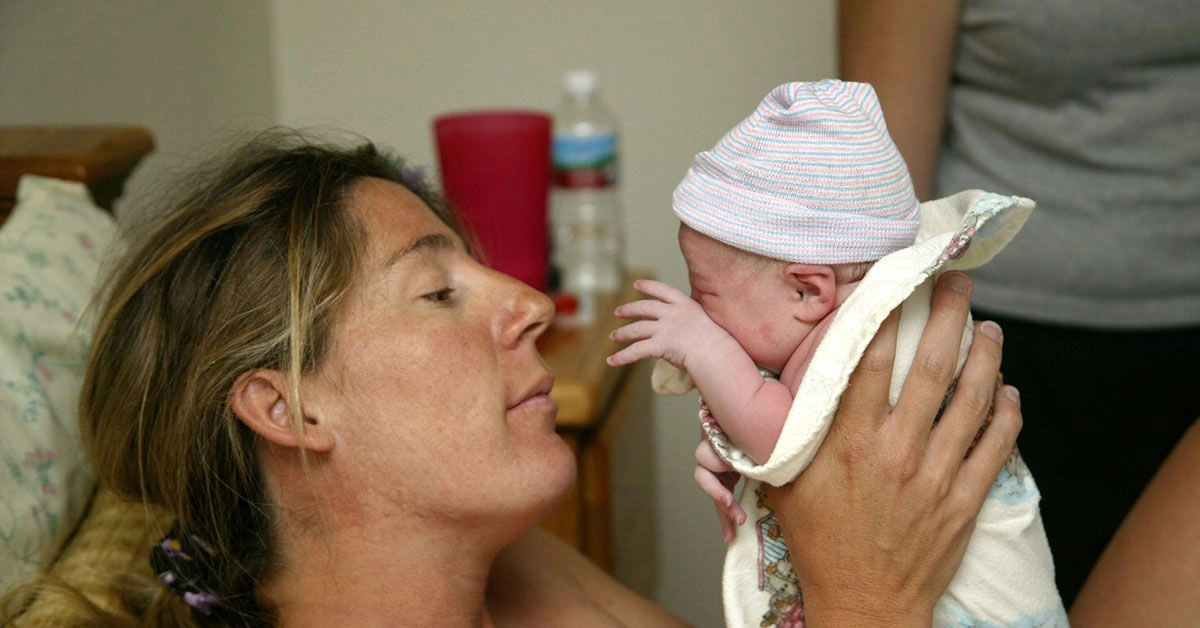
You may have heard of VBAC, which stands for vaginal birth after cesarean. HBAC means a home birth after cesarean — essentially a VBAC that takes place at home.
VBACs and HBACs are often further specified by how many prior cesareans a person has had. For instance, HBA1C denotes a home birth after one cesarean, while HBA2C indicates a home birth after two cesareans.
There are strong opinions on both sides of the HBAC debate.
It’s worth noting that the American College of Obstetricians and Gynecologists advises that VBACs be attempted in hospital settings. Below we review advantages, drawbacks, and other factors to weigh as you plan your birth.
What does the research say?
Researchers in the U.S. documented 1,000 HBACs in 2008, up from 664 in 2003 and only 656 in 1990. By 2013 that figure rose to 1,338. Although still uncommon, HBACs appear to be growing in number each year, a trend researchers attribute in part to constraints on hospital VBAC options.
How successful are they? One study looked at 1,052 people who attempted HBAC. Their VBAC success rate was 87 percent, with 18 percent transferring to hospital. By comparison, the study examined 12,092 people planning home birth without a prior cesarean; that group had a transfer rate of 7 percent. The most frequent reason for transfer was failure to progress.
Other work reports success rates generally in the 60 to 80 percent range, with the highest likelihood of success among those who’ve previously had at least one vaginal birth.
Benefits of HBAC
Having a vaginal birth rather than an elective repeat cesarean spares you surgery and its possible complications. That often translates to a faster recovery and an earlier return to normal activities.
A vaginal delivery can also lower some of the risks associated with multiple cesareans in future pregnancies, such as placental complications, if you plan to have more children.
The perceived advantages of birthing at home are frequently personal and may include:
- greater autonomy and empowerment
- a stronger sense of control
- reduced expenses
- respect for religious or cultural practices
- comfort and connection with the familiar birthing environment
Although planned home birth can carry stigma, research finds no increase in infant mortality compared with hospital birth. Birthing people at home often report fewer interventions and complications and greater satisfaction with their birth experience.
Risks of HBAC
There are risks associated with a VBAC, and some of those may be heightened by choosing a home setting.
One study showed that those attempting HBAC faced higher rates of blood loss, postpartum infection, uterine rupture, and neonatal intensive care admissions than home births without prior cesarean.
The most serious concern is uterine rupture, which occurs in about 1 percent of people attempting VBAC in any setting. Though uncommon, uterine rupture is when the uterus tears during labor and requires emergency cesarean delivery.
For VBAC patients, the rupture typically happens along the scar line from earlier surgery. Severe hemorrhage, injury or death to the baby, and potential hysterectomy are among complications that demand urgent hospital-level care.
One woman’s story
Chantal Shelstad gave birth to her third baby at home after her first was breech and delivered by cesarean. She says, “After my first birth plans became a cesarean, followed by a difficult recovery and postpartum depression and anxiety, I knew I wanted a different birth experience and resolved I’d avoid hospitals if possible.”
“About three and a half years later, I had a VBAC for our second child at a birth-friendly center in South Korea, surrounded by midwives, nurses, and an excellent OB who supported me regardless of the baby’s presentation. If we’d been in the U.S., we probably would have chosen home birth, but the birth center was wonderful.”
For her third child, Shelstad chose a home birth. “Our third and final baby was born in my bedroom, in a birthing tub, nearly two years after our second,” she recalls.
“When I found out I was pregnant we knew we wanted a home birth. We interviewed several local midwives and found one we connected with who would support us even if the baby was breech. The prenatal care was comforting and reassuring. Appointments lasted an hour, allowing us to talk through plans and rehearse different birth scenarios.”
“When labor began, I loved staying in my own home. Labor was very fast — about two hours of active labor — and my midwife arrived only 20 minutes before our son was born. I could move from the tub to my bed to rest and hold my baby while family brought food and cared for the other children. Instead of leaving a hospital after days, I stayed home to rest and recover. It was incredible.”
Are you a candidate for HBAC?
Shelstad’s experience highlights some of the factors that make someone a reasonable HBAC candidate.
You may be considered eligible if:
- you’ve had one or more prior vaginal births
- your uterine incision is low transverse or low vertical
- you’ve had no more than two previous cesareans
- it’s been 18 months or longer since your last cesarean
- there are no conditions likely to complicate vaginal birth, such as placental problems, malpresentation, or higher-order multiples
- you’ve never experienced a uterine rupture
Still, much guidance suggests VBACs should be attempted where emergency cesarean delivery is accessible. That means home birth is often not broadly recommended. Discuss a hospital transfer plan with your care team, who can help you evaluate your options individually.
Remember that even if you appear to be an ideal HBAC candidate, hospital transfer may become necessary if labor stalls, if your baby shows signs of distress, or if you experience significant bleeding.
The takeaway
“HBACs can feel frightening, but for me, hospitals were the source of fear,” Shelstad says. “I had more control and comfort at home. I trusted the birth process and the skill of my midwife and team, and knew we had hospital plans should an emergency occur.”
Ultimately, the choice of where and how to birth your baby rests with you and your healthcare provider. Ask questions and raise concerns early in prenatal care so you have the information you need to make an informed decision.
As your due date nears, stay prepared to adapt your birth plan if circumstances arise that could affect your or your baby’s safety.





















Leave a Reply
You must be logged in to post a comment.