


Dental appointments are commonly postponed because of other commitments. While this is understandable, it’s not ideal. If you haven’t had a professional cleaning in years, plaque and hardened tartar can accumulate extensively.
When that buildup is significant, it becomes difficult for a dentist to properly inspect the hard and soft tissues in your mouth. That can limit their ability to evaluate your dental health fully. In these situations, a full mouth debridement may be advised.
A full mouth debridement (FMD) is a nonsurgical treatment performed by a dentist or a periodontal specialist. The goal of FMD is to remove heavy deposits of plaque and tartar from your teeth and from beneath the gum line.
Keep reading to find out more about the full mouth debridement process and how it differs from other dental procedures you might require.
What exactly is a full mouth debridement?
Full mouth debridement is an initial step to address extensive plaque accumulation or periodontal disease. It’s carried out in a dental office and generally takes more time than a routine cleaning.
Dental plaque is a sticky film that forms on teeth every day. If plaque isn’t removed with daily brushing, it can calcify and become tartar. Dentists sometimes call tartar “calculus.”
Once tartar hardens, it provides a surface for more plaque to adhere to. This can lead to cavities and gum inflammation (gingivitis). Untreated gum disease can progress to infections affecting the gums, ligaments, and jawbone — known as periodontal disease.
Periodontal disease has important implications for oral health and may even be linked to heart problems, according to a 2020 review.
It’s essential for your dentist to be able to diagnose gingivitis and periodontal disease accurately. Excessive plaque and tartar make it hard for them to perform a thorough examination of your teeth and gums.
How does FMD differ from scaling and root planing?
If you have periodontitis, your gums will be inflamed and you may have periodontal pockets beneath the gum margin. These pockets are gaps between teeth and gums where plaque and bacteria collect.
Because periodontal pockets are difficult to clean, your dentist might suggest a more invasive approach called scaling and root planing, sometimes referred to as a deep cleaning.
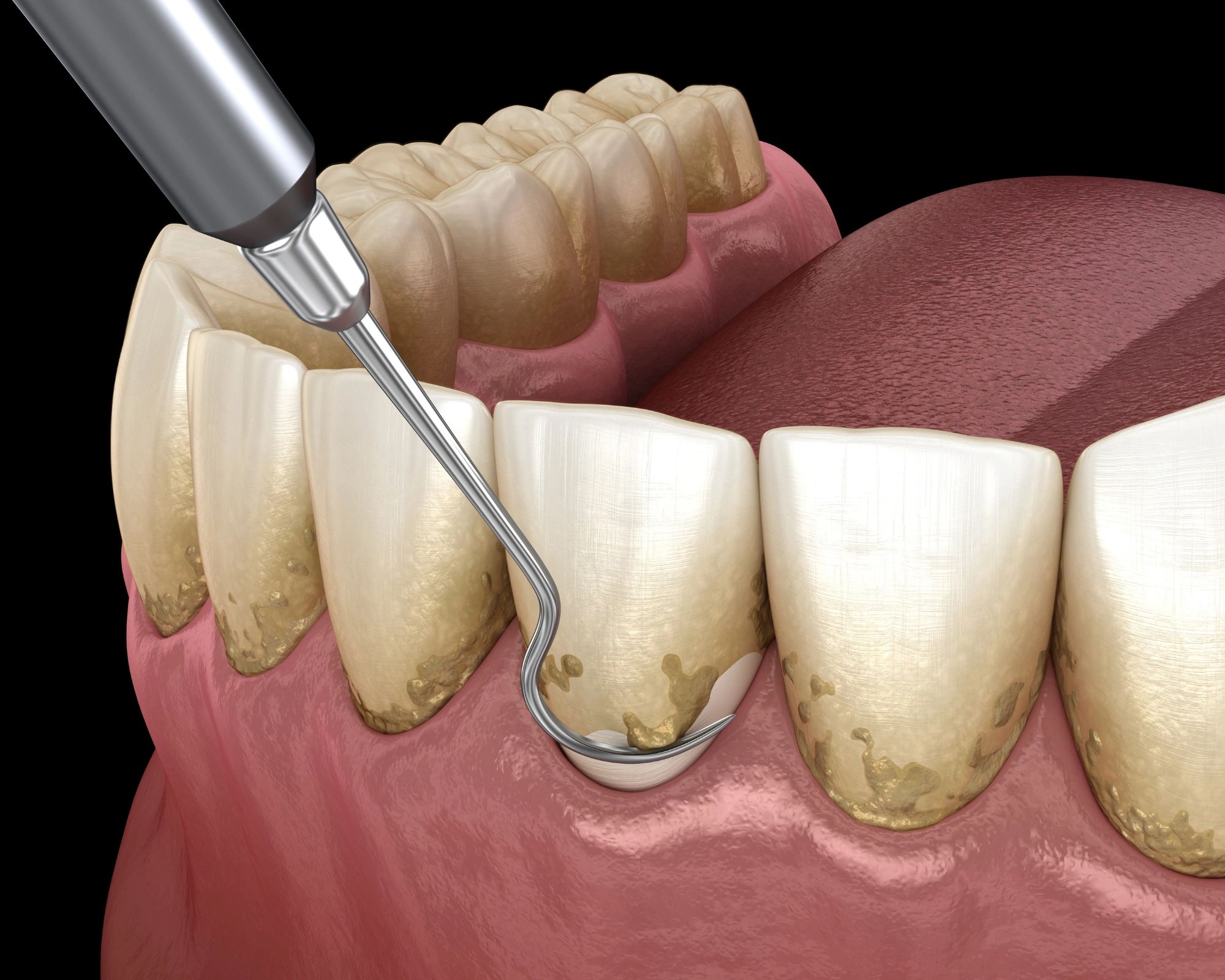
The American Dental Association notes that scaling and root planing can be performed with local anesthesia.
Scaling resembles full mouth debridement in that it removes tartar from teeth, but it reaches deeper beneath the gums. Root planing involves smoothing the tooth root surfaces.
Root planing may be performed across the mouth or in targeted areas to encourage gum tissue to reattach to tooth surfaces. This helps close small periodontal pockets and removes niches where bacteria can flourish.
After the procedure, antibiotics or an antibacterial gel might be put directly into the pockets to help keep them free of infection.
Will I need scaling and root planing after an FMD?
It’s possible you’ll require scaling and root planing following a full mouth debridement to completely eliminate tartar, inflammation, and infection from your teeth and gums.
It can also be a preparatory measure before more extensive periodontal surgery is performed.
What happens during a full mouth debridement?
Here’s the usual sequence for a full mouth debridement:
- Your dentist may numb parts of your mouth with local anesthesia. Whether this is necessary depends on how much tartar is below the gums and your sensitivity.
- Your provider will remove plaque and tartar from and around your teeth using hand instruments or an ultrasonic scaler that uses vibrations and water to blast away deposits.
- Your dentist might polish your teeth afterward or suggest further treatments if more cleaning is needed.
How does your mouth look before and after an FMD?
Before an FMD, teeth may appear yellowed or stained. They might look longer if the gums have receded. Gums can appear pale and may bleed when brushing or flossing.
After an FMD, you may experience some soreness and sensitivity. Once this subsides, you should notice pinker, healthier-looking gums and brighter teeth that sit more snugly in their sockets.
What should I expect following a full mouth debridement?
An FMD typically takes around an hour. In some cases, the work is split into several visits spaced 1 to 2 weeks apart.
A follow-up FMD-type visit is called a prophylaxis. During prophylaxis, additional plaque and calculus removal occurs and your teeth may be polished.
A follow-up appointment is necessary after a full mouth debridement so your dentist can perform a comprehensive exam. X-rays will be taken to check for cavities and to evaluate any damage to teeth and structures beneath the gum line.
That visit helps determine whether your mouth is now healthy. Your dentist may advise improved oral hygiene at home and recommend returning for routine cleanings every six months.
Your dentist might also suggest scaling and root planing to further cleanse gums and roots. In some cases, more invasive surgery, such as flap surgery, may be needed to close larger periodontal pockets.
If any teeth are beyond repair, extraction may be planned.
How can I avoid needing a full mouth debridement?
Maintaining solid oral hygiene habits can reduce the likelihood of needing extensive dental care like a full mouth debridement.
Tips to prevent needing full mouth debridement
- Limit sugary foods and drinks. Sugary substances cling to teeth and promote bacterial growth. If you do consume them, rinse your mouth with water and brush when possible.
- Brush at least twice daily with a soft-bristled brush and fluoride toothpaste.
- Consider an electric toothbrush. Electric brushes can help clean between teeth and beneath the gum line more effectively.
- Don’t forget to floss. Daily flossing is important.
- Avoid smoking, vaping, or chewing tobacco products.
- See your dentist twice a year for checkups and professional cleanings.
The takeaway
A full mouth debridement is a dental intervention that thoroughly removes heavy plaque and tartar from teeth and gums. You may need this treatment if you’ve avoided dental care for years.
Good oral hygiene and regular dental visits can help prevent the need for an FMD or other more involved dental procedures.























Leave a Reply
You must be logged in to post a comment.