
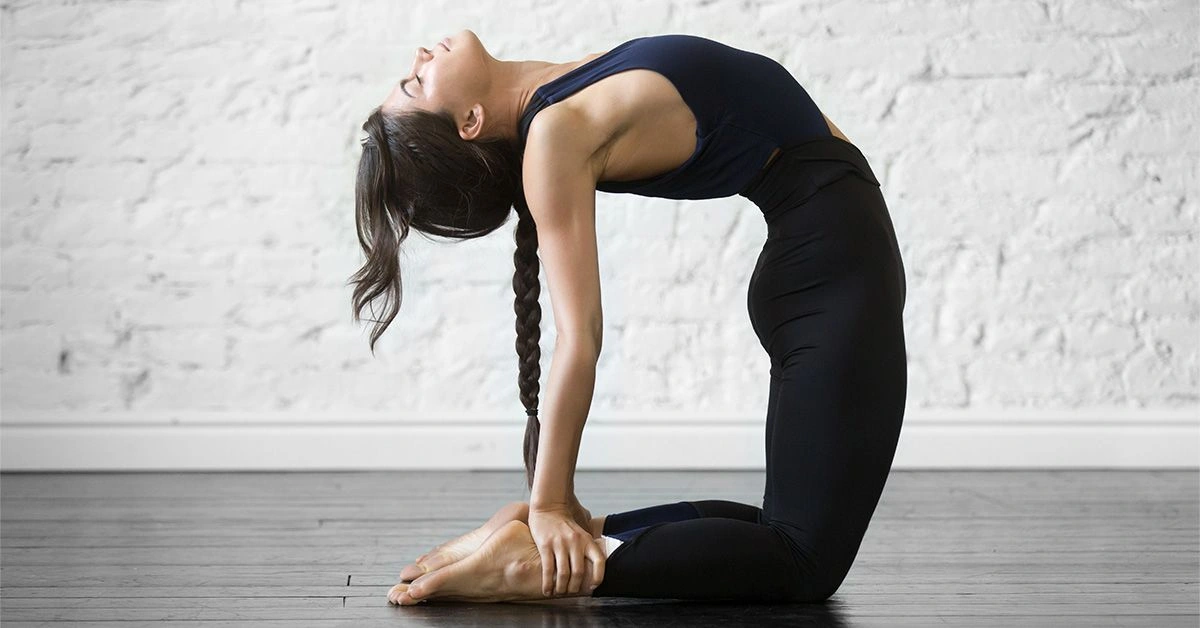
The Five Tibetan Rites are an age-old yoga sequence comprised of five movements, traditionally performed 21 times each day.
Those who practice report various physical, mental, and spiritual advantages. These outcomes are believed to rejuvenate a person’s energy and resilience. Because of these reputed effects, the Five Tibetan Rites have long been nicknamed the “Fountain of Youth.”
Below we’ll review what the five rites involve, how to perform them, and the potential benefits of this routine.
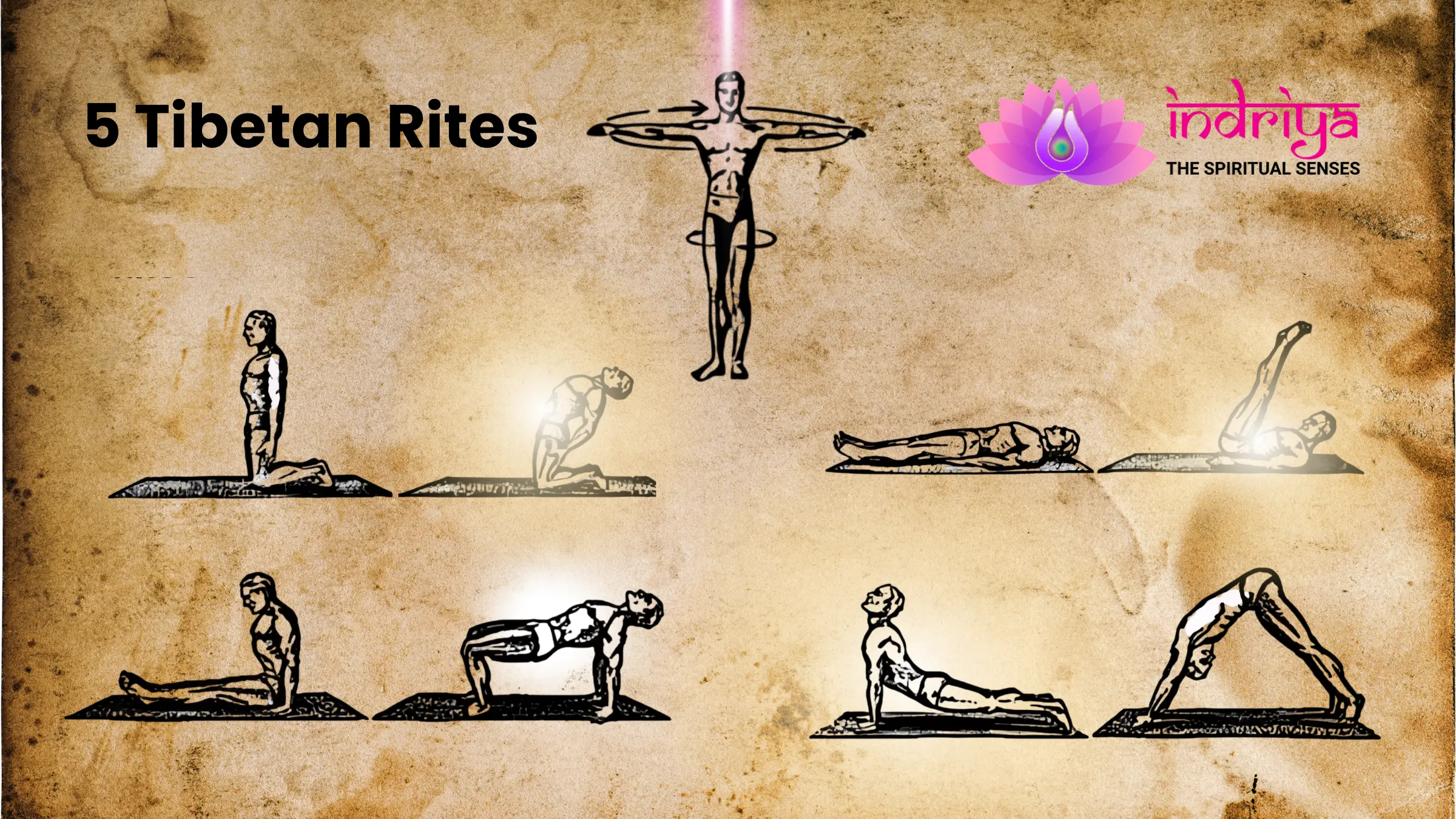
What are the 5 Tibetan Rites?
The Five Tibetan Rites are commonly thought to be over 2,500 years old. They are attributed to Tibetan lamas (monastic leaders in Tibetan Buddhism), although the exact origin is still debated by some historians.
The rites were introduced to Western audiences in 1985 through Peter Kelder’s book “Ancient Secret of the Fountain of Youth.” Kelder’s account, which promotes the program as a method of “youthing,” describes the exercises in detail.
The practice centers on the body’s subtle energy. Practitioners propose the body contains seven energy centers, or vortices. In Hindu tradition these are known as chakras.
It is claimed these centers influence parts of the endocrine system, a collection of glands and organs that govern many bodily functions, including aspects of aging.
Enthusiasts assert that when these energy centers rotate harmoniously, vitality and youthfulness follow. The Five Tibetan Rites are practiced to foster that balance.
What are the benefits?
Scientific research on these specific rites is limited. Most reported benefits come from anecdotal accounts by practitioners and the observations of health professionals and yoga teachers.
Reported improvements include:
- reduced joint pain and stiffness
- enhanced strength and coordination
- improved circulation
- reduced anxiety
- better sleep quality
- increased energy
- a more youthful look
How to do the 5 Tibetan Rites
Although the classic recommendation is to perform each rite 21 times daily, beginners can start with fewer repetitions and build up gradually.
During week one, practice each rite 3 times per session. The following week add 2 more repetitions per rite. Continue increasing by 2 repetitions each week until you reach 21 of each rite daily.
Rite 1
The goal of the first rite is to accelerate the rotation of the chakras. Novices often experience lightheadedness while doing this movement.
- Stand upright. Extend your arms out so they are parallel to the floor, with palms facing down.
- Remain in place and slowly rotate your body clockwise. Keep your eyes open and your head level, directing your gaze slightly toward the ground without bending your neck forward.
- Perform between 1 and 21 rotations.
Spin as many times as comfortable, stopping if you feel notably dizzy. Over time you’ll be able to complete more turns. Avoid excessive spinning, which is believed to overstimulate the energy centers.
Rite 2
During the second rite, maintain slow, rhythmic deep breathing. Continue that breathing pattern between each repetition.
You’ll want a carpeted surface or a yoga mat for this rite.
- Lie flat on your back with arms at your sides and palms on the floor.
- Inhale as you lift your head, tucking the chin toward the chest, and simultaneously raise your legs straight up while keeping the knees extended.
- Exhale as you gently lower your head and legs back to the starting position. Release tension in your muscles.
- Complete between 1 and 21 repetitions.
If keeping your knees straight is challenging, bend them as necessary. Aim to straighten them more with each session.
Rite 3
Like the second rite, the third one uses steady rhythmic breathing. You may close your eyes during this rite to encourage inward focus.
- Kneel with knees about shoulder-width and hips positioned over the knees. Keep your torso upright and place your palms on the backs of your thighs, just below your buttocks.
- Inhale and drop your head back, arching the spine to open the chest.
- Exhale and bring your head forward, moving the chin toward the chest. Keep your hands resting on your thighs throughout.
- Repeat from 1 up to 21 times.
Rite 4
The fourth rite, sometimes referred to as the Moving Tabletop, is performed with rhythmic breathing. Your hands and heels should remain planted during the movement.
- Sit on the floor with legs extended straight ahead and feet about shoulder-width apart. Place your palms on the floor beside you with fingers pointing forward. Keep your torso straight.
- Drop your chin to your chest. Inhale and gently tilt your head back while lifting your hips and bending your knees until your body forms a tabletop position, with your head softly arched back. Tense your muscles and hold your breath briefly.
- Exhale, release the tension, and return to the starting position.
- Perform between 1 and 21 repetitions.
Rite 5
The fifth rite combines the Downward-Facing Dog and Upward-Facing Dog postures, earning it the nickname Two Dogs. This move also requires consistent breathing rhythm.
- Sit cross-legged, placing your palms on the floor in front of you.
- Extend your feet behind you with toes curled under and feet shoulder-width apart. Straighten your arms and arch your spine while keeping the tops of your thighs on the floor. Drop your head back into an Upward-Facing Dog.
- Then inhale and lift your hips, forming an inverted “V” position. Bring your chin toward your chest and lengthen your back into a Downward-Facing Dog.
- Exhale as you return to Upward-Facing Dog.
- Repeat from 1 to 21 times.
To protect your lower back, you can bend your knees while transitioning between these poses.
Safety tips
As with any exercise regimen, approach the Five Tibetan Rites cautiously. Begin with gentle motions and a small number of repetitions.
Exercise extra care if you have:
- Heart or respiratory issues. Consult your physician before attempting these movements to ensure they are safe for you.
- Neurological disorders. Conditions such as Parkinson’s disease or multiple sclerosis can impair balance. If you have one of these diagnoses, these exercises may be unsafe.
- Conditions that cause dizziness. If you are prone to lightheadedness, speak with a doctor before trying the first rite. The spinning motion can worsen vertigo, circulatory problems, or medication-induced nausea.
- Pregnancy. The spinning and bending involved may not be safe during pregnancy.
- Recent surgery. If you’ve had surgery within the past six months, the rites could lead to complications.
The bottom line
The Five Tibetan Rites, commonly called the “Fountain of Youth,” are a set of five yoga postures practiced for over 2,500 years. People perform these rites aiming to restore youthful energy and boost vitality.
For optimal results, practice the sequence consistently. You can use it alone or as part of a broader fitness routine.
If you have medical concerns or are new to exercise, consult your healthcare provider before beginning these movements.





















Leave a Reply
You must be logged in to post a comment.