
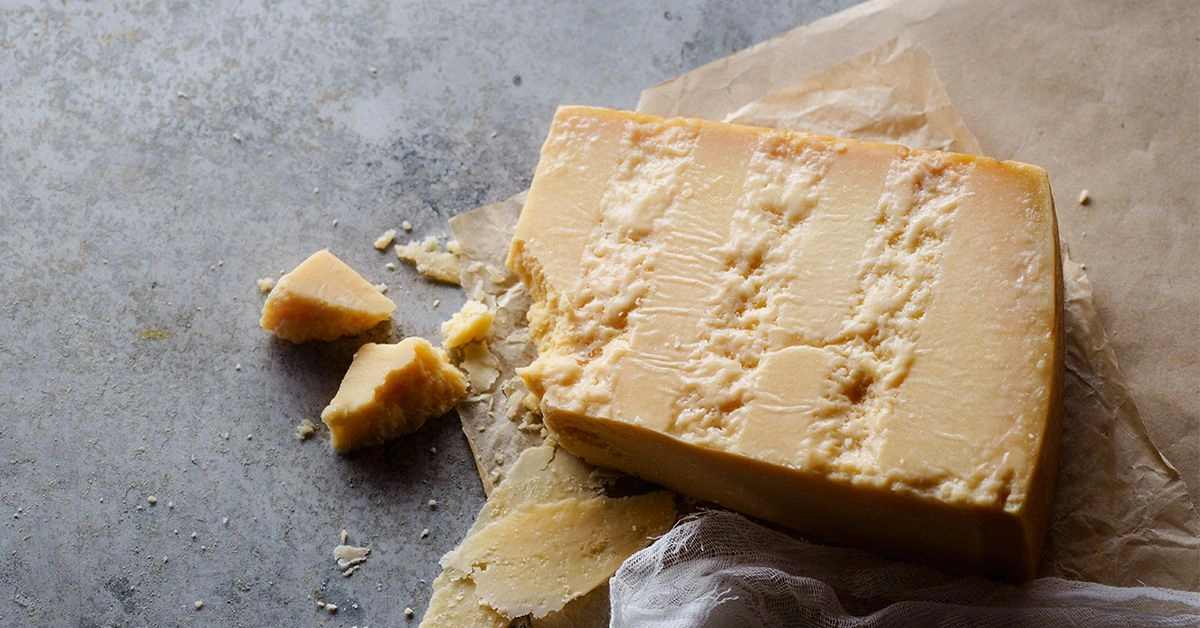
Parmesan, often called Parmigiano-Reggiano, is a firm Italian cheese notable for its distinct nutritional profile.
Some view it as a functional food, suggesting its components might support health or lower disease risk (1).
Its standout nutritional traits include a high protein and calcium content and relatively easy digestibility (2).
Traditionally, this famous Italian cheese is produced using a method that goes back about a millennium, giving it its signature taste and mouthfeel.
In the United States, however, the Food and Drug Administration allows any cheese with similar physical and chemical characteristics to be labeled as Parmesan, regardless of where it was made (3).
This article reviews the nutritional advantages, typical culinary uses, and possible drawbacks of Italian Parmigiano-Reggiano.
What is Parmesan cheese?
Parmesan is an Italian cheese known for a pronounced, nutty taste that can carry sweet, salty, and bitter notes simultaneously. Its texture is crumbly and granular, and its hue ranges from pale to deeper yellow.
Unlike many cheeses, it benefits from a protected designation of origin (PDO) under European Union rules (4).
That designation means that within the EU only cheese produced in the traditional locales — the northern Italian provinces of Parma, Reggio Emilia, Modena, Bologna, and Mantua — can be labeled and sold as Parmesan or Parmigiano-Reggiano (4).
How is it made?
Beyond being made in defined Italian zones, Parmesan is produced exclusively from milk of cows raised in the same area — a blend of Italian Frisona, Bianca Modenese, and other regional breeds (5).
The production technique originates in the Middle Ages, when monastic cheesemakers created a dry, hard cheese formed into large wheels weighing as much as 39 pounds (18 kilograms) for long-term storage (6).
Parmesan is produced using rennet coagulation. Rennet is a collection of animal-derived enzymes that trigger coagulation (solidifying). Calf rennet is the most commonly used form (7).
Rennet-coagulated cheeses are traditionally crafted through these seven stages (7, 8):
- Setting: Rennet is added to cow’s milk, prompting coagulation. Whey separates from a solid curd composed mainly of casein proteins.
- Cutting: When the curd forms, it’s sliced into rice-sized fragments to help expel whey and lower moisture, typically using a traditional instrument called a spino.
- Cooking: The curd-and-whey mix is heated to about 131°F (55°C) to encourage curd contraction and further whey release.
- Draining: After heating, a cheese mass forms and the whey is drained away from the developing cheese.
- Knitting: The curd continues to fuse, creating a larger unified cheese mass.
- Pressing: Pressing, similar to knitting, forces out more whey and completes curd fusion. A mold shapes the familiar Parmesan wheels.
- Salting: Finally, the wheels are immersed in brine, which lowers moisture and allows salt uptake.
After salting, the cheese enters the maturation, or aging, phase.
Ripening may last from 12 months up to more than 40 months. The duration of aging influences the cheese’s final texture and flavor.
Summary: Parmesan is a firm cheese traditionally made in defined northern Italian areas. It offers a strong, nutty flavor and a granular texture that varies with aging time.
Nutrition
Parmesan is nutrient-dense, even in small portions.
A 1-ounce (28-gram) serving of hard Parmesan supplies (9):
- Calories: 111
- Protein: 10 g
- Fat: 7 g
- Carbs: 0.9 g
- Calcium: 26% of the Daily Value (DV)
- Phosphorus: 16% of the DV
- Sodium: 14% of the DV
- Zinc: 7% of the DV
Due to its protein and fat levels, Parmesan is energy-dense, meaning it delivers a relatively high calorie amount per serving.
Parmesan is not considered lacto-vegetarian because it’s typically made with animal-derived rennet. On labels, rennet is often listed simply as “enzymes.” Unless otherwise noted, these are generally animal rennet (3, 10).
That said, vegetarian versions of Parmesan exist. For example, BelGioioso produces a Parmesan made without animal rennet and clearly labeled as vegetarian (11).
The fat in this cheese is primarily composed of medium- and short-chain fatty acids, which are more readily absorbed and may be used as quick energy sources, potentially contributing less to fat storage (1, 12, 13).
Finally, Parmesan supplies several nutrients important for bone health, including calcium, phosphorus, and zinc (14, 15).
Summary: Parmesan is a nutrient-rich cheese, high in protein, readily available fats, and minerals that promote bone health.
Health benefits
Below are some potential advantages of consuming Parmesan cheese.
Naturally low in lactose
Although milk is the base ingredient, Parmesan is effectively lactose-free.
Lactose is the primary carbohydrate in milk, yet roughly 75% of people worldwide have difficulty digesting it due to low lactase — the enzyme that breaks lactose into glucose and galactose (16).
People with lactose intolerance may experience diarrhea, abdominal discomfort, gas, and bloating after consuming lactose-containing foods.
Because lactose is mainly present in whey — the watery fraction of milk — much of it is removed when whey is expelled from curd during cheese production (7).
Consequently, Parmesan contains no more than 0.10 milligrams of lactose per 100 kilocalories and is generally considered suitable for those with lactose intolerance (1).
May promote bone health
Calcium is the most plentiful mineral in the body and plays a crucial role in bone structure and function. Nearly 99% of the body’s calcium is stored in bones (17).
Inadequate intake or poor absorption of calcium can prompt the body to draw on bone calcium reserves, potentially leading to bone weakening and conditions like osteoporosis (17).
As noted, a serving of Parmesan offers about 26% of the Daily Value for calcium (9).
The cheese’s casein proteins also help make its calcium highly bioavailable. When casein is broken down, mineral-rich residues are left behind that can improve absorption of minerals like calcium, iron, and zinc (1).
High in readily digestible protein
Parmesan supplies substantial amounts of high-quality protein — protein with a strong biological value — because it contains high concentrations of all essential amino acids (1, 2).
Because it contains every essential amino acid, it’s considered a complete protein source.
Amino acids form proteins’ building blocks, and essential amino acids must be obtained from the diet because the body cannot synthesize them.
Moreover, the protein in Parmesan is easier to digest. During aging, proteins break down into smaller molecules, like free amino acids, effectively pre-digesting them and facilitating absorption (1).
Summary: Parmesan is nearly lactose-free, supplies abundant calcium, and offers high-quality, easily absorbed protein.
Uses
Parmesan is both flavorful and nutritious, suitable for dishes from starters to sweets.
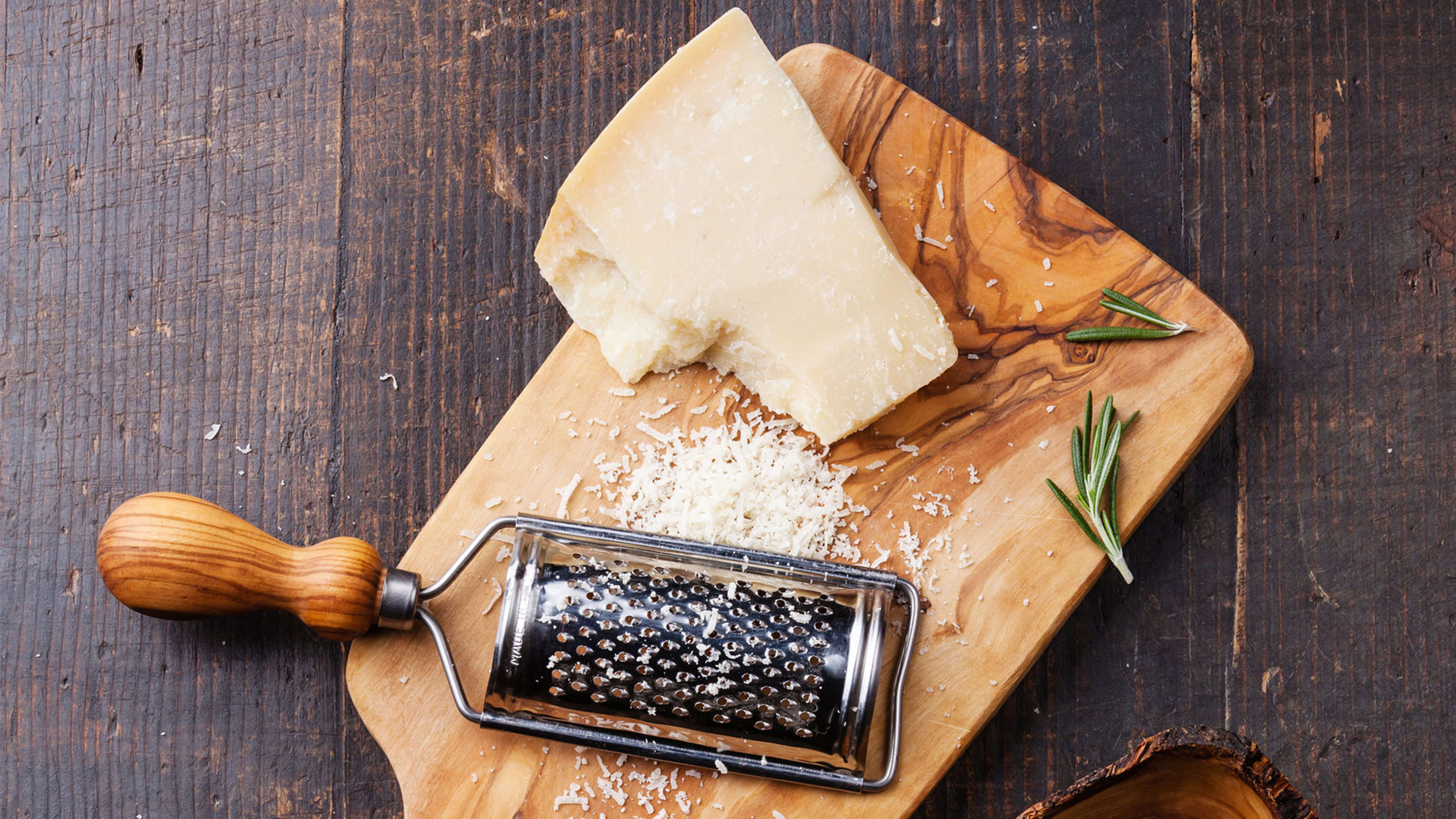
It’s commonly sold shredded, grated, or in wedges and is widely available in supermarkets and online.
Because its flavor evolves with aging, different maturity levels pair better with certain foods and beverages.
Typical aging ranges and suggested pairings include (5):
- 12–19 months: Mild and delicate, with fruity and yogurt-like notes. Best for salads and cold preparations; enjoy with sparkling white wines.
- 20–26 months: Balanced in flavor; good for sauces, desserts, and classic Italian dishes like soups and pasta.
- 27–34 months: More aromatic and pronounced; pairs nicely with baked pasta or fruit and honey desserts.
- 35–45 months: Intense in taste; pairs well with red wine.
Summary: Incorporating Parmesan can boost both flavor and nutrition. It works well in both sweet and savory recipes.
Downsides
Because it’s a dairy product rich in casein protein, Parmesan may be inappropriate for individuals with a casein or cow’s milk allergy.
Casein allergy arises when the immune system reacts to casein from milk or milk products, causing immediate or delayed allergic responses (18, 19).
Possible symptoms include (19):
- rashes
- skin irritation
- breathing difficulties
- asthma exacerbations
- gastrointestinal distress
- anaphylaxis
If you have a casein or cow’s milk allergy, you should avoid milk products, including Parmesan.
Summary: Parmesan can trigger allergic reactions in people allergic to casein or cow’s milk. Those individuals should avoid this cheese and other dairy products.
The bottom line
Parmesan is a well-aged cheese with a bold taste and a crumbly, granular texture, produced in certain areas of northern Italy.
It’s nutrient-dense and can be a solid option for individuals with lactose intolerance or those seeking easily digestible protein. It may also aid bone health.
However, it is not appropriate for people with casein or cow’s milk allergies.
Parmesan makes a tasty addition to both sweet and savory dishes and is available in blocks, shredded, or grated forms at retail outlets and online.





















Leave a Reply
You must be logged in to post a comment.