Bananas rank among the world’s most consumed fruits (1, 2, 3, 4).
Beyond supplying quick energy and key nutrients, these tropical fruits are a handy snack any time of day.
In grocery aisles, you’ll often find organic and conventionally produced bananas displayed side by side. They look almost identical, which leads many people to wonder whether they truly differ — and if organic bananas are superior.
This article examines organic versus conventional bananas so you can pick the one that fits your needs.
ADVERTISEMENT
Banana calories and nutrition
Whether they’re organic or conventionally farmed, bananas are low in calories, protein, and fat. They provide a good amount of carbohydrates, fiber, natural sugars, and several vitamins and minerals.
On average, a 4.4-ounce (126-gram) banana supplies (5):
Calories: 112
Protein: 1.4 grams
Fat: < 1 gram
Carbs: 28.8 grams
Fiber: 3.3 grams
Sugar: 15.4 grams
Vitamin B6: 27% of the Daily Value (DV)
Vitamin C: 12% of the DV
Copper: 11% of the DV
Potassium: 10% of the DV
Magnesium: 8% of the DV
Riboflavin: 7% of the DV
Folate: 6% of the DV
Bananas contain more carbohydrates than some other fruits, yet their glycemic index (GI) is relatively low — roughly 50 — though this changes with ripeness.
The GI scale runs from 0–100 and reflects how a food impacts blood sugar. Higher GI values indicate a greater blood sugar response (6).
Because bananas have a modest GI, deliver complex carbs, and provide fiber, they usually don’t provoke pronounced blood sugar spikes in people without metabolic disorders such as diabetes.
Organic vs. conventional bananas
Organic bananas are essentially the same fruit as conventional ones; the primary difference lies in farming practices. Nutritionally, they’re largely comparable.
However, limited studies indicate that some nutrient levels may vary between them. For instance, one analysis reported higher zinc levels in certain organic bananas compared with conventional fruit (7).
Beyond that finding, research comparing nutrient content between organic and conventional bananas is sparse. Therefore, it’s not justified to definitively state that organic bananas are more nutrient-dense than conventionally grown ones.
Moreover, the nutritional makeup of both organic and conventional bananas can vary by farm. Elements like soil composition, elevation, and growing season temperatures can affect the fruit’s composition (7, 8, 9).
Summary: Both organic and conventional bananas are nutritious, providing fiber, energy-sustaining carbs, vitamins, and minerals. There’s limited evidence to claim organic bananas consistently offer more nutrients than conventional ones.
Health benefits of bananas
Bananas — regardless of size, color, or growing method — offer several health perks, such as:
Packed with bioactive compounds. Bananas supply antioxidants, polyphenols, carotenoids, and phytosterols, among other bioactives that could support health and disease prevention (4, 10, 11, 12).
May support heart health. Potassium, magnesium, and fiber in bananas can act together to help lower blood pressure and potentially reduce cardiovascular risk (13, 14).
Could aid weight management. Bananas are relatively low in calories, and their fiber content promotes digestive health and can increase feelings of fullness, which may help with weight control (13, 15, 16, 17).
Because research directly comparing the health effects of organic versus conventional bananas is limited, it’s unclear whether one type provides greater benefits.
Some investigations indicate that organic and non-organic foods have similar calorie and nutrient content (9, 18, 19, 20).
Other studies suggest organic foods might be linked with lower risks of obesity, certain cancers, infertility, allergies, high blood pressure during pregnancy, and additional health issues (21, 22, 23, 24).
However, many of these reports are observational, meaning other lifestyle and environmental variables could explain the associations rather than organic produce alone.
In short, more controlled human research is necessary to determine whether organic bananas confer distinct health advantages (25).
Summary: Organic and conventional bananas are both nutrient-rich and contain beneficial plant compounds. They may support heart and digestive health and assist in weight control, but it’s unclear if organic bananas are superior for health.
ADVERTISEMENT
Which type is best?
When weighing organic versus conventional bananas, you might first look for nutritional or health differences.
Because substantial nutritional differences aren’t clearly established, consider these other factors when choosing:
Price. Organic bananas typically cost more than conventional ones, though prices fluctuate by store and region (23).
Environmental impact. Some consumers opt for organic produce for ecological reasons. Conventional banana operations may have greater negative effects on local air, soil, and water compared with organic farms (26, 27, 28).
Labor and worker safety. Workers on conventional banana plantations often face higher risks of pesticide exposure, respiratory problems, fatigue, and gastrointestinal complaints compared with those on organic farms (29, 30).
Chemical residues. Organic bananas may contain fewer pesticide residues, heavy metals, and other agrochemicals than conventional bananas (20, 23).
Ultimately, the choice is personal. If you can manage the typically higher cost of organic bananas, they might offer environmental benefits, improved worker conditions, or reduced chemical exposure compared with conventional fruit.
Summary: Although their nutrient content is similar, organic and conventional bananas differ in other meaningful ways. Consider price, environmental effects, and worker welfare when choosing which to buy.
How to identify organic bananas
Usually, stores clearly label organic and conventional bananas.
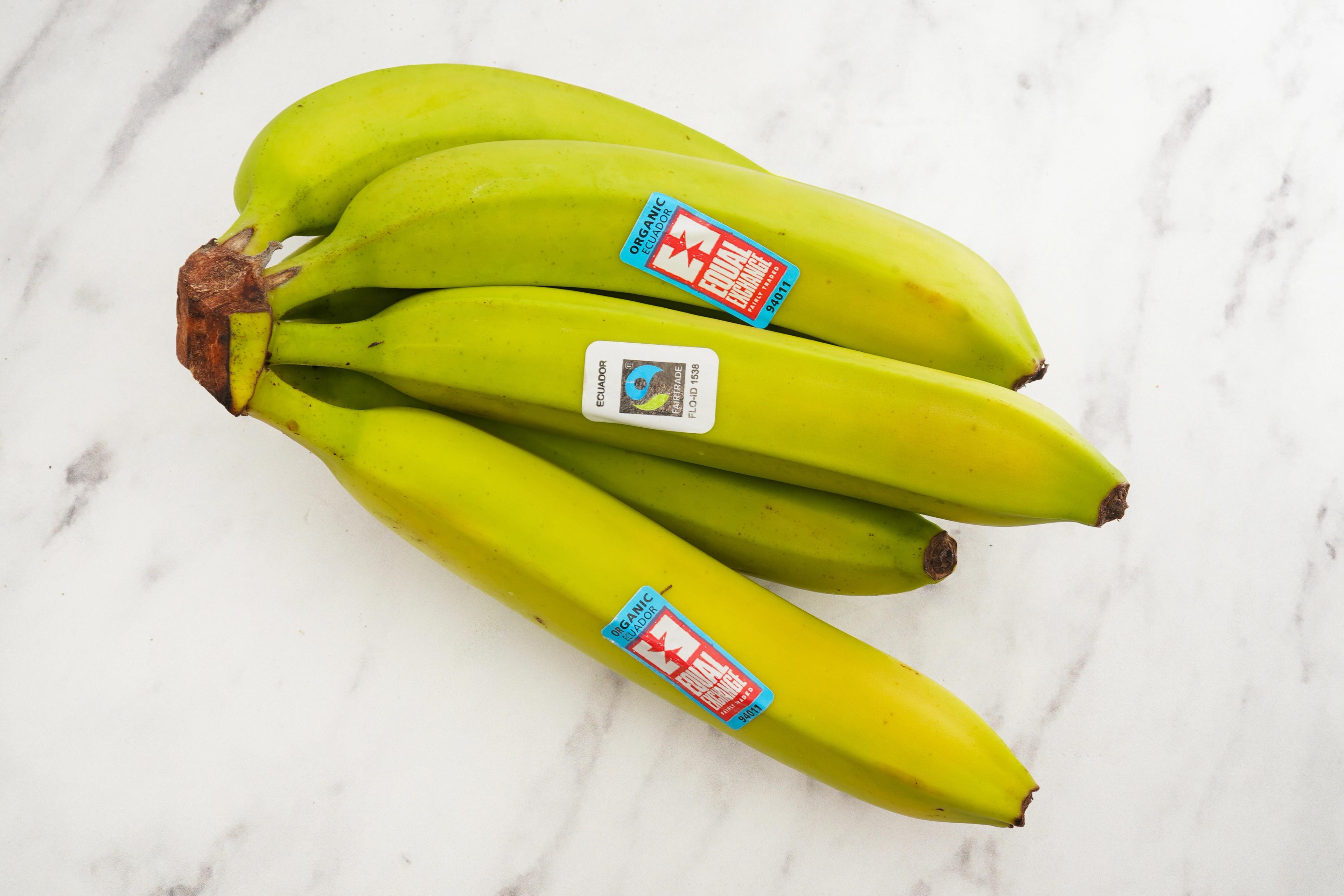
If signage is missing, check the fruit’s sticker or any plastic wrap. Most often, those labels explicitly indicate whether the bananas are organic.
You can also check the PLU (price look-up) code on the sticker. PLU codes are 4–5 digit numbers that identify produce.
If a PLU code begins with the digit 9, the item is typically organic.
ADVERTISEMENT
The bottom line
People often ask whether organic produce is healthier than conventionally grown food, but the answer isn’t straightforward.
This is true for bananas too: there’s limited proof that one type is definitively healthier than the other. Both organic and conventional bananas are nutritious fruits.
Some consumers favor organic bananas for environmental reasons, lower chemical use, or worker welfare concerns, but the decision is yours.
In the end, ripe or green, organic or conventional, fresh bananas are convenient, nutritious, and simple to incorporate into your meals. If you’re curious about the pros and cons of less-ripe fruit, read more about green bananas good or bad.
Just one thing
Try this today: Bored of plain bananas? Blend one into a vibrant green smoothie for a tasty switch-up!
Frequently Asked Questions
Are organic bananas more nutritious than conventional ones?
Overall nutrient profiles are similar; limited studies report occasional differences in specific minerals, but there’s no consistent evidence that organic bananas are universally more nutritious.
Do organic bananas have fewer pesticide residues?
Yes, organic bananas are typically grown without synthetic pesticides, so they often contain fewer pesticide residues than conventionally grown bananas.
Are organic bananas better for the environment?
Organic farming generally aims to reduce chemical runoff and improve soil health, so organic banana production can have lower environmental impacts, though results vary by farm and region.
How can I identify organic bananas in the store?
Look for labels or stickers that say “organic” or check the PLU code: codes starting with 9 usually indicate organic produce.
Should I choose organic bananas despite higher cost?
Choosing organic is a personal decision. If you prioritize lower chemical exposure, worker safety, or environmental concerns and can afford the price premium, organic bananas may be worth it.
Share this article:
Disclaimer: This article is for informational purposes only and is not intended as medical advice. Please consult a healthcare professional for any health concerns.























Leave a Reply
You must be logged in to post a comment.