
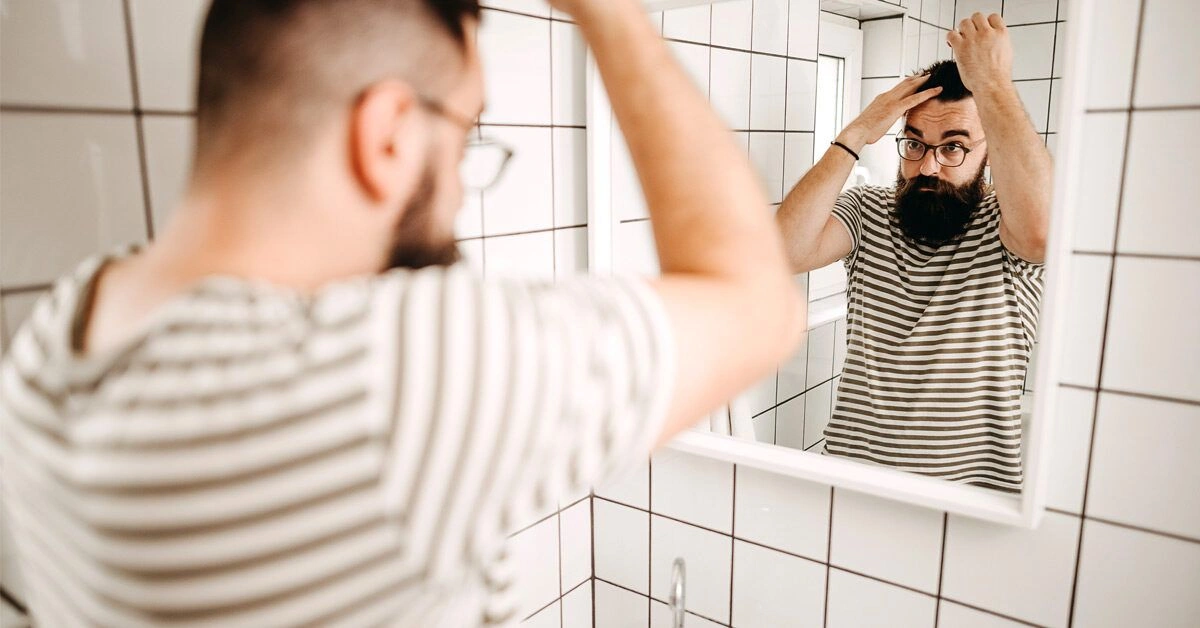
A hairline that moves back is commonly driven by age and hereditary factors, though certain diets and medications can influence hair condition and, in some cases, support regrowth.
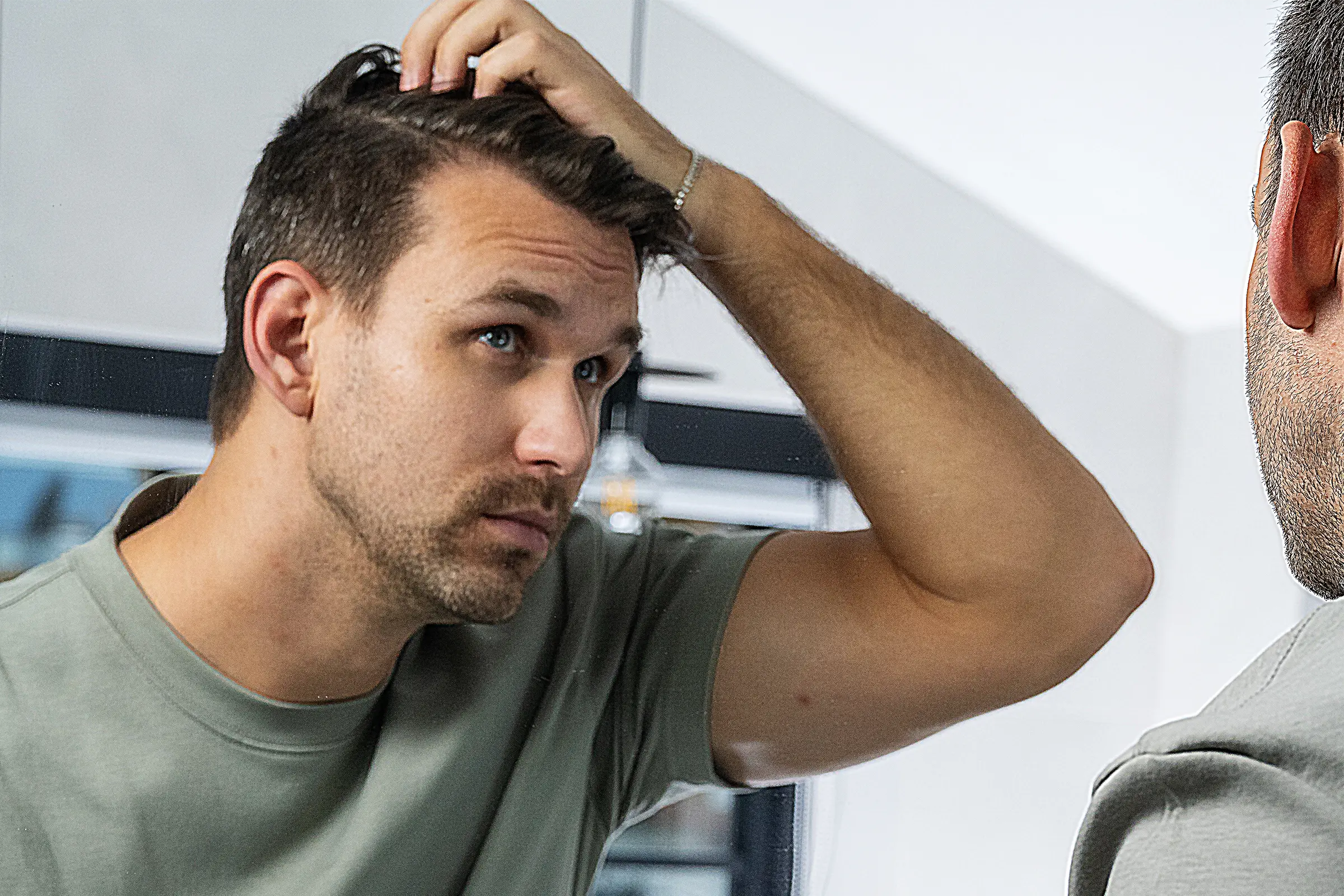

A quick summary of options for a receding hairline
- Adopt a nutritious diet
- Prescription and OTC drugs
- Herbal treatments
- Hair transplantation
- PRP injections
- Use milder shampoo
- Low-level light therapy
- Essential oil treatments
- Scalp massage
- Modify your haircut
- Reduce DHT activity
- Manage stress and anxiety
It’s normal for the hairline to shift upward slightly with age. For men, this process can begin as early as the late teens or early 20s.
Once hairline recession begins, it can be hard to completely halt. For most people, hair loss stems from a mix of genetics and aging.
If you’re noticing thinning, there are increasingly more treatments, clinical options, and at-home approaches that may enhance hair health and appearance.
What leads to a receding hairline?
The most frequent causes of a receding hairline are aging and inherited traits.
Additional contributors can worsen hairline recession. These include:
- excessive styling (especially with heat)
- wearing tight styles like cornrows or tight braids
- chemical treatments such as bleaching or peroxide-based dyes
- consuming a diet high in saturated fats, processed foods, additives, and sugar
- cigarette smoking
- inflammatory scalp conditions like lupus or frontal fibrosing alopecia
Treatment approaches for a receding hairline
No therapy can guarantee to stop a receding hairline completely, but various lifestyle measures and medical treatments can help hair appear thicker and last longer.
Adopt a nutritious diet
Eating foods rich in antioxidants may improve the look and vitality of your hair.
Antioxidants counter oxidative stress, which contributes to hair aging. Foods like blueberries, spinach, kidney beans, and walnuts are good natural sources.
Key vitamins and minerals that support hair growth include:
- vitamin A
- vitamin B12
- vitamin E
- iron
- zinc
Adding plenty of leafy greens, nuts, and seeds to your meals can enhance hair texture and strength.
Recommended products:
Medications
The most well-known OTC option for a receding hairline is minoxidil (Rogaine). Many people use it for this purpose.
Studies indicate topical minoxidil outperforms placebo. A 2015 paper reported new hair growth in about 40% of users. Minoxidil is the active ingredient in the 5 percent topical solution by Keeps.
Finasteride (Propecia) is a prescription tablet that reduces hormone levels linked to hairline recession. Taken orally, finasteride has been shown to encourage scalp hair growth and curb hair loss.
These items are available through partners like Hims, Keeps, and Roman.
Recommended products:
Herbal approaches
Applying herbal preparations topically may support denser, healthier hair for those with a receding hairline.
Hibiscus (Chinese), ginseng, gotu kola, gooseberry, and aloe vera have long been used in traditional medicine for hair concerns. Saw palmetto has shown promise in slowing or halting hair loss and is an ingredient in some shampoos and conditioners, including formulations by For Hims.
Combining several herbs in a carrier oil makes a conditioning blend you can leave on the scalp.
Recommended products:
Hair transplant
A hair transplant relocates hair from the rear of the scalp to the hairline area. These grafts can create a denser hairline appearance.
Transplants carry risks and are typically not covered by insurance. Consult a physician to determine if you’re an appropriate candidate.
PRP therapy
PRP (platelet-rich plasma) therapy is another choice. A small blood sample is taken and spun in a centrifuge to isolate the platelet-rich plasma, which is then injected into areas of the scalp needing stimulation. The treatment aims to rejuvenate follicles and trigger new growth.
Use a gentler shampoo
Some shampoos are formulated to be mild on hair and to energize follicles. Harsh shampoos can strip sebum from the scalp and damage hair, while gentler formulas may support growth.
Ketoconazole is an active ingredient in some of these shampoos. 2020 research indicates it can encourage hair growth in many instances.
Recommended products:
Low-level light therapy
Low-level light therapy uses lasers to stimulate scalp hair growth. A 2015 study reported benefits for men and women with hair loss.
Researchers think the light may signal cells to enter the anagen (growth) phase of hair follicles.
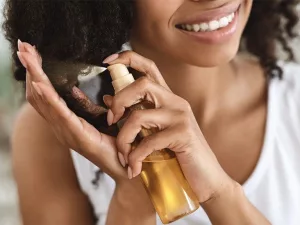
Essential oils
Certain essential oils may encourage hair growth. Rosemary oil, peppermint oil, and lavender oil have shown potential as treatments for a receding hairline.
Always dilute essential oils in a carrier oil like almond, coconut, or jojoba oil before applying to the scalp.
Recommended products:
Scalp massage
Performing a regular scalp massage may support thicker, healthier hair, according to 2016 research.
The increased circulation around the hairline may be why massage stimulates follicles. Try massaging the scalp for at least four minutes per day by hand.
Change your hairstyle
Altering how you wear your hair is a simple way to reduce factors that contribute to hair loss. Over-brushing, rough handling, and tight styles can accelerate hairline recession.
The objective isn’t to conceal the hairline but to divert attention from thinning areas like the temples or frontal edge. Consider these looks:
- Keep length on top to style into a fauxhawk; texture can create the perception of more hair. Pair with neatly trimmed sides for a sharp finish.
- Use a side part to keep hair off your face.
- Opt for a buzz cut if your hair is already short or you want minimal upkeep. A buzz may reduce the prominence of the hairline.
Lower DHT levels
Dihydrotestosterone (DHT) is a hormone that, when elevated, can accelerate hair loss.
You may help reduce DHT by adding certain foods to your diet. Evidence suggests green tea (and its EGCG), turmeric (curcumin), and soy products like edamame may assist in lowering DHT.
Recommended products:
SHOP NOW AT THE REPUBLIC OF TEA
SHOP NOW AT THE REPUBLIC OF TEA
Manage stress and anxiety
Stress can be connected to certain types of hair loss, though reducing stress isn’t always simple.
Research has found regular exercise, time outdoors, relaxation strategies, and meditation can reduce stress levels (source).
Recommended products:
When to consult a physician
Some hair shedding is normal; widespread hair loss is not.
If you notice heavy shedding, bald patches, or unusual patterns, see your primary care doctor or a dermatologist. Hair loss can sometimes indicate an underlying medical issue.
Common questions about stopping a receding hairline
Can a receding hairline grow back?
With an appropriate treatment approach, a receding hairline can often show regrowth. Plans may combine evidence-based medical treatments, natural options, or both.
With an appropriate treatment approach, a receding hairline can often show regrowth. Plans may combine evidence-based medical treatments, natural options, or both.
What hair loss treatments work for Black men?
Male hair loss therapies can be adapted for all hair textures, including tight curls and coils. A hair loss specialist will consider factors like hair density and curl pattern during your consultation — see more on treating a receding hairline black men.
Male hair loss therapies can be adapted for all hair textures, including tight curls and coils. A hair loss specialist will consider factors like hair density and curl pattern during your consultation — see more on treating a receding hairline black men.
Does a receding hairline always lead to baldness?
A receding hairline is a hallmark of male pattern hair loss, but it’s normal for the hairline to evolve with age. Recession doesn’t inevitably progress to complete baldness, and there are many interventions to slow further loss.
A receding hairline is a hallmark of male pattern hair loss, but it’s normal for the hairline to evolve with age. Recession doesn’t inevitably progress to complete baldness, and there are many interventions to slow further loss.
Takeaway
There’s no single guaranteed method to entirely stop a hairline from receding once it begins. However, there are far more choices now to bolster the hair you have and slow further thinning.
OTC options and home remedies may help, but it’s best to begin with a dermatologist or your primary care provider.
Keep in mind that outcomes vary between individuals, so consult a doctor to determine the most suitable approach for you.

















Leave a Reply
You must be logged in to post a comment.