

Whether your hair is long or cropped, curly or stick-straight, untreated or chemically relaxed, chances are you’ve dealt with tangled strands at some point.
We understand you likely have better things to do than spend time painstakingly working knots out of your hair.
In this piece, we’ll explain what leads to tangled hair and — most importantly — how to banish those annoying knots.
.jpg)
What creates knots in your hair?
A knot forms when two or more hairs wrap around one another and become interlaced. Once a few strands are entwined, the tangle can grow and become more difficult to undo.
Each day your scalp sheds hairs as part of a normal hair growth cycle. When hair is smooth and straight, loose strands tend to fall away more easily.
Textured or damaged hair, however, is often less sleek because the cuticles — the outermost layer of the hair shaft — may not lie flat.
Instead of detaching cleanly, these loose hairs are more likely to loop around neighboring strands when they’re released, producing knots.
Friction from rubbing against surfaces like towels, sheets, or pillowcases is another common way tangles develop, which helps explain those bedhead snarls you find in the morning.
While anyone can get tangled hair, the following hair types are especially susceptible to knots:
- hair damaged by heat, sun, or bleach
- hair prone to breaking
- hair longer than shoulder length
- naturally curly hair
- dry hair
- hair that’s combed or scratched vigorously
- hair regularly exposed to hot styling tools
- hair frequently styled with alcohol-containing products like hairspray, mousse, or gel
How can you remove knots from your hair?
It might be tempting to grab a brush or pick and attack the tangle. To reduce the risk of breaking your hair, it’s better to approach knot removal thoughtfully.
The most effective method involves using a detangling spray that matches your hair type.
Many detangling sprays work on damp or dry hair and don’t require rinsing afterward.
Step-by-step: Removing knots
- Begin with a detangler formulated for your hair. These products lubricate the hair shafts, making it simpler to separate strands that have become entangled.
- Detangling sprays typically work on damp or dry hair. Avoid applying them to soaking-wet hair, which can cause the product to run off.
- Divide your hair into at least four sections: two on top and two underneath. If your hair is thick or curly, you may need additional sections. Secure each section with a clip.
- Work on one section at a time. Gently pull the hair away from your scalp and hold it taut.
- Spray the detangler onto that section and give it a moment to penetrate the hair.
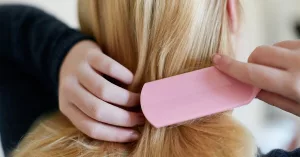
- Use a pick or comb to work the knot out. Start near the roots and slowly comb down to the ends. Repeat as needed.
- After combing each section, release the clips and run a brush or a wide-tooth comb through your hair a few more times.
- Unless the product instructions say otherwise, there’s no need to rinse. Allow your hair to dry, then style as usual.
Detangling products
Based on formulation, ingredients, and user feedback, the following detanglers may be effective for particular hair needs.
- Cantu Coil Calm Detangler with Shea Butter: Ideal for natural and curly hair, this spray helps soften and condition while loosening tangles.
- Garnier Whole Blends Refreshing 5-in-1 Detangler Spray: Infused with green tea and green apple, this lightweight mist is particularly useful for dry hair.
- Johnson’s No More Tangles Detangling Spray: A gentle, effective formula made especially for babies and children.
How to prevent knots
Sleep on a satin pillowcase
Movement on your pillow can cause friction that tangles your hair strands. A satin pillowcase can help keep hair smoother during sleep. You could also wear a satin turban or tie a headscarf around your hair.
You can shop for a satin pillowcase and a satin turban or headscarf online.

Braid before bed
Plaiting your hair before you sleep is a simple way to reduce tangles. One loose braid or several smaller braids both work.
Braiding hair while damp and allowing it to dry that way also helps prevent snarls. You may also want to braid before workouts or when your hair will be exposed to wind.
Avoid rubbing with a towel
Vigorously rubbing wet hair with a terrycloth towel can lead to breakage and cuticle damage, increasing the likelihood of tangles.
Instead, wrap a microfiber towel or a cotton T-shirt around your head to gently wick moisture away, or let hair air-dry.
Keep up with trims
Trimming your hair every 8 to 10 weeks helps remove split ends. Cutting away damaged ends can enable hair to shed more cleanly and reduce knot formation.
Choose products for your hair type
Your hair has unique needs, and using suitable products can significantly reduce tangling.
Dry, damaged hair
If your hair is dry, heat-damaged, or frizz-prone, avoid alcohol-based products that can further dry it out. Opt for oils, serums, and leave-in conditioners for styling.
Natural hair
For natural hair, consider a combing cream formulated to impart shine and body without causing tangles.
The American Academy of Dermatology recommends combing textured or tightly curled hair when it’s damp.
Fine, straight hair
If your hair is fine and straight, steer clear of texturizing or volumizing sprays high in silicone, which can make hair tacky and more likely to tangle.
The takeaway
Tangled hair can affect any hair type, though it’s more frequent with damaged, curly, long, or dry hair.
There are numerous methods to lessen or prevent knots, and using products suited to your hair can help a lot.
If you notice excessive shedding or increased breakage, mention it to your doctor — hair condition can reflect your overall health.


















Leave a Reply
You must be logged in to post a comment.