
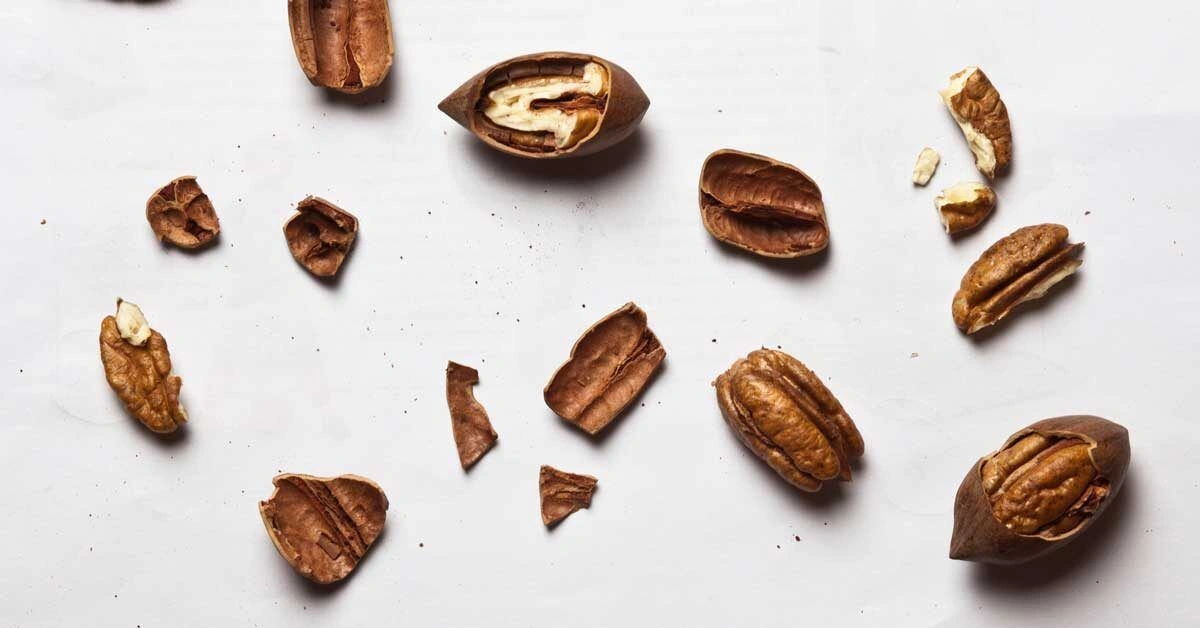
Working out which foods fit a very-low-carb, high-fat ketogenic eating plan can be confusing.
A lot of nuts and seeds are low in net carbs (total carbohydrates minus fiber) and rich in beneficial fats, making them excellent choices.
They’re also packed with protein, fiber, vitamins, minerals, and antioxidants. Still, some types contain fewer carbs than others.
Below are the 13 top nuts and seeds that pair well with a keto lifestyle.
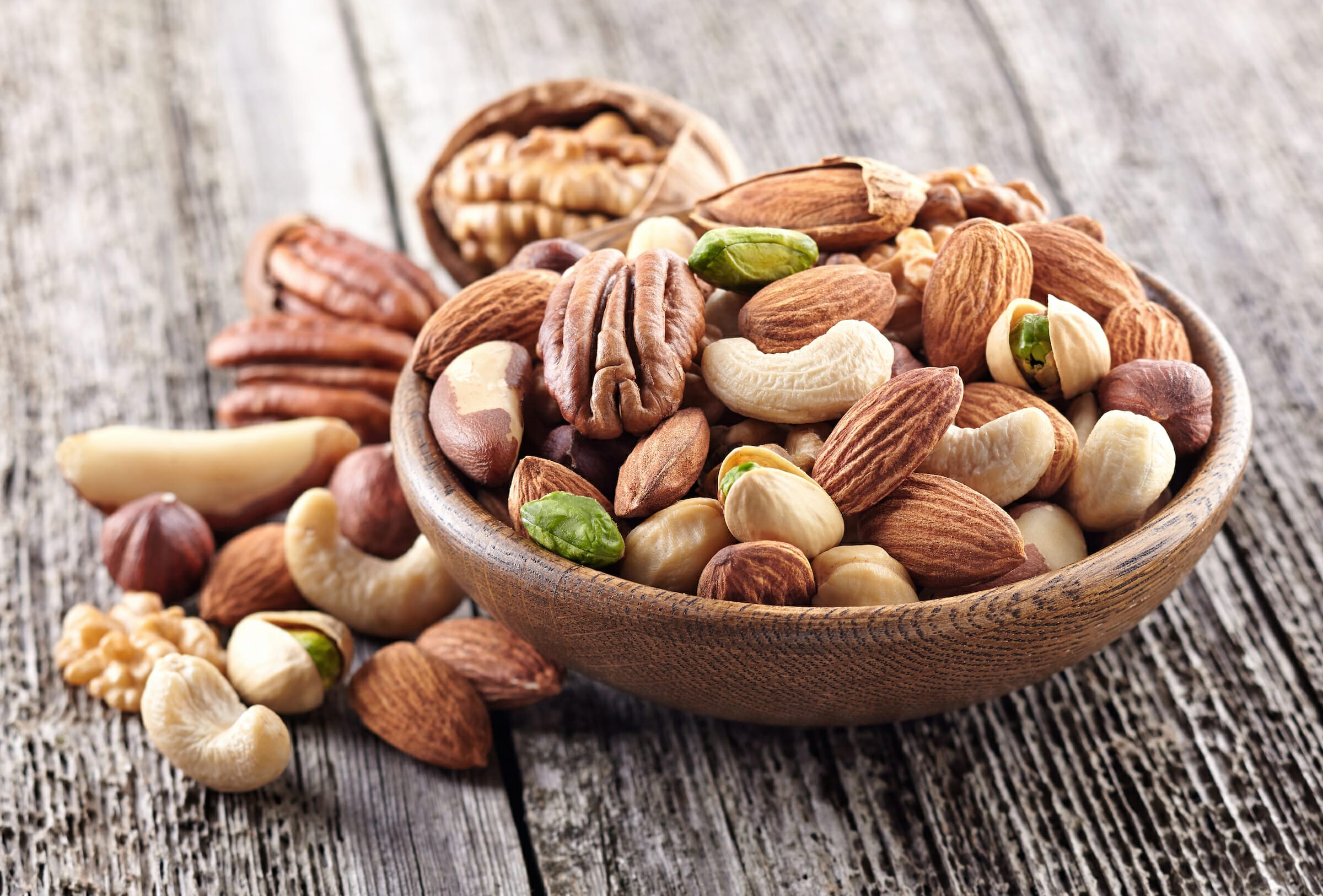
1. Pecans
Pecans are tree nuts with a nutrient profile well-suited to keto. One ounce (28 grams) of pecans contains (1):
- Calories: 196
- Protein: 3 grams
- Fat: 20 grams
- Total carbs: 4 grams
- Fiber: 3 grams
- Net carbs: 1 gram
They’re a high-fat, keto-compatible nut that may help lower insulin levels.
Insulin is a hormone that can encourage fat storage, so keeping insulin lower is beneficial when trying to lose weight.
Indeed, a 1-month trial with 26 adults found that participants who ate roughly 1.5 ounces (43 grams) of pecans daily had decreased insulin and improved insulin sensitivity versus controls (2).
Pecans make a great keto snack and can be crushed into a crunchy, low-carb coating for chicken or fish.
2. Brazil nuts
Brazil nuts are tree nuts native to South America. One ounce (28 grams) of Brazil nuts provides (3):
- Calories: 185
- Protein: 4 grams
- Fat: 19 grams
- Total carbs: 3 grams
- Fiber: 2 grams
- Net carbs: 1 gram
They’re an outstanding source of selenium, a trace element required for many bodily functions, such as reproduction and protein formation (3, 4).
Some evidence suggests that people on keto may be more susceptible to selenium deficiency (5).
Just one Brazil nut supplies more than 100% of the daily selenium requirement, so it’s an easy way to meet needs (3).
However, because of their very high selenium content, it’s wise to limit intake to one to three Brazil nuts per day to avoid excessive selenium consumption, which can be harmful.
3. Chia seeds
Chia seeds are tiny, firm black or white seeds loaded with soluble fiber and omega-3 fats. One ounce (28 grams) of chia seeds offers (6):
- Calories: 138
- Protein: 5 grams
- Fat: 9 grams
- Total carbs: 12 grams
- Fiber: 10 grams
- Net carbs: 2 grams
Around 60% of their fat consists of omega-3s, making them a strong plant-based source of these anti-inflammatory fats (7, 8).
A 6-month study of 77 people found those who ate about 1 ounce (30 grams) of chia seeds per 1,000 calories each day saw larger drops in the inflammatory marker C-reactive protein (CRP) than controls.
The same research reported greater weight loss and larger reductions in waist circumference among chia consumers compared with the control group (9).
Chia pudding is a common low-carb dish made by soaking the seeds until they form a gel; you can also add chia to smoothies, protein shakes, or use them in keto cracker recipes for extra texture.
4. Macadamia nuts
Macadamias, native to Australia, are very high in fat, making them ideal for keto. One ounce (28 grams) of macadamia nuts contains (10):
- Calories: 204
- Protein: 2 grams
- Fat: 21 grams
- Total carbs: 4 grams
- Fiber: 2 grams
- Net carbs: 2 grams
Several studies associate macadamia consumption with improved cholesterol markers (11, 12, 13).
For example, a 4-week study of 17 men found those who got 15% of their calories from macadamias experienced a 5.3% drop in LDL cholesterol and an 8% rise in HDL cholesterol (11).
Macadamias are a rich-fat snack. You can also find or make macadamia milk, butter, and flour as lower-carb alternatives.
5. Flax seeds
Flax seeds are rich in fiber and omega-3s. One ounce (28 grams) of flax seeds supplies (14):
- Calories: 131
- Protein: 6 grams
- Fat: 9 grams
- Total carbs: 9 grams
- Fiber: 8 grams
- Net carbs: 1 gram
These small seeds have been investigated for possible benefits on blood pressure and cardiovascular health.
In a 6-month trial involving over 100 individuals with high blood pressure, those who ate about 1 ounce (30 grams) of flaxseed meal daily had significant reductions in blood pressure versus controls (15).
Flax can be purchased whole or ground and added to keto-friendly baked goods, soups, smoothies, and shakes. Flax milk is another low-carb milk substitute.
6. Walnuts
Walnuts are widely consumed tree nuts. One ounce (28 grams) of walnuts contains (16):
- Calories: 185
- Protein: 4 grams
- Fat: 18 grams
- Total carbs: 4 grams
- Fiber: 2 grams
- Net carbs: 2 grams
They’re a high-fat, keto-appropriate nut that may improve heart health by lowering risk factors like high LDL cholesterol and elevated blood pressure.
A 6-month study with 100 people showed that those on a calorie-restricted diet who consumed 15% of their calories from walnuts had lower total and LDL cholesterol and larger blood pressure reductions than those following a standard low-calorie plan (17).
Walnuts are great as a filling snack or added to low-carb desserts such as brownies or fudge. They’re also a tasty salad addition.
7. Hemp seeds
Hemp seeds, also called hemp hearts, come from the Cannabis sativa plant. They’re a superb source of plant protein and healthy fats. One ounce (28 grams) of hemp seeds provides (18):
- Calories: 155
- Protein: 9 grams
- Fat: 14 grams
- Total carbs: 2 grams
- Fiber: 1 gram
- Net carbs: 1 gram
Some studies suggest the proteins in hemp seeds may help lower blood pressure (19).
They’re also high in linoleic acid, a fat that animal studies suggest might protect against Alzheimer’s and other neurodegenerative diseases (20, 21).
Hemp seeds can replace oatmeal or grits, be sprinkled on salads, or blended into smoothies and protein shakes for a keto-friendly boost.
8. Hazelnuts
Hazelnuts have a smooth, buttery mouthfeel that suits desserts. One ounce (28 grams) of hazelnuts contains (22):
- Calories: 178
- Protein: 4 grams
- Fat: 17 grams
- Total carbs: 5 grams
- Fiber: 3 grams
- Net carbs: 2 grams
They’re also a strong source of vitamin E, with a 1-ounce (28-gram) serving delivering about 28% of the Reference Daily Intake (RDI).
Vitamin E acts as an antioxidant and has been linked to lower heart disease risk by neutralizing free radicals and potentially improving factors like cholesterol (22, 23).
In a 4-week study of 48 adults with high cholesterol, consuming about 1 ounce (30 grams) of hazelnuts daily lowered total cholesterol while raising HDL cholesterol and vitamin E levels (24).
Their flavor matches well with chocolate—try hazelnuts with dark chocolate for a lower-carb dessert. Hazelnut flour also serves as a keto-friendly baking substitute.
9. Peanuts
Though technically a legume (closer to beans and lentils than tree nuts), peanuts are extremely common and a convenient choice for keto followers.
One ounce (28 grams) of peanuts contains (25):
- Calories: 164
- Protein: 7 grams
- Fat: 14 grams
- Total carbs: 6 grams
- Fiber: 2 grams
- Net carbs: 4 grams
They’re a great plant protein source and contain essential amino acids that must come from the diet (26).
Peanuts are particularly rich in leucine, a branched-chain amino acid (BCAA) that supports muscle synthesis (27).
Peanuts or natural peanut butter make easy snacks and can be stirred into smoothies, shakes, or keto desserts. They also work well in savory sauces like satay and add texture to stir-fries.
Choosing unsalted peanuts and natural peanut butter without added sugars is generally best for health.
10. Sesame seeds
Sesame seeds are widely used globally—often as a sprinkle on breads—and are low in carbs and high in fat, making them a solid keto option.
One ounce (28 grams) of sesame seeds contains (28):
- Calories: 160
- Protein: 5 grams
- Fat: 13 grams
- Total carbs: 7 grams
- Fiber: 5 grams
- Net carbs: 2 grams
They’re rich in lignans, antioxidant compounds with anti-inflammatory actions.
Multiple studies link sesame seeds to reduced inflammation. Chronic inflammation is associated with conditions such as heart disease and certain cancers (29, 30, 31, 32).
Use sesame seeds as a crunchy finish for salads and stir-fries or include them in keto cracker and bread recipes. Tahini, made from ground sesame seeds, is another tasty, keto-friendly option.
11. Pine nuts
Pine nuts are tree nuts best known for their role in pesto, an Italian sauce made with basil, cheese, and olive oil.
They’re versatile, have a distinct, earthy taste, and are low in carbs while relatively high in fat.
One ounce (28 grams) of pine nuts contains (33):
- Calories: 191
- Protein: 4 grams
- Fat: 19 grams
- Total carbs: 4 grams
- Fiber: 1 gram
- Net carbs: 3 grams
They contain pinolenic acid, a fat that may reduce appetite by influencing hormones such as cholecystokinin (CCK) and glucagon-like peptide-1 (GLP-1) (34).
In one small study of 18 overweight postmenopausal women, participants consumed 36% less food after taking 3 grams of concentrated pine nut oil with breakfast compared to a placebo (35).
While encouraging, further research is necessary.
Pine nuts add flavor to many dishes; pesto is naturally keto-friendly and pairs well with meats or vegetables. They’re also tasty raw or roasted as a snack.
12. Sunflower seeds
Sunflower seeds are a popular, high-fat snack that fits well into keto diets. One ounce (28 grams) of hulled sunflower seeds provides (36):
- Calories: 164
- Protein: 6 grams
- Fat: 14 grams
- Total carbs: 6 grams
- Fiber: 2 grams
- Net carbs: 4 grams
Research indicates sunflower seeds may offer several health benefits.
They’re rich in anti-inflammatory antioxidants—such as vitamin E, flavonoids, and phenolic acids—and have shown antidiabetic and anti-inflammatory effects in animal experiments (37).
Sunflower seeds are commonly eaten as a snack or used to top salads. Sunflower seed butter is widely available as well.
As with peanuts, choosing unsalted options is usually preferable.
13. Almonds
Almonds and almond-derived products—like almond butter, milk, and flour—are versatile staples for a keto diet.
One ounce (28 grams) of almonds contains (38):
- Calories: 164
- Protein: 6 grams
- Fat: 14 grams
- Total carbs: 5 grams
- Fiber: 3 grams
- Net carbs: 2 grams
Like other tree nuts, almonds have been connected to a range of health benefits due to their nutrient composition.
In addition to protein, healthy fats, and fiber, almonds supply vitamin E, magnesium, copper, and antioxidants like proanthocyanidins (39).
Some studies suggest almond consumption may lower the risk of conditions such as type 2 diabetes, cardiovascular disease, and Alzheimer’s (40, 41).
Enjoy almonds raw or roasted as a keto snack. You can also purchase or make almond milk or butter, and almond flour is a common low-carb baking substitute.
The bottom line
Nuts and seeds are satiating, adaptable foods favored by people following low-carb, high-fat diets like keto.
They bring flavor, texture, and variety to keto meals and snacks. Both are rich sources of healthy fats, protein, fiber, vitamins, minerals, and antioxidants.
Eat them on their own as quick snacks or add them to salads, shakes, desserts, and numerous recipes. Many can also be transformed into keto-friendly milks, spreads, and flours.
The 13 nuts and seeds listed above are delicious, nutritious choices to include in a ketogenic eating plan.



















Leave a Reply
You must be logged in to post a comment.