

What are atrophic scars?
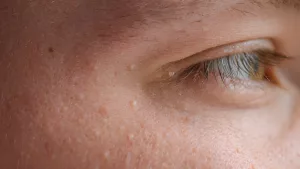
An atrophic scar is a sunken mark that heals beneath the normal skin layer. Atrophic scars form when the skin cannot regenerate tissue, resulting in uneven scarring patterns.
These scars often arise from severe acne or varicella. They can also develop after mole removal. The indentation can take on one of three scar types:
- Ice pick scars. These are small, narrow marks resembling deep pores.
- Boxcar scars. Boxcar indentations resemble chickenpox scars with flat bottoms and well-defined edges.
- Rolling scars. This variety lacks clear boundaries and is commonly found on the cheeks.

5 Atrophic scar treatments
Atrophic scars are the most prevalent acne scar type. They are categorized into three main forms: ice pick, boxcar, and rolling scars. Treatment depends on the scar type you have. Atrophic scars can be challenging to treat and may require multiple procedures over time.
A licensed dermatologist can guide you through your treatment and offer recommendations to help speed your recovery. When discussing options with a dermatologist, understand there is a risk that treatment may not be effective and could leave behind a new scar.
1. Chemical peels
Chemical peels are a widely used treatment. The peeling process works by destroying the damaged skin layer through topical chemicals. The chemical solution prompts the skin to peel away, revealing a fresh layer underneath.
This regeneration reduces the visibility of atrophic scars. Peels may take days to weeks to show improvement. In some cases, your skin needs substantial time to heal.
Different chemical agents are chosen based on scar severity. They range from mild acids found in everyday skincare — such as glycolic acid — to stronger agents used in deeper peels — like phenol — which may require sedation before application.
2. Fillers
Soft-tissue fillers are commonly employed for rolling atrophic acne scars. They help level or raise indented scars to align with the surrounding skin. Fillers are injected beneath the scar and can yield near-immediate results. Over time, the fillers improve skin volume and lessen the scar appearance.
3. Skin needling
Skin needling or microneedling therapy involves puncturing the skin to stimulate regeneration of a healthier layer. The procedure uses a device with multiple needles rolled over the skin in various directions. The tiny punctures trigger collagen production and new tissue formation.
This approach prompts the skin to regenerate and boosts collagen, a protein essential for maintaining skin elasticity and health.
4. Punch excision
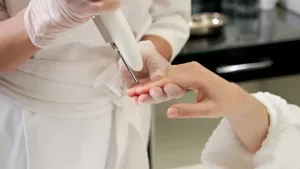
Punch excision is another common technique to treat and remove atrophic acne scars, particularly ice pick scars. In this method, a needle-sized tool is used to excise the scar tissue. The wound is then closed with sutures. For more severe scars, a small skin graft may be taken from behind the ear to fill the gap.
The punch excision and grafting may lead to uneven pigmentation and stitching marks. Be sure to review these risks with your doctor before proceeding.
5. Subcision
Subcision is a cost-effective surgical option best suited for rolling atrophic scars. While effective on its own, subcision is often paired with other therapies such as microneedling and chemical peels.
The technique loosens the tissue around the indented scar and creates a new wound that can heal to match the surrounding skin.
During the procedure, the clinician inserts a needle beneath the skin in multiple directions around the scar tissue, using a fanning motion. Afterward, applying pressure and cold to the area helps prevent bleeding. Subcision may be repeated if the scar is particularly deep.
Outlook
Treatment of atrophic scars can lessen the appearance of skin indentations and may boost confidence. It’s important to recognize that there are no instant cures for atrophic scars.
Each method carries its own risks. Some approaches might leave new scars or fail to completely remove the original scar. Others may require repeated sessions to optimize results. Before deciding on any treatment, consult with your physician about your options.
Optum Now is operated by RVO Health. By clicking on this link, we may receive a commission. Learn more.











Leave a Reply
You must be logged in to post a comment.