
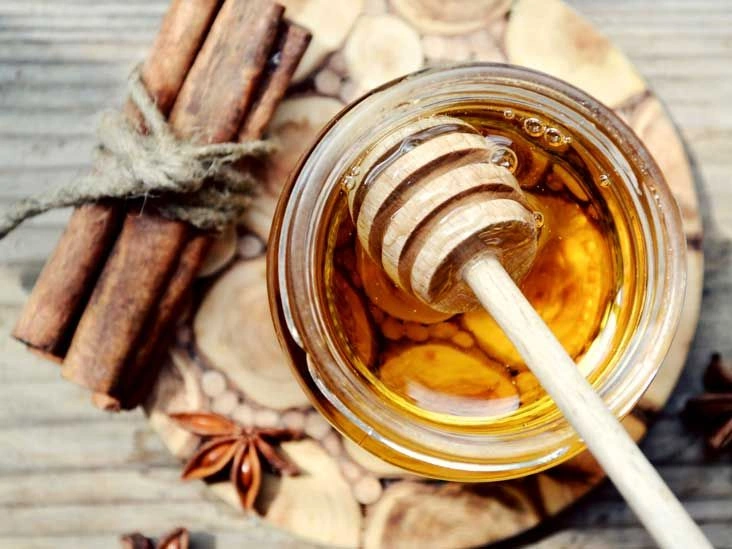
Honey and cinnamon are two natural substances that offer a range of health advantages.
Some people assert that blending these two ingredients can treat nearly every ailment.
While there is proof that each possesses certain medicinal properties, many of the claims about a honey-and-cinnamon mixture appear exaggerated.
This article examines the benefits of honey and cinnamon and distinguishes evidence-based effects from myth.

Traditional ingredients with modern uses
Honey is a sugary fluid made by bees and has been used for ages as both nourishment and medicine.
Today it’s most frequently used in recipes and as a sweetener in drinks.
Cinnamon is a spice derived from the bark of trees in the Cinnamomum genus.
Harvested bark is dried and curls into the familiar cinnamon sticks. You can buy it as sticks, ground powder, or as an extract.
Both honey and cinnamon have a variety of health-promoting properties on their own. Still, some people assume combining them will amplify the benefits.
In 1995 a Canadian tabloid published a piece listing many conditions allegedly cured by a honey-and-cinnamon mix.
Since then, bold assertions about the combo have proliferated.
Although both ingredients have legitimate health applications, not all claims about their combined use are supported by research.
Summary: Honey and cinnamon are used both as foods and for their medicinal qualities. However, not every claim about them is validated by scientific studies.
What cinnamon can do for you
Cinnamon is a widely used spice in cooking and baking and is available as a supplement.
There are two primary varieties:
- Cassia cinnamon. Often labeled as Chinese cinnamon, this type is the most common in supermarkets. It’s cheaper, generally lower quality than Ceylon, and may have some adverse effects in large amounts.
- Ceylon cinnamon. Known as “true cinnamon,” it’s harder to find and has a slightly sweeter taste.
Cinnamon’s health effects stem from bioactive compounds in its essential oil.
The best-studied compound is cinnamaldehyde, responsible for cinnamon’s characteristic flavor and scent (1).
Notable potential benefits of cinnamon include:
- May reduce inflammation. Chronic inflammation raises the chance of long-term disease. Research suggests cinnamon could help lower inflammation (2, 3).
- May help against neurodegenerative conditions. Several lab studies indicate cinnamon might slow aspects of Parkinson’s and Alzheimer’s disease. These findings require confirmation in human trials (4, 5, 6, 7).
- May offer anticancer effects. Some animal and in vitro studies show cinnamon can inhibit cancer cell growth and replication, but human studies are needed to confirm this (8, 9).
Other proposed uses include treatments for ADHD, IBS, PMS, PCOS, and foodborne illness, but evidence is lacking.
Summary: Cinnamon is among the healthiest spices available. Both varieties have benefits, but Ceylon is preferable for regular consumption.
What honey can offer
Besides being a better option than table sugar, honey has several therapeutic uses.
It’s important to recognize that honey varies in quality.
Many of honey’s health effects are tied to bioactive compounds most abundant in unfiltered, high-quality honey.
Science-backed benefits of honey include:
- May soothe coughs. One study showed honey was more effective at relieving nighttime cough in children than dextromethorphan, a common cough suppressant, though more research is necessary (10).
- An effective topical treatment for wounds and burns. A review of six trials found that applying honey to wounds is an effective therapy (11, 12).
Honey is also touted as a sleep aid, memory enhancer, aphrodisiac, remedy for yeast infections, and a way to reduce dental plaque, but these claims lack strong scientific support.
Summary: Honey provides several health perks related to its antioxidant and antibacterial actions.
Where honey and cinnamon overlap
The assumption is straightforward: if each ingredient is beneficial alone, their combination might be even more powerful.
Research indicates honey and cinnamon share some overlapping health effects. For instance, both may be helpful in these areas:
May lower heart disease risk
A honey-and-cinnamon blend could potentially lower heart disease risk by improving several risk markers.
These include reductions in LDL (bad) cholesterol and triglycerides.
High blood pressure and low HDL (good) cholesterol also raise heart disease risk, and both foods may have favorable effects on these factors.
Studies show honey consumption can reduce LDL by 6–11% and triglycerides by up to 11%, and it may raise HDL by roughly 3% (13, 14, 15, 16, 17).
A meta-analysis reported that daily cinnamon reduced total cholesterol by an average of 16 mg/dL, LDL by 9 mg/dL, and triglycerides by 30 mg/dL, with a modest rise in HDL (18).
Although the two have not been studied together extensively, each has shown modest blood pressure-lowering effects in animal studies (2, 19, 20, 21).
Both ingredients are rich in antioxidants, which benefit heart health by improving circulation and reducing clot formation, lowering the risk of heart attack and stroke (19).
They may also lower heart disease risk through anti-inflammatory effects since chronic inflammation contributes to cardiovascular disease (2, 22).
May help heal wounds
Both honey and cinnamon have established wound-healing properties and might support treating skin infections when applied topically.
Each has antibacterial and anti-inflammatory actions, important qualities for skin repair (23, 24).
Honey has been used effectively on burns and to treat diabetes-related foot ulcers, a severe complication of diabetes (12, 25).
Cinnamon’s strong antibacterial activity could add benefits for wound care.
Because diabetic foot ulcers often become infected with antibiotic-resistant bacteria, cinnamon oil has shown protective effects against such strains in lab studies (26, 27).
Note that these tests used concentrated cinnamon oil, which is far stronger than powdered cinnamon from the grocery aisle. There’s no proof that powdered cinnamon would have identical effects.
May improve blood sugar control
Regular cinnamon intake appears beneficial for people with diabetes and may help prevent the condition (28, 29, 30).
Multiple studies report that cinnamon reduces fasting blood glucose in people with diabetes (28, 29, 31, 32, 33, 34).
Cinnamon helps lower blood glucose partly by improving insulin sensitivity, making cells respond better to insulin and allowing sugar to enter cells more easily (30).
Honey may also have advantages for people with diabetes, affecting blood sugar less dramatically than regular sugar (35).
Some studies suggest honey can lower LDL and triglycerides while boosting HDL in diabetics (13, 15).
Using honey or cinnamon instead of table sugar in tea may be a healthier choice, but honey remains high in carbohydrates, so people with diabetes should use it sparingly.
High in antioxidants
Both honey and cinnamon are excellent antioxidant sources, which convey numerous health advantages (36, 37, 38).
Antioxidants protect against unstable free radicals that can damage cells.
Honey contains phenolic antioxidants linked to a reduced risk of heart disease (39).
Cinnamon is likewise an antioxidant leader and ranks highly compared with other spices (1, 40, 41).
Combining honey and cinnamon can provide a substantial antioxidant boost.
Summary: The combination of honey and cinnamon may confer benefits such as supporting heart health, aiding wound healing, and helping blood sugar control.
Popular but unproven uses
It’s appealing to imagine two potent ingredients teaming up to form a universal remedy.
However, no research has shown that mixing honey and cinnamon produces a cure-all for numerous conditions.
Many alleged uses for honey and cinnamon lack solid scientific backing.
Common but unproven claims include:
- Reduces allergy symptoms. Some trials have explored honey’s effect on allergies, but results are weak and mixed (42, 43).
- Cures the common cold. While both have antibacterial effects, most colds are viral, so antibacterial action won’t cure them.
- Treats acne. Their antibacterial properties may benefit acne-prone skin, but studies haven’t evaluated the mixture’s effectiveness for acne. For more on topical uses, see honey and cinnamon for acne.
- Promotes weight loss. Some research suggests replacing sugar with honey may reduce weight gain, but there’s no evidence that honey and cinnamon cause weight loss (44, 45).
- Relieves arthritis pain. Although both reduce inflammation, there’s no proof that applying them topically diminishes joint inflammation.
- Soothes digestive problems. Claims that honey coats the stomach or that the two will cure gut infections aren’t supported by research.
Summary: Both honey and cinnamon are healthful, but evidence doesn’t show their combination multiplies effects.
How to incorporate honey and cinnamon safely
The simplest dietary use of honey is as a sugar substitute.
Choose unfiltered, high-quality honey, because many processed supermarket honeys lack beneficial compounds.
Keep in mind honey remains sugar-dense and should be consumed in moderation.
Cinnamon contains coumarin, which can be harmful in large quantities. Coumarin levels are much higher in Cassia cinnamon than in Ceylon (46, 47).
Whenever possible, opt for Ceylon cinnamon. If you use Cassia, limit it to about 1/2 teaspoon daily (0.5–2 grams). Up to 1 teaspoon (approximately 5 grams) of Ceylon cinnamon per day is generally considered safe (46).
To address a skin infection, mix honey with a small amount of cinnamon oil and apply it directly to the affected area.
Summary: Honey and cinnamon can be consumed or applied topically. For maximum benefit, buy high-quality unfiltered honey and prefer Ceylon cinnamon.
The takeaway
Honey and cinnamon each possess multiple health benefits, many of which are supported by scientific evidence.
They are particularly useful for heart health and for combating infections.
However, there is no scientific proof that combining honey and cinnamon produces a miraculous cure-all.























Leave a Reply
You must be logged in to post a comment.