
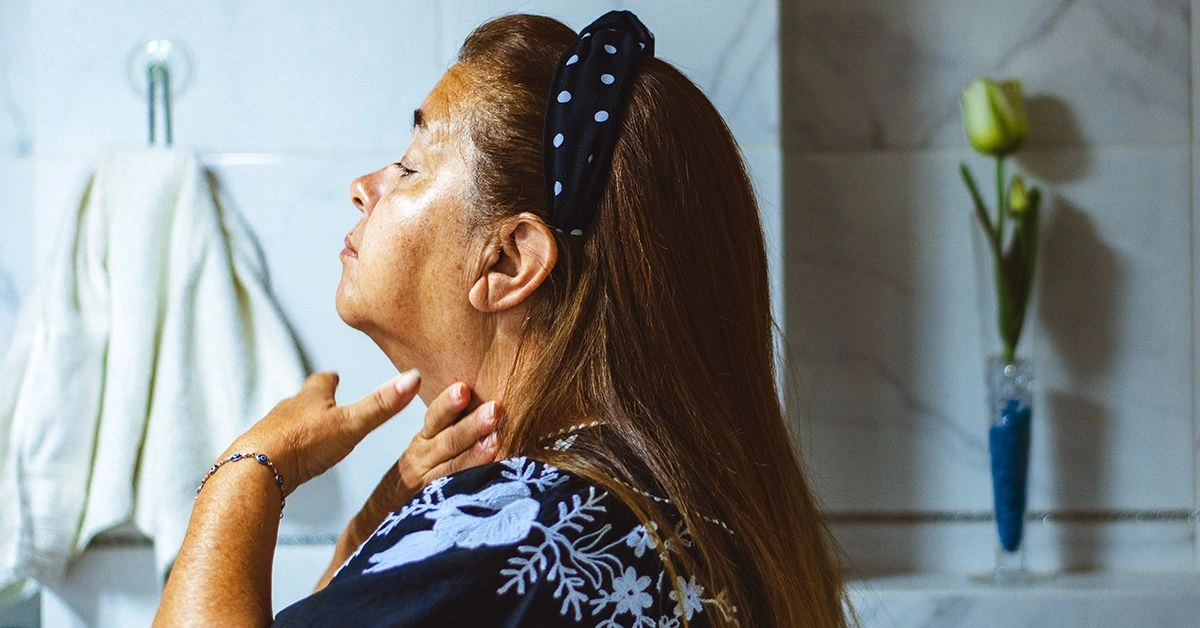
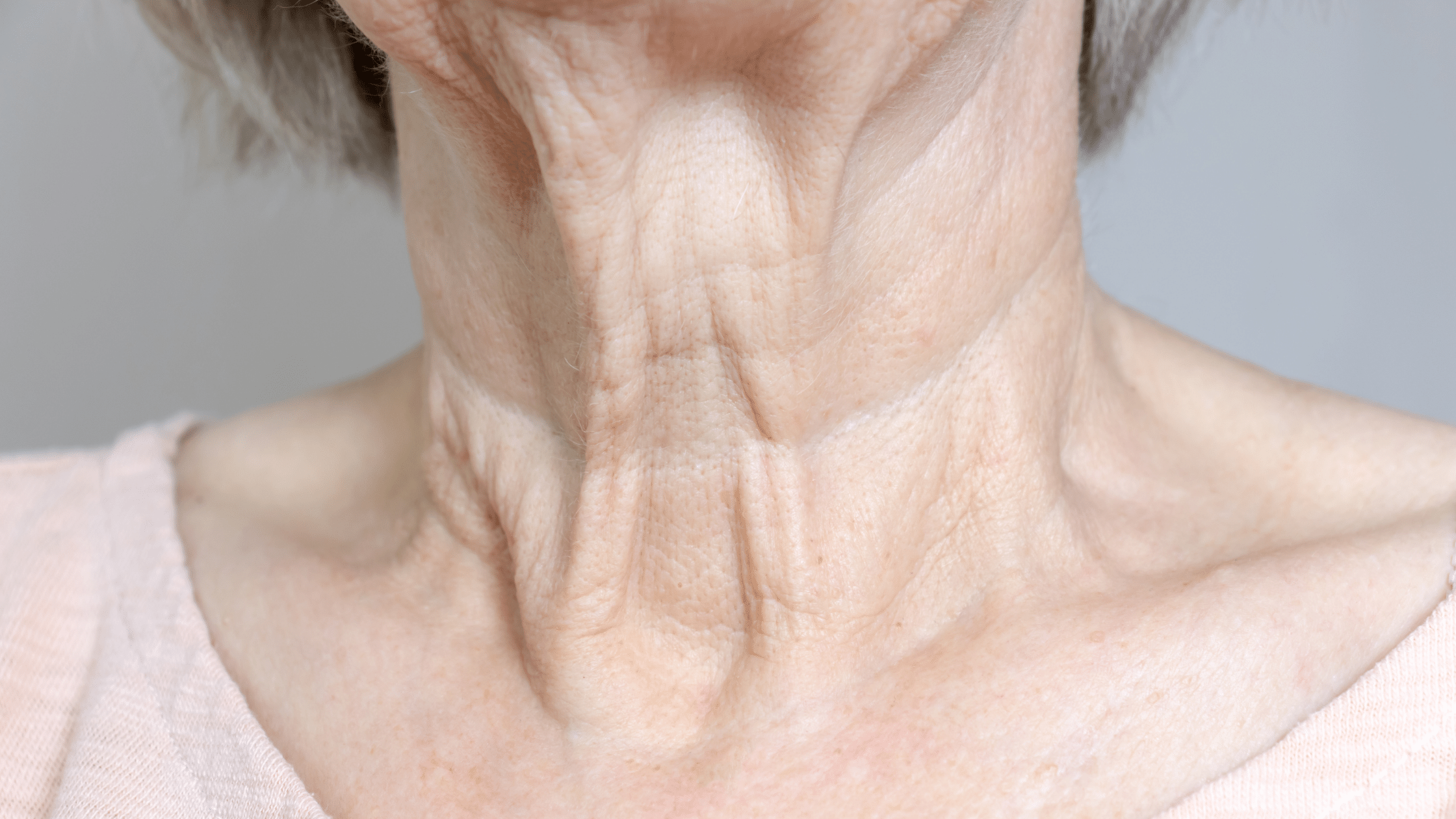
“Turkey neck” describes the loose, crepey, or wrinkled skin that appears on the neck as we age. Strengthening the neck muscles through exercise may help firm the area somewhat, but removing redundant skin typically requires surgical intervention.
Turkey neck happens when the neck muscles weaken and the skin loses its elasticity, diminishing its ability to stay taut.
Exercises for turkey neck
There are numerous facial and neck exercises promoted to reduce turkey neck. However, so far, few high-quality studies have definitively shown that these routines reliably reverse the condition.
Exercise benefits overall health and can tone underlying muscles, but it cannot remove surplus skin. Thus, while workouts might improve neck muscle tightness, they may not produce visible changes in the overlying skin.
A study investigated how certain yoga-style neck exercises affected neck tone, stiffness, and elasticity. The investigators observed increased elasticity and relaxation in superficial neck muscles along with improved tone and elasticity in functional muscles.
Although the researchers concluded that face yoga may support muscle structure and its aesthetic presentation during aging, additional research is needed to confirm and expand upon these results.
Neck stretches used in the study
Examples of neck stretches include:
- Side neck stretch: Hold the side of a chair with one hand and place your other hand on the side of your head, gently stretching.
- Back-diagonal neck stretch: Grasp the side of the chair with one hand and the front of the head with the other. Gently pull the head slightly forward and toward the opposite side to stretch the muscles.
- Posterior neck stretch: Place both hands on the top of the head and tilt the head forward to stretch the back neck muscles.
Neck stretches may boost muscle tone and skin elasticity to some degree, but they are unlikely to eliminate sagging or excess skin entirely.
Topical treatments for turkey neck
N-acetyl glucosamine, a naturally derived form of glucosamine, appears in many neck and anti-aging creams. Some studies suggest these products can improve the look of aging neck skin by firming and smoothing it and by lessening hyperpigmentation.
In one earlier 2016 trial, 42 people showed progressive improvement in neck appearance after applying a cream containing N-acetyl glucosamine for 16 weeks.
A 2023 study evaluated a topical formula targeting signs of neck aging. The cream combined three active ingredients:
- retinol
- tripeptide
- glaucine
Designed to address neck wrinkles, laxity, and skin texture, this topical appeared to improve wrinkles and the overall texture of the neck.
Procedures and surgeries for turkey neck
Surgical options remain the fastest and most definitive ways to address turkey neck. Surgery involves incisions and will leave scars, whereas some newer procedures are less invasive. Below are common surgical and medical approaches that can help diminish neck aging signs:
Botox (botulinum toxin type A)
Although not a surgical procedure, Botox is an in-office treatment performed by specialists. It’s minimally invasive with no downtime. Results typically last about 3–4 months, and repeat injections are required to preserve the effect.
Hyoid neck lift
This relatively new neck-lift technique helps tighten and smooth the neck’s skin. Published research indicates it may be an effective option for reducing or eliminating visible neck sagging.
MST operation
The MST procedure is a minimally invasive technique that rejuvenates the neck by tightening skin with barbed tensor threads. This method generally results in only small, discreet scars.
Skin-tightening laser
Several medical devices deliver heat to the skin to induce tightening. Laser-based skin-tightening treatments are noninvasive and typically yield mild to moderate improvements. Multiple sessions spread over 4–6 months are usually needed, but there is no recovery period required.
Z-plasty
Also known as anterior cervicoplasty, this operation, introduced in the 1970s, directly removes excess neck skin. It is swift and effective, though it can leave a visible scar at the posterior neck.
Takeaway
Overall, neck exercises are the least invasive but generally the least effective for removing excess skin, while surgeries and in-office medical procedures offer the most reliable results. Topical cosmetics fall between these options in terms of benefit.
If neck aging concerns you, consult your physician or a board-certified dermatologist or plastic surgeon to discuss the most suitable treatments for your situation.












Leave a Reply
You must be logged in to post a comment.